
Hand-in-Hand: Climate Change and Food Security
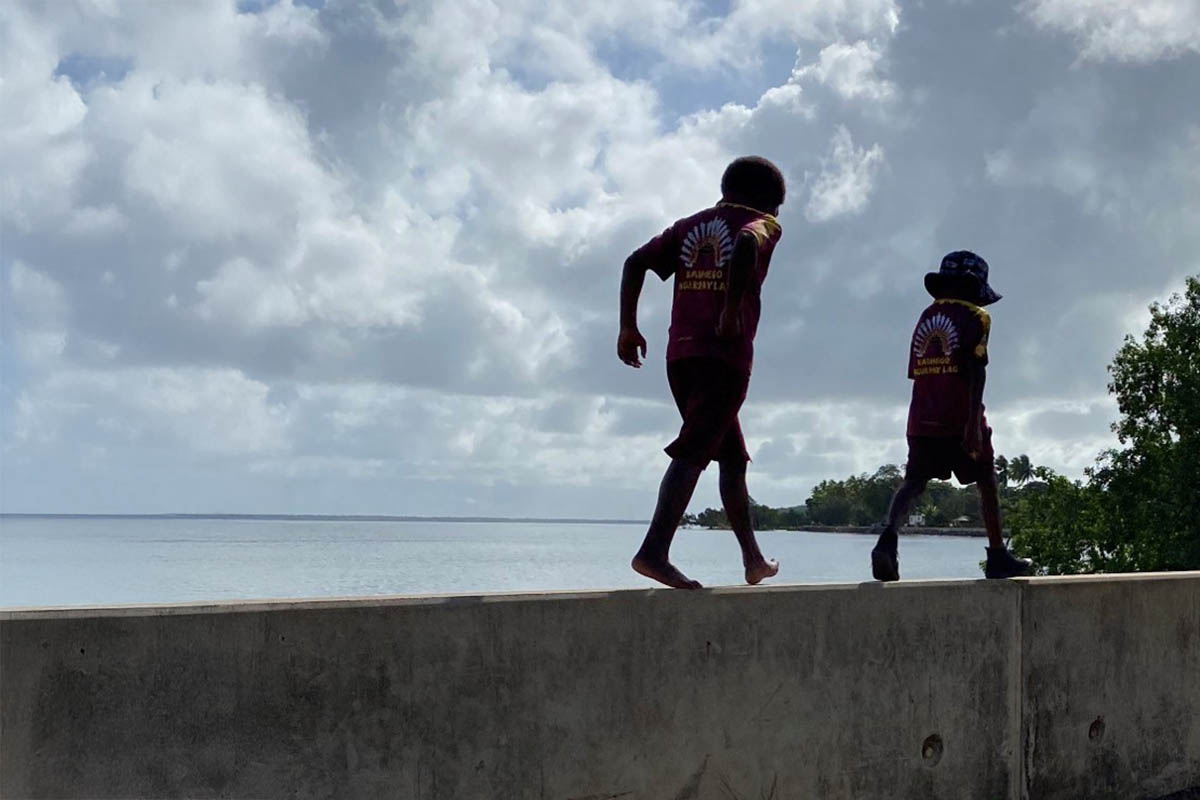
Aboriginal and Torres Strait Islander Peoples have lived for millennia in a changing climate with their deep knowledge of ‘Country’ (Lansbury et al., 2022). Human-induced climate change, however, raises unforeseen risks to the food security, diet and health of Indigenous Peoples – especially in remotely located communities (Lansbury et al., 2022). Food security for remote communities is a priority strategy for the Closing the Gap Implementation Plan 2023 and Australian, State and Territory governments. Extreme climate events can result in a state of prolonged food stress, and inadequate food supply and diet, and have exposed policy gaps needed to support communities to mitigate food insecurity and build food security resilience. There is a major gap in evidence on the impact of climate change on community food security and diet, and the lived experience, to inform effective policy for food security resilience and prevention of further health inequities.
Our research, in the Northern Territory and Queensland, will determine the impact of climate events on food security and diet, document with communities their lived experience, and the enablers and obstacles they encounter in providing food security with climate events. We will actively engage with policy leads to co-design sustainable policy interventions to fortify climate change food security resilience. This research addresses what Indigenous communities have experienced and identified as critical policy failures in enabling communities to ensure food security with climate events. Through our collaborative and hand-in-hand approach that centres Indigenous Knowledges, we will endeavour to build research capacity and advance evidence to directly impact policy for food security resilience and healthy diets.
Our partners
- Queensland University of Technology, Carumba Institute
- Menzies School of Health Research, Wellbeing and Preventable Chronic Disease
- The University of Queensland, School of Public Health
- Charles Darwin University, Molly Wardaguga Research Centre
Study aims
Over the 4 years of the study, with Aboriginal and Torres Strait Islander leadership and guidance, we will:
- Determine if and how climate change events impact food security and diet.
- Identify the facilitators and obstacles to community food security with climate events.
- Co-design and predict impact on diet of effective and sustainable policy interventions and assess use of this co-designed evidence by community and policy leads.
Methods
Guided by the leadership of our teams’ Indigenous investigators, this research is informed by an Indigenous Knowledges’ perspective that values and seeks to build relationships between researchers and partner communities and integrates principles of relationality (environment, people, culture and history), responsibility (transparency and trustworthiness), reverence (respect and valuing of Indigenous Knowledges) and reflexivity (researcher standpoints and influences). The ‘CONSIDER reporting criteria’ will be used to ensure ethical research practice with Indigenous leadership of the research and authentic partnerships with Indigenous communities (Huria et al., 2019).
Investigator team
This project is co-lead by Mr Francis Nona and Prof Julie Brimblecombe.
Chief investigators
- Prof Julie Brimblecombe, Monash University
- Mr Francis Nona, Queensland University of Technology
- A/Prof Megan Ferguson, University of Queensland
- Dr Beau Cubillo, Menzies School of Health Research
- Prof Elaine Maypilama, Charles Darwin University
- A/Prof Shanshan Li, Monash University
- Dr Emma McMahon, Menzies School of Health Research
- Prof Louise Maple-Brown, Menzies School of Health Research
- Dr Katherine Cullerton, University of Queensland
Associate investigators
- Prof Yuming Guo, Monash University
- Assoc Prof Veronica Matthews, University of Sydney
- Ms Melinda Hammond, Community Enterprise Queensland
- Ms Treezie Moynham, National Indigenous Australians Agency
- Ms Laura Baddeley, Arnhem Land Progress Aboriginal Corporation
- Ms Kate Robertson, Northern Territory Department of Health
- Prof Joanna Batstone, Monash University
- Simone Nalatu, Health and Wellbeing Queensland
- Dr Liza Barbour, Monash University
Related publications
Lansbury N, Redmond AM, Nona F. Community-Led Health Initiatives for Torres Straits Island Communities in a Changing Climate: Implementing Core Values for Mitigation and Adaptation. International Journal of Environmental Research and Public Health. 2022; 19(24):16574. https://doi.org/10.3390/ijerph192416574
Get in touch
For any questions about the project, please contact:
Mr Francis Nona
Zenadth Kes (Badulaig man)
Queensland University of Technology
Email: francis.nona@qut.edu.au
Prof Julie Brimblecombe
Monash University
Email: julie.brimblecombe@monash.edu
Emma McMahon
Project Coordinator
Email: emma.mcmahon@menzies.edu.au)
References
Lansbury N, Redmond AM, Nona F. Int J Environ Res Public Health. 2022;19(24):16574.
Australian Bureau of Statistics. 4727.0.55.005 - Australian Aboriginal and Torres Strait Islander Health Survey: Nutrition Results - Food and Nutrients 2012-2013: Table 14 Food security. 2015.
Huria T, et al. BMC Medical Research Methodology. 2019;19(1):173.