
Menzies Remote Short-Item Dietary Assessment Tool
The MRSDAT
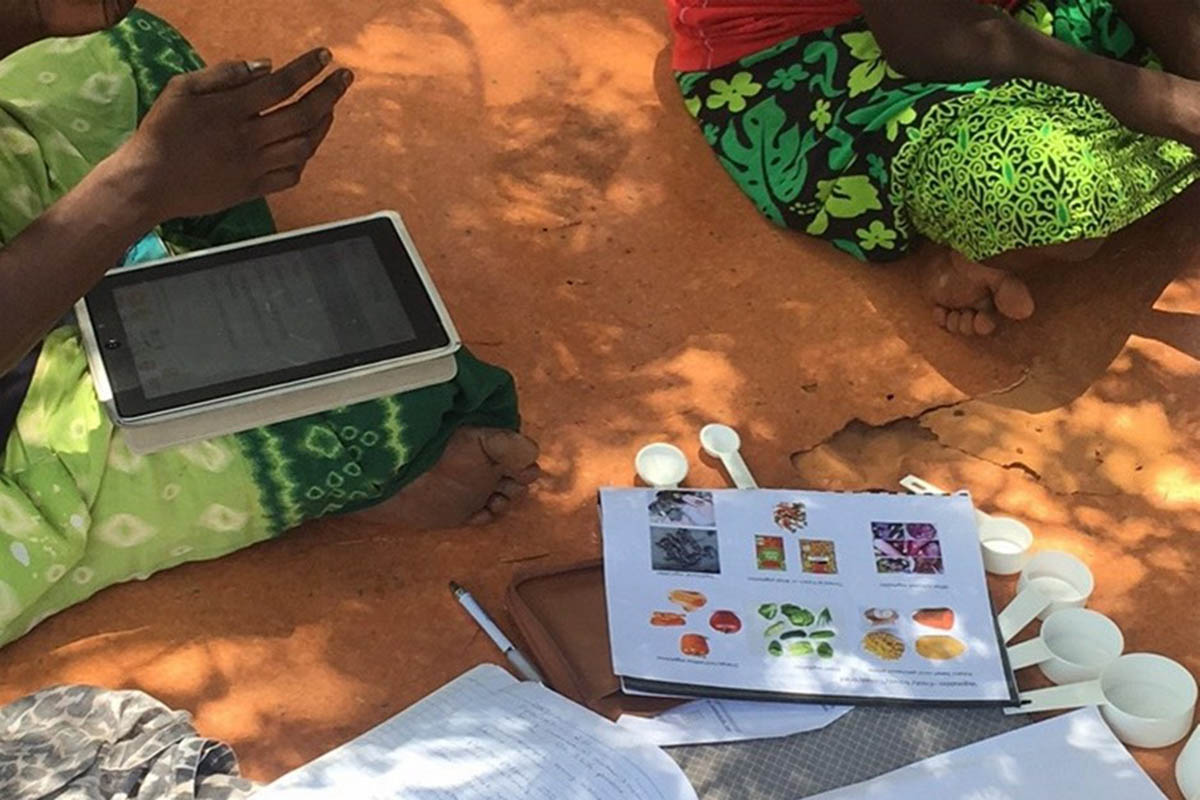
The Menzies Remote Short-Item Dietary Assessment Tool (MRSDAT) is a quick and easy way to assess individual diet, with an instant score provided on how well the diet matches the Australian Dietary Guidelines.
This food frequency questionnaire was developed with and for remote Aboriginal and Torres Strait Islander communities.
How to access the tool
The latest version of the MRSDAT is available through Qualtrics. To access the tool, please contact Emma Tonkin at emma.tonkin@monash.edu
The MRSDAT can be accessed online via a link on any device (phone, iPad, computer), or through the Qualtrics app, and once the MRSDAT tool is downloaded to the app, it can be completed offline.
The MRSDAT development has been a collaboration between Menzies School of Health Research, Monash University and Flinders University. The MRSDAT is hosted and managed by Monash University.
How does it assess diet?
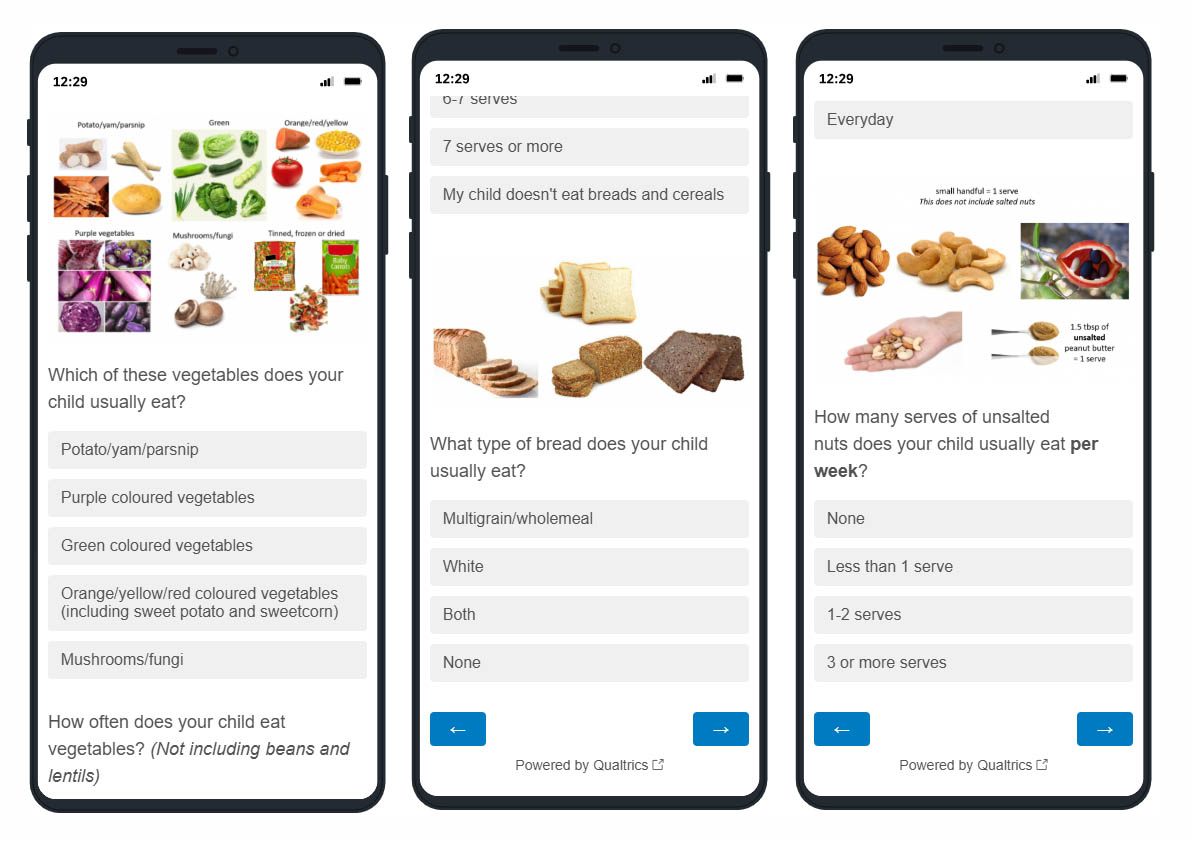
The MRSDAT includes 32 questions measuring the usual intake of the food groups in the Australian Dietary Guidelines, breastfeeding for young children, and traditional food intake. It includes in-built serving size images and food group descriptions to aid in accurate completion.
It has been developed to include scoring formulas for all the age and life stage groups included in the Australian Dietary Guidelines (from 7 months to 70+ years), including pregnancy and breastfeeding. There is a version for children to be completed by caregivers, and a self-complete version for older children and adults. It has been found to take 10-20 minutes to complete.
What feedback does it provide?
The online MRSDAT automatically generates daily intakes of all food groups and provides a comparison of how these match the recommendations for the respondent’s age and life stage, including:
- Vegetables
- Fruit
- Dairy
- Grains
- Meat
- Sugar-sweetened drinks
- Discretionary foods
The MRSDAT also uses scoring formulas based on the Australian Dietary Guidelines to automatically generate a score out of 100 for how well the reported diet matches the recommended diet for that age and life stage. This score is a measure of diet quality, and the component parts include:
- Dietary variety
- Vegetables
- Fruit
- Dairy
- Grains
- Wholegrain quality
- Meats
- Sugar-sweetened drinks
- Plain water
- Healthy fats
- Discretionary foods
Higher diet quality scores reflect closer alignment between the reported diet and the Australian Dietary Guideline recommendations.
Has it been validated?
The MRSDAT was updated in 2019 to enable automatically generated feedback and extend its use across all Australian Dietary Guideline age and life stage groups. This latest version has been validated with both children (6 months to 5 years), and adults (18 to 70 years), including pregnant and/or breastfeeding Aboriginal and Torres Strait Islander women. Diet quality scores derived from the MRSDAT varied by less than 0.5% to those derived from 24-hr recalls (publication currently under review). The original MRSDAT was also validated in children 6-36 months.
Internal and external users report high respondent acceptance of the MRSDAT, and little/no missing data.
Related Publications
Tonkin, E, Chan, E, Deen, C, Fredericks, B, Dhurrkay, M, Dissayanake, HU, Garngulkpuy, J, Gurruwiwi, G, Biggs, BA, Brimblecombe, J (2025) The relative validity of the updated Menzies Remote Short-Item Dietary Assessment Tool (MRSDAT) for use with remote Aboriginal and Torres Strait Islander children and adults, BMC Public Health. 25(1):1990. DOI: 10.1186/s12889-025-23233-x
Rohit, A, Brimblecombe, J, O’Dea, K, Tonkin, E, Maypilama, L, Maple-Brown, L (2018), Development of a short-item diet quality questionnaire for Indigenous mothers and their young children: the Menzies remote short-item dietary assessment tool (MRSDAT), Australian Journal of Rural Health, 26(3):220-224, DOI: 10.1111/ajr.12412.
Tonkin, E, Kennedy, D, Golley, R, Byrne, R, Rohit, A, Kearns, T, Hanieh, S, Biggs, BA, Brimblecombe, J (2018), The relative validity of the Menzies Remote Short-item Dietary Assessment Tool (MRSDAT) in Aboriginal Australian children aged 6-36 months, Nutrients, 10(5):590. DOI:10.3390/nu10050590.
How has the tool been used?
Research projects using the MRSDAT
- PANDORA Wave 2
- Child Health and Nutrition Study
- Apunipima Optimal Nutrition Project
- Remote Food Security Project
- South Australian Aboriginal Birth Cohort Study (formerly Baby Teeth Talk), 7 year & 9 year follow up
- Food & Water 4 Life study
- ELCHO Health and Wellbeing Project
- UQ Patient Navigator Study
The latest validation study findings suggest the MRSDAT is a robust tool and may have utility for brief interventions and the clinical setting. To explore opportunities for using the MRSDAT in this way please contact Emma Tonkin at emma.tonkin@monash.edu.