
Tash Newman
Bachelor of Medical Science (Honours)
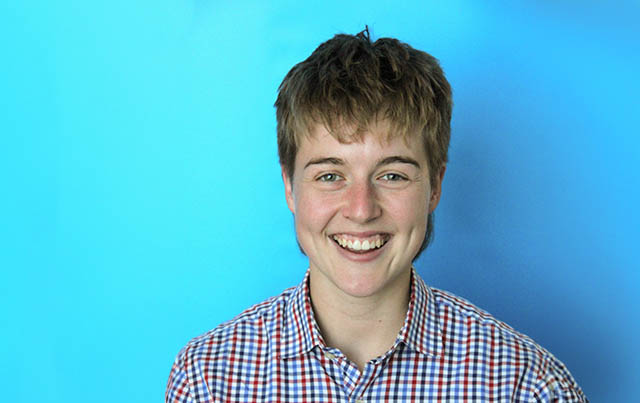
Tash Newman is in the final year of their medical degree after completing an Honours year at The Alfred where they were primarily supervised by Associate Professor James Lee, a specialist general and endocrine surgeon and a leading authority in thyroid cancer research.
Tash committed to the Honours year after speaking to past students about the opportunities it presented to build research skills and professional networks.
“Initially, I didn’t have much idea of what the Honours year involved but past students gave me the 101 of what to look for in a project – that it had ethics approval, the supervisor had a successful track record with past Honours students and the project was going ahead. I was also focused on the skills and networking that would come out of the project I chose.”
After speaking to potential supervisors, Tash committed to a research project with A/Prof Lee that investigated the quality-of-life experience of patients after a hemithyroidectomy (HT) or total thyroidectomy (TT) to treat malignant or benign thyroid disease.
The thyroid gland is at the front of the neck, in front of the windpipe and oesophagus, and secretes hormones to regulate metabolic processes including growth and energy expenditure. Around 14 percent of older Australians are believed to suffer from a thyroid disorder, according to the Australian Thyroid Foundation.
Thyroid disorders such as Hashimoto’s disease or Graves’ disease, or benign or malignant growths on the thyroid, can lead to patients requiring part or total thyroid removal. This can require patients to take thyroid hormone replacement medication for life.
Tash’s Honours research examined differences in impacts on quality-of-life post-surgery, depending on whether a hemithyroidectomy or total thyroidectomy were performed.
“If patients have a small thyroid cancer on one side of the thyroid, if you only remove half the thyroid then the chances of that cancer returning or affecting their life are quite low compared to the impacts of removing the complete thyroid. I looked at the pros and cons of the two surgical procedures if there were no differences in oncological outcomes.”
Tash’s research was based on adult thyroidectomy patients from the Australian and New Zealand Thyroid Cancer Registry and the Monash University Endocrine Unit who underwent surgery at 22 participating institutions. They completed patient reported outcome measures with patients emailed an online survey at three, six and 12-month timepoints.
During the project, Tash was based in a general surgical office at The Alfred where they set up a new recruitment system to collect patient quality of life data before surgery and completed coding and data processing work to analyse outcomes. In their medical student capacity, Tash was also able to observe A/Professor Lee performing thyroid surgery.
“I learned to use new software such as REDCap (Research Electronic Data Capture) and STATA and I became very interested in how powerful those tools could be and how the software could help solve any problems that arose during analysis.”
Tash’s research found HT patients had better quality of life outcomes than TT patients in the first 12 months post-surgery in terms of being less fatigued, experiencing less pain and also reporting fewer issues with returning to work and finances. However, those differences significantly decreased after the first year with short-term disparities evening out in the long-term.
“One interesting finding was that patients who had a hemithyroidectomy reported they didn’t feel quite as supported by medical and healthcare professionals as patients who had their thyroid completely removed. This could be explored further.
“However, the key takeaway is the need to communicate what we found to patients and for them to have informed consent. Is it important for them to have less symptoms in the short-term, or are they more concerned about long-term cancer recurrence? That needs to be a decision shared with their clinicians.”
Next year, Tash hopes to begin a medical internship in a major metropolitan hospital in Melbourne. From there, they plan to embark on a surgical training pathway.