
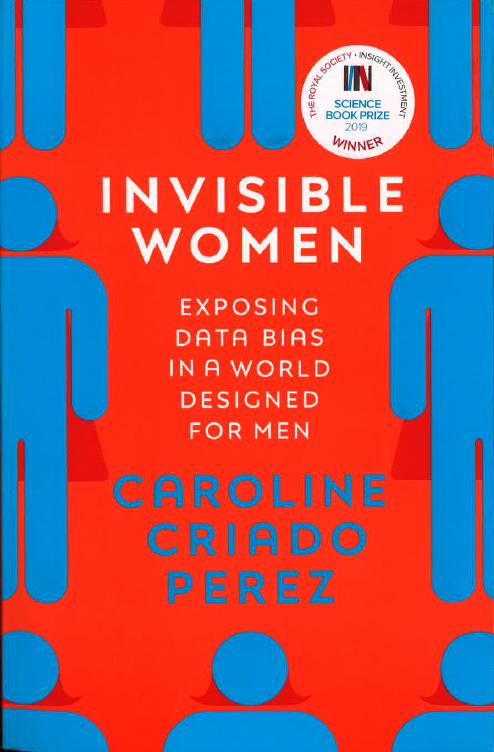
Invisible Women: Exposing Data Bias in a World Designed for Men
MUARC Adjunct Astrid Linder wrapped up a meeting recently by mentioning to her colleagues that they would be driving home in cars designed for men.
The comment raised a few surprised eyebrows – even for a room full of road safety experts.
Linder is Research Director of Traffic Safety at VTI in Sweden and a leading voice on the gendered data bias in road safety.
She’s presented on the topic in South Korea and her work is featured in Caroline Criado Perez’s new book, Invisible Women: Exposing Data Bias in a World Designed for Men.
In the EU, new cars must pass five crash tests before being made available to the public.
Linder reveals that none of the EU’s crash tests require a female dummy. Regulatory tests instead use a “fiftieth-percentile male dummy.”
The European organisation that measures the safety of new cars for consumers – Euro NCAP – says they occasionally use scaled-down male dummies.
As Criado Perez argues:
Women are not scaled-down men. We have different muscle-mass distribution. We have lower bone density. There are sex differences in vertebrae spacing….even our body sway is different.
Furthermore, the book mentions that a seat belt has yet to be designed for pregnant women, with research showing that standard seat belts do not fit 62% of third-trimester women. Consequently, the risk of fetal injury is higher.
There is one statistic in the book that makes this data gap particularly alarming. Criado Perez writes: “When a woman is involved in a car crash, she is 47% more likely to be seriously injured than a man, and 71% more likely to be moderately injured.”
Linder has created a prototype of a female crash-test dummy and looks forward to the day when it becomes part of all EU testing.
Given the increased injury risk for females, it is a moment that will be long overdue.
Invisible Women: Exposing Data Bias in a World Designed for Men is written by Caroline Criado Perez and can be borrowed from Monash University Library.