
Cardinia Hills Youth Fire Readiness Program
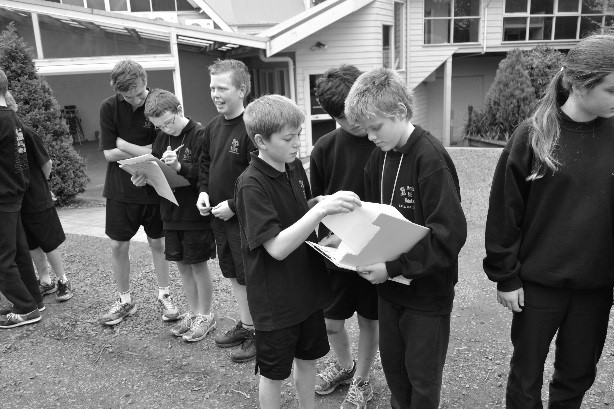 Project Summary
The Cardinia Hills Youth Fire Readiness Project (CHYFRP) was a behavioural change program designed to enable peer led cultural change in the attitudes and readiness of local youth towards fire safety. CHYFRP sought to build the skills, values and capacity of young people to encourage a pro fire safety culture.
Background and Situation Context
The Cardinia Hills area incorporates the south eastern face of the Dandenong Ranges. The areas, in which participants live, include some of the most heavily impacted areas of the Ash Wednesday fires in 1983.
Our target groups were aged 11 – 18 and represented a huge concern on days of school closure due to fire danger weather. This places young people in large numbers (1200 +) as a transient vulnerable at risk group who are highly mobile, poorly equipped and largely unsupervised.
Conversely, we knew, given the right information and support, this demographic can be highly capable and able to exert a strong and positive influence over their peers’ decisions and attitudes and therefore create resilient behaviours to local hazards.
The need to place fire safety in a transferable context has year round consequences for our participants as the environments and living arrangements they may go on to experience will be diverse and therefore the need for adaptive fire safety skills set is critical.
Our assumptions were that participants were in a unique position to develop innovative events and campaigns that delivered fire safety to youth in meaningful and relevant ways. This proved founded, with participants passionately engaged in set projects with a sense of ownership that was compelling.
Activities
Fiona Sewell designed the program to work with small groups from grade 6 to year 10+ living within the Cardinia Hills areas in order to establish small strategic groups that can then promote fire readiness within their own schools and peer groups.
Students begin work on the respective projects halfway through the program, and this provides them with community and school based opportunities to apply the skills they have gained. See below for Projects completed and see Macclesfield Disaster Recovery Group: Emergency Procedure manual, Appendix A.
Projects completed
- Project 1 - Art installation; “We of the Mists and Smoke”
- Project 2 - Capturing Living History; “I heard an elderly person say” – Publish Children’s book
- Project 3 - Resilient Townships – “Planning for our futures”
- Project 4 - “Not on My Watch” – Youth designed arson prevention
- Project 5 - “Youth for Recovery” – Youth specific Local Recovery planning
- Sub Project Activity – Fire Warden Auditors
- Sub Project Activity – Animal Carrier Libraries
Students engaged
- Grade 3/4 = 73
- Grade 5/6 = 47
- Year 9 - 55
- At Risk Mentoring = 10
Results
The carefully designed Sessions enabled working in conjunction with whole class CFA Fire Safe Kids or CFA Fire Safe Youth Sessions. This design ensured support for small groups to promote consistent messages delivered in a localised manner.
The learning units were developed to suit varying age groups and levels of ability and were designed to support a range of learning styles and experience levels.
- Communities, Culture and Survival
- Basic Fire science
- Understanding Human behaviour
- Strategic communication
- Municipal planning
- Prevention
- Response
- Recovery
In supporting the learning and development needs of our participants, we ensured that learning processes provided both relevance and motivation as a core feature of the session. To achieve this we established the following aspects within the delivery
- Theory sessions delivered during field work
- Field work to provide personalised evidence
- Personalised content to be used in project work
- Participants to engage in community based events through which tangible and “real world” achievements can be showcased.
Following the competition of the program, Fiona Sewell and Dr Helen Goodman conducted a review of the effectiveness, appropriateness and efficiency of the program, detailed below.
Intended consequences
Positive impact on youth culture
Students were enabled through the program to evolve their existing views, demonstrate an increased awareness about fire safety and to establish foundation values for those that had not yet formed any strong cultural attitudes in relation to fire safety.
Enhancement of youth relationships with emergency services
Evaluation data also pointed to the contribution CHYFRP was able to make toward enhanced relationships between students and local authorities. This was in part strengthened by the insights students were able to gain into the dynamics and roles of local authorities and emergency services agencies.
Support existing work undertaken by CFA
CHYFRP provided an external support mechanism for students to engage more deeply with fire safety content and provided opportunities for students to build better relationships with CFA volunteers and staff. However, CHYFRP still relied on the CFA for the provision of CFA specific resources, guidance in supporting age appropriate fire safety learnings, the provision of specialist guest speakers and access to local Fire Station tours using volunteer presenters.
Support existing works undertaken by schools
By capitalising on existing school curriculum and core and/or elective subjects as a platform for fire safety, Echo was able to strengthen the learning outcomes of CHYFRP and be more creative in the experiences student undertook.
Build the resilience of participating students
CHYFRP was well placed to have a meaningful impact on the resilience of their participants. CHYFRP examined their findings against the following framework using these concepts from the Mental Health Foundation of Australia (MHFA) youth resiliency model and found that the CHYFRP strengthened the following desirable traits
- Social competence
- Problem solving skills
- Autonomy
- Optimism
Further enhance participant’s career prospects
CHYFRP focus on workplace contexts of fire safety enabled students to broaden their perceptions of how and why fire safety skills are valued in many different industries. This approach supported core program intentions of transferrable skill sets, but it also framed fire safety competency as a desirable attribute that prospective employers would also value.
Unanticipated positive outcomes
- Positive impact on road safety culture
- Positive impact on animal conservation
- Positive impact on family fire prevention
- Positive impact on participating school staff fire prevention knowledge
Efficacy:The CHYFRP was an effective medium through which to engender a positive change in the students’ ability to understand and recognise a range of fire safety risks. We also find that the CHYFRP use of additional facilitators enabled the students to establish stronger relationships with their local emergency service agencies, increase their empathy towards fire affected persons and deepen their appreciation of the complexities associated with recovery and rebuilding in fire affected communities.
Efficiency:The CHYFRP pilot project operated from a net budget of $73,376 (after GST) with in-kind support from the Shire of Cardinia and voluntary administration support provided by Echo. Two hundred and fifty five students were engaged in the program over its duration indicating a fiscal cost of approximately $288 per student. However, we find that this figure does not account for the full volume of unpaid hours contributed by CFA volunteer presenters, project stakeholders, the CHYFRP coordinator and the authors of this report. The evidence demonstrates that greater financial investment is required in order to replicate the volume and success of the work achieved by CHYFRP.
Appropriateness:The design and implementation of CHYFRP did support age appropriate learning and activities across both primary and secondary cohorts. The data gathered from students, class teachers and stakeholders clearly exposed positive changes in the students’ skills, attitudes and behaviours and confirms that CHYFRP did enable both cultural and behavioural change.
The evidence also demonstrates that learning content, which was potentially distressing or dangerous, managed with diligence and sensitivity by the program facilitators, and that the inclusion of key sessional facilitators such as CFA personnel ensured the program abided by its duty of care to students and the participating public schools.
Program evaluation
Direct evidence: We used seven different existing frameworks to ensure that students are increasing their Fire readiness, improving their literacy, meeting localised needs and increasing their personal resilience because of their involvement in the project. The learning program and Community/School based projects continue to be evaluated against the following;
- Fire Services Commissioner Community Education Guidelines
- CFA Fire Safe Kids & CFA Fire Safe Youth (upcoming)
- Victorian Education Learning Standards
- Mental Health Foundation Australia Youth Resiliency Model
- Children and Youth Fire knowledge – Dr Briony Towers
- Project Stakeholder requirements
- Participant’s goals.
Further direct evidence is gathered using “myth busters” style question and answer sessions at incremental phases of the program and all sessions are being attended by an assistant who is recording observations throughout the sessions. These observations will be used to guide adjustments within the program and to develop a more intimate understanding of the participant’s experience.
Indirect evidence:has included the willingness of participants to embrace the opportunities presented, the ability of participants to apply their learning in a local and global context and the degree to which students demonstrate ownership of Community/School based events.
Emerging evidence: has already highlighted that students have strong desire to enable change in the culture of local youth and their attitudes towards Fire safety. The established groups have been unambiguous about fire readiness gaps in local youth and have formulated innovative and compelling strategies to address these gaps.
What knowledge or product outcomes did the project accomplish?
The key outcomes we set ourselves were
- To increase Participants knowledge of Fire and their local environment by providing Fire Safety education which addresses Personal, Structural and Bushfire knowledge
- To enable a peer lead cultural change in attitudes towards fire safety by instilling effective communication strategies which accommodate a range of audiences
- To provide transferable skills in fire safety by enabling situational awareness that can be applied in a range of environments e.g. Rural, Urban, Coastal and Interface by applying an All hazards and All Agencies approach
- To enhance Participants relationships with local emergency services through integrated training delivery, informal social opportunities and collaborative community based events
- To identify and engage Participants personal connections to our local areas through integrated training delivery, supported School based events collaborative community based events
Awards
Finalists Fire Awareness Awards 2012 (Education category)
Winner Fire Awareness Awards 2013 (Youth Category)
Reflection
CHFYR remains unique in several aspects within the field of Youth/School based fire education, as is the first and only program in which a community group designed, led and facilitated the program. This program was also one of the only programs which has remained focussed only on peer-to-peer education, and which mapped the learning across primary, secondary and VCAL units of learning.
CHYFRP demonstrated the capacity to enhance and add value to youth orientated disaster resilience learning and it is clear that there is a greater potential for youth to contribute to wider community safety than is currently being utilised. Further, the evidence has demonstrated that CHYFRP provided a meaningful tool with which communities could share greater responsibility (through involvement of community-based agencies such as Echo) for the provision of fire safety education to young people within a range of traditional and non-traditional settings.
The CHYFRP demonstrated not only the viability but also the necessity for collaboration between community-based youth organisations, schools and emergency services to increase youth disaster resilience. This program, its teaching resource and evaluation report provide a solid basis to engage young people effectively in a structured but flexibly delivered cost effective and empowering program.
The positive response of young people to this program was strong and unambiguous. They have reminded us to listen to them, to take advantage of what were at times their passionate interest, to include them in community level thinking about preparedness and response. This program provides a carefully thought through model to harness these strengths and make a substantial contribution to community safety at the local level.
Critical Success Factors
- The program and activities focussed on peer-to-peer education
- Trusting our young people to use fire behaviour knowledge safely
- Enabling young people to be active contributors to local fire safety education both within their respective schools and the wider community
- Ensuring emergency services ongoing involvement in sessions and governance
Critical Success Factors
- Articulating the value of community-led Youth Fire Safety education
- Engaging schools in the program
- Identifying the corresponding Victoria Essential Learning Standards to ensure broader education needs were being met within the CHYFP content
Additional Project Details
| Lead organisations | Echo Youth and Family Services Inc. |
| Partner/s |
Victoria Police CFA Community safety District 8 & 13 Emerald and Gembrook CFA Shire of Cardinia Dept. of DPCD Emerald Secondary School Emerald Primary School Gembrook Primary School Echo Youth & Family Services - Mentoring groups |
| Funding source | Department of Planning and Community Development |
| Funding amount | $91,000 |
| Contact name | Fiona Sewell, CHYFR Program coordinator, Echo Youth and Family Services |
| Contact email | jennyc@alpineshire.vic.gov.au |
| Contact telephone | Email contact only. |
| Hurdles submitting details of project | Nil |
| Project URL | - |