
Emerald Emergency Planning Group
Project Summary
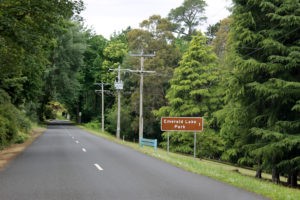 The Emerald Emergency Planning Group (EEPG) consists of first responders, local agencies and key leaders in the community who work together to plan and coordinate a whole of community response in the immediate aftermath of a major disaster or serious emergency. The term that EEPG developed to describe this approach is “Recovery Ready Communities”. The objective is to develop clear local processes and networks specifically designed to operate in a relief/recovery environment post a major disaster or serious emergency.
Background and Situation Context
The EEPG was born out of the aftermath of the Ash Wednesday fires of 1983, which resulted in loss of life and the destruction of many parts of the Hills communities of the Eastern Dandenong Ranges. Based in the township of Emerald the EEPG increasingly works across communities of the Eastern Hills region of the Dandenong Ranges in Victoria. The community leaders involved in the 1983 disaster observed the chaos that occurred in the initial period after the fire front had passed. Longer-term, they observed the compounding effect of both the inability of external relief and recovery agencies and organisations to operate immediately at a local level, and the difficulties they faced longer-term when trying to provide information and appropriate resources to the affected townships.
The Bushfire Royal Commission gazetted post disaster recovery “Shared Responsibility”: EEPG provides one mechanism for communities to begin the process of becoming what EEPG terms “Recovery Ready” and sharing their part in the responsibility for relief and recovery processes.
Objectives
EEPG seeks to
- Help communities build Relief and Recovery Readiness across the Eastern Hills Region of the Dandenong Ranges
- Help people recover in the most effective way possible, post a major disaster or serious emergency.
- Intentionally build a specific network that works alongside normal community networks, one specifically centred on acute relief/recovery planning and longer-term recovery activities.
EEPG is committed to achieving this by
- Building a team of community’s key leaders committed to working together before and during recovery from a major disaster or serious emergency.
- Developing protocols and systems to enable EEPG members, local government and the community to work together more effectively during the recovery process.
- Mapping existing relief/recovery resources of the local community.
- Providing a network where leaders can meet and discuss current and emerging emergency management issues.
- Working together post disaster or serious emergency, in the longer-term recovery space when required.
Activities and Results
- The EEPG has been operational since 1983 and consists of key leaders in the community meeting regularly to review how best to respond post disaster.
- The community is aware of the EEPG and casual comments suggest that a feeling of comfort exists in knowing the group actively plans for post disaster relief/recovery.
- EEPG recruited an EEPG Support Group, which consists of broader community-based organisations and individuals, who pledged support and resources for a post disaster event.
- EEPG works with the Macclesfield Disaster Recovery Group and Emergency Management Victoria to map the entire 3782 postcode in terms of relief/recovery focussed resources.
- EEPG reflects a mechanism for the community to start thinking effectively about, planning for and actively preparing for effective relief/recovery post disaster.
Reflection
People living in small to medium communities do so out of either necessity and/or love of the environment. Research and experience highlight the truth that local responses most effectively respond to local social issues. We have been taught effectively to think like individuals, that we can struggle to think of ourselves as part of anything beyond our immediate network, other than those things that might build on our individual wants and needs or us.
Every Community develops networks that build up over time, because of the natural places where people gather: clubs, organisations, businesses, schools, churches, etc. These networks contribute to helping develop effective, healthy community members and they usually have the capacity and ability to deal with most events that impact a community. However, these normal day-to-day networks have a capacity limit. Our normal networks do not primarily exist to deal with large-scale recovery and at some point; a major disaster or emergency event could overwhelm the community’s capacity. At this point, fractures occur in existing networks. Dr Rob Gordon’s research is clear that fracture lines in a community post disaster are one of the greatest threats to effective recovery. These fracture lines occur because normal everyday networks break down and not designed to operate in a traumatic post disaster environment. EEPG seeks to pre-plan a network and operational processes designed to work in this environment. EEPG seeks to help key community leaders, organisations, agencies and individuals pre-think how they would best work together in a post recovery period. The goal is to help build a Recovery Ready Community and engage the community in thinking about its responsibility for recovery.
Additional Project Details
| Lead organisations | Echo Youth and Family Services Inc. |
| Partner/s |
Emergency Management Victoria Local CFA brigades Local SES unit Echo Youth and Family Services Emerald medical clinic Sporting clubs Emerald Ambulance Emerald Primary and Secondary schools Service clubs including Lions, Rotary, etc. Local churches DHHS Cardinia Shire Macclesfield Disaster Recovery Group |
| Funding source | Nil |
| Funding amount | $0 |
| Contact name |
Wayne Collins, Chair EEPG & Emergency Services Program Supervisor, Echo Youth and Family Services. |
| Contact email | wayne.collins@echo.org.au |
| Contact telephone | Email contact only. |
| Hurdles submitting details of project | Nil |
| Project URL | http://echo.org.au/programs/recovery-ready-communities-project/emerald-emergency-planning-group/ |