
Gender and Disaster Pod
Project Summary
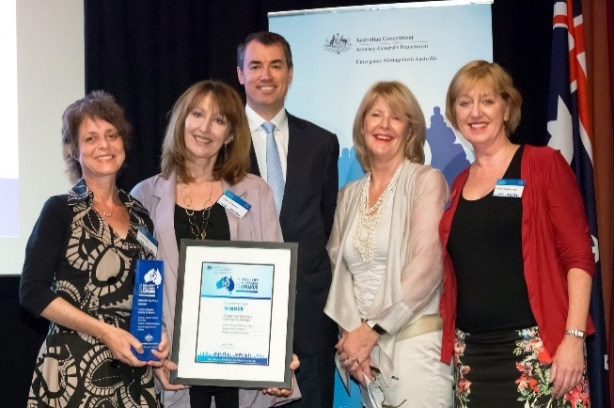 The GAD Pod brings a gender focus to disaster policy and practice. Its website synthesises resources developed since the first research in Australia on violence against women after disaster. Other ‘firsts’ include research with men after disaster and the 3-year Victorian “Gender and Disaster Taskforce” (January 2014-November 2016).
Background and Situation Context
The GAD Pod was formally established in 2015 to promote understanding of the role played by gender in survivor responses to disaster, and to embed these insights into emergency management practice.
In 2009, research about the implications of gender to disaster experience in developed countries was rare. In 2012, the first Australian research directly with women on this subject - The Way He Tells It - was released at Australia’s first conference on disasters and family violence; Identifying the Hidden Disaster.
The Hidden Disaster conference galvanised interest in gender issues in disaster, and led to a successful submission to the National Disaster Resilience Grants Scheme. The researchers then considered men’s experiences of health and wellbeing during and after Black Saturday. The findings are captured in Men on Black Saturday: Risks and opportunities for change. The ‘Just Ask’ conference on men’s experiences of disaster followed.
Since undertaking these foundational research projects, the Pod partners have led diverse initiatives—with input from emergency management, community members, masculinity experts and government representatives —to inform responses to women and men in future disasters.
Activities
The GAD Pod has built on community engagement - via qualitative research and consultation - with 30 women, 32 men, and 47 workers affected by the Black Saturday bushfires. The initiative has been led and driven by the two women’s health services and Monash University Disaster Resilience Initiative. The men’s research was guided by a high level Men’s Advisory Group, Chaired by The Fire Services Commissioner and, after establishment of the GAD Taskforce, by Emeritus Professor Frank Archer. Activities have included the hosting of national conferences with international keynote speakers, and collaborative curating with Steve O’Malley from the Metropolitan Fire Brigade of the gender stream of Victoria’s Emergency Management Conference. Conference presentations and journal articles, together with training developed and offered to the emergency management sector, have been key ways to disseminate the research findings and achieve positive change for those involved in and affected by disaster. A gender and disaster website and unique ‘Roadmaps’ section (funded by DHHS) allows easy access to a wealth of resources. Recent projects commissioned by government departments (DELWP and DPC) have allowed research into barriers to women in fire and emergency leadership roles, and (in collaboration with GLHV@ARCSHS, La Trobe University) experiences of LGBTI communities in emergencies in Victoria. Current research, funded by the NDGRS is investigating long-term disaster resilience from a gendered perspective. The GAD Pod, via lead agency Women’s Health In the North) is holding a national Diversity in Disaster conference in 2018 in collaboration with other partners, VCOSS and Resilient Melbourne. Leading international gender and disaster researchers are keynote speakers at this conference.
Results
Gendered research was first covered in two reports entitled “The Way He Tells It: Relationships after Black Saturday”[1] and “Men on Black Saturday - Risks and opportunities for change”[2]. Recommendations for improving disaster planning, training and ESO practice have been informed by the stories, experiences and advice offered by community members, community and ESO workers, and academics working in the fields of masculinity, gender and disaster.
Filmed proceedings of the two national conferences, featuring presentations by academics, community members and on-the-ground workers are available online. Both conferences were privileged to host Dr Elaine Enarson as keynote speaker, along with leading Australians experts such as Professor Bob Pease and Dr Christine Eriksen. These conferences were the catalyst for the Victorian Gender and Disaster Taskforce – the first in Australia, and as far as we know the first in the world.[3] The 2018 conference features Professor Maureen Fordham and Assoc. Professor J.C. Gaillard. Along with filmed proceedings, a Monograph is currently underway in a partnership of the Australian Journal of Emergency Management and the GAD Pod, particularly through the leadership of Emeritus Professor Frank Archer, MUDRI. Naomi Bailey will lead the productions of an outcomes statement.
The research has been presented at national and international conferences (Japan, Denmark and the US) and MUDRI Forums and at the 6th Annual Professor Frederick ‘Skip’ Burkle Jnr Keynote Lecture.
Journal articles and book chapters have been published.
The initiative has won a number of awards at international, national and state levels and from Monash University.
[1]. “The Way He Tells It: Relationships after Black Saturday” is a WHGNE research report that captures the experience and knowledge of women who survived Black Saturday. It was published in 2011.
[2] “Men on Black Saturday – Risks and opportunities for change” is a 2013 report on research into men’s Black Saturday experience in Victoria. The research was conducted under the auspices of WHGNE and Monash University’s Injury Research Institute (MIRI).
[3] Article about the Taskforce: https://ajem.infoservices.com.au/items/AJEM-30-04-08
POSITIVE impacts/changes/benefits for the target beneficiaries
- Funded projects have seen the development, piloting and ongoing delivery of training on Family Violence and Natural Disaster, and Men and Disaster. A further two training modules have been piloted on Gender Equity and Disaster, and Living LGBTI in Disaster. A series of six short films were made as key resources and are available online. Training is aimed at middle managers in the emergency sector, local government and community members.
- A collaboration with 1800 RESPECT has resulted in inclusion of the gender and disaster information in the web-based information at 1800 RESPECT, a community service announcement to be played through ABC rural radio stations during fire season, and a video.
- An initiative over almost three years is the collaborative development of national gender and emergency management guidelines, funded in three parts by the Victorian Department of Health and Human Services, the Attorney-General’s Department and Emergency Management Victoria. Its launch instigated the NDRGS funded Diversity in Disaster conference, 2018.
- Discussions are currently underway to strengthen our involvement in the Oceania-Pacific hub of the Gender and Disaster Network. The GAD Pod is a member of the newly established Gender and Disaster Centre at University College of London.
- None
- Progressing training so that it is taken up systematically, particularly by the emergency management sector.
- Publishing journal articles related to this work
- Further, ongoing research into gender and disaster.
- Strengthening our role in international Gender and Disaster networks.
Reflection
Factors that were unique/good practice
- Applying a gendered lens across a number of settings and working closely with informants to the research projects.
- Seeking ways to link the research with the practice of emergency management in Australia.
- The establishment and successful operation of the first Australian “Gender and Disaster Taskforce” to reduce the compounding effects of gender on disaster impacts, (as detailed in the URL link).
- This initiative is good practice in that it has
- catalysed partnerships and collaboration among multiple stakeholders from diverse horizons
- institutionalized and sustained such partnerships and collaboration over the long term, in a key structure - the Taskforce;
- galvanised interest in a previously un-researched field; (4) it has made proper use of available technology;
- resulted in a number of Australian “firsts”; and
- utilized women’s skills and leadership for risk reduction and resilience building.
Critical Success Factors
The impacts, results and achievements mentioned above have all been the results of the leadership and work of WHGNE, WHIN and MUDRI. These efforts have made the project a success in the Gender & Disaster area in particular, and in the disaster/climate risk reduction and in influencing emergency management in general. The collaboration with Monash University Disaster Resilience Initiative since 2012 has assisted immeasurably in gaining recognition for the work and extending its reach.
Challenges Faced and Solutions
Major challenges have included the need to include “gender” into the disaster context, when people feel there is no time to consider this. Dr Elaine Enarson writes about this challenge. “Each summer,” she says, “the bushfire season again diverts attention on to ‘urgent’ matters and attention to gender issues is relegated to the unimportant. Yet its importance lives on as both men and women suffer from the gendered expectations of ESOs, their communities and society as a whole.” A particular challenge since 2016 has been the reluctance to address gender, particularly in Victoria, and the move to ‘diversity and inclusion’, which overlooks the normative discrimination of women by men.
Areas for improvement
- Training would ideally be adapted for different audiences.
- All disaster agencies could gather sex-disaggregated data.
- A nominated agency should collect and monitor family violence data.
- Prioritization of family violence awareness before a disaster occurs.
- More documentation through journal articles should be completed.
- Establish a sector-wide focus on gender in emergency management.
Sustainability and potential for replication in other settings
Project funding achieved to 2019. Further funding is yet unknown.
Additional Project Details
| Lead organisations |
Women’s Health Goulburn North East (WHGNE) Women’s Health In the North (WHIN) Monash University Accident Research Centre |
| Partner/s | Collaborative partners dependent upon projects, e.g. most recently, GLHV@ARCSHS, La Trobe University. |
| Funding source |
WHGNE, WHIN National Disaster Resilience Grants Scheme (NDRGS) National Emergency Management Projects Attorney General’s Department Department of Health and Human Services (DHHS) Emergency Management Victoria (EMV) 1800 RESPECT Department of Environment, Lands, Water and Planning (DELWP) |
| Funding amount |
WHGNE, WHIN, MUDRI National Disaster Resilience Grants Scheme (NDRGS) Recent funding National Emergency Management Projects Attorney General’s Department FRRR Department of Health and Human Services (DHHS) Emergency Management Victoria (EMV) 1800 RESPECT Department of Environment, Lands, Water and Planning (DELWP) From external sources: $1,000,000 + since 2012 |
| Contact name | Debra Parkinson |
| Contact email | space@netc.net.au |
| Contact telephone | 0423 646 930 |
| Hurdles submitting details of project | Nil |
| Project URL | www.genderanddisaster.com.au |