
Healthy and Resilient Together
Project Summary
 The Healthy And Resilient Together (HART) project is a community-wide approach to building resilience in the towns of Beechworth, Wooragee and surrounding areas. The project brings together three primary schools and two early childhood services to address an identified need to enhance and build resilience in children within the community. It also provides and plans for bushfire and fire safety education for children and young people.
Background and Situation Context
The HART project is being conducted in Beechworth, Wooragee and the surrounding areas of North East Victoria. Situated in a bushfire arear of the Indigo Shire, it has a population of approximately 4,000 people, and has experienced three large bushfires over the last 12 years.
The project partners include local government, local CFA, health and education settings working collaboratively to develop an innovative approach to building resilience and providing fire safety education to children, staff and families in the local community.
Groups participating include Beechworth Primary School, St Joseph’s Primary School, Wooragee Primary School, Beechworth Kindergarten, Beechworth Community Child Care Centre, Indigo Shire Council, local CFA and Beechworth Health Service. There is commitment from the partners to work together and combine efforts to support funding and future activities.
The need for building resilience in children in our community was identified by consultation with parents, staff and students from primary schools and early childhood services in the area that are all participating in the Healthy Together Achievement Program (AP). The Bushfire Royal Commission and the Bushfire Cooperative Research Centre supported the recommendations to support resilience education and disaster risk education in children and young people. HART supports and enhances the current work and framework of the AP to support the groups to become health promoting schools and services to address health and well-being in each.
Activities
There are four components to the HART project to
- provide resilience education and strategies for children aged 5-12 years, attending primary schools and brought together Prep/1/2, year 3/4 and year 5/6 to attend a session as a group of combined schools.
- provide resilience education and strategies to parents/carers and staff from primary schools (PS) and early childhood education services (ECS).
- delivery bushfire and fire safety education prior to summer and the up and coming bushfire season.
- develop action plans to utilise the strategies and skills learnt to implement ongoing actions for building resilience in children.
Partners and the Health and Well Being Teams (HWBT) developed the project design with the commitment to try something different and together. The Foundation for Rural and Regional Renewal (FRRR) provided funding to conduct the project with additional financial support gained from Berry St.
The HART project is still in progress. The resilience education sessions are complete and the fire safety sessions are complete. The groups are all currently developing and reviewing their actions plans to define further activities and actions for the ongoing commitment to enhancing resilience in children and the community.
Results
The HART project has provided resilience education to
- 340 primary school students from Foundation to year 6
- Education to approximately 40+ primary school and early childhood education staff
- 120 + parents/carers in the community
- 136 evaluations gathered from staff/parents/carers
- 89.71% rating of 9 &10/10 for satisfaction
By the middle of December 2015, over 400 children received fire safety education provided by the local CFA to the participating primary schools and early childhood groups in Beechworth and surrounding areas. The fire safety education is vital to children and young people living in the bushfire prone area of Beechworth, Wooragee, Stanley and the surrounding areas.
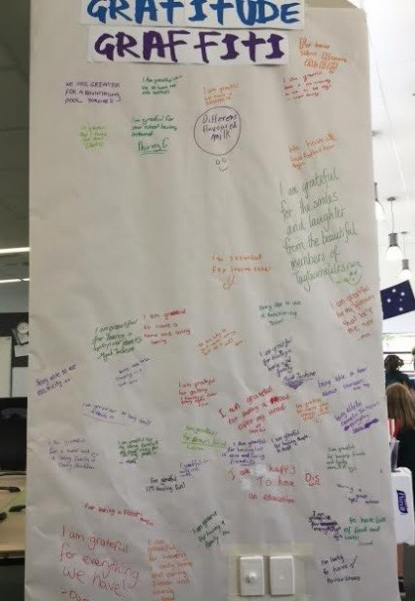
The HART project has generated positive discussions in the community with actions already implemented such as a gratitude wall at Beechworth Primary School, and a staff gratitude wall at the child care centre.
Other results include
- Ongoing commitment from the partners with action plans to address resilience in the groups are being developed and reviewed
- Common language and strategies being discussed in primary schools and early childhood services
- Discussions and ideas gathered to support strategies to share the learning such as gratitude to wider community and celebrate the positive things
- Identified need for follow up session and further education for those who were unable to attend
- Implementation of 2 community discussion groups, Putting Resilience Into Action to reflect on results from education sessions and identify community led actions
- Establishment of Putting Resilience Into Action network of 115 members with regular communication
The project taught Gratitude, Empathy and Mindfulness (GEM) to the children, parents/carers and staff who are essential elements in developing resilience in children and young people.
The feedback received through evaluation forms and informal conversations has been extremely positive. The gratitude from all involved in the sessions (including children, staff, parents/carers and onlookers) was overwhelming.
The action plans will provide setting-specific frameworks to continue to support and implement the strategies. The action plans also support the continuation of the collaboration for the development of further initiatives and the promotion of activities to support the ongoing development of resilience in children.
The community-wide approach has created considerable conversations within and between the community, schools and early childhood services.
Evaluation has identified actions from participants and these have been presented to the HWBT and Putting Resilience Into Action groups.
Next Steps
Replicating this community-wide approach would be beneficial in other communities and discussions have commenced.
Reflection
HART is providing the children and families in our community with skills and strategies to support the development of resilience in children and the underlying foundations necessary to manage disaster or challenges presented to them.
Factors that were unique/good practice
- Engagement of education services working in partnership with health, Local Government and local CFA
- Employment of a groups approach to support and promote health and well-being, and in particular resilience
- AP framework and HWBT that include membership from Local Government and health as well as parents and education staff, provides ongoing framework for action in area resilience and bushfire education to support the community.
- Commitment from partners to work together as all committed to building resilience in children and to support a community wide approach
- Listening to the needs of the community and developing action to address the need
Challenges Faced and Solutions
The only challenge for the HART project lay primarily with ensuring that parents/carers attended resilience education and to have more than 100 attend as our target. The project offered the parent/carer education sessions in the morning and the evening to provide accessibility and to allow more child care centre staff to attend a session if they were unable to attend the professional development session due to the centre opening hours.
Areas for improvement
The recommendation would be to provide this opportunity to other bushfire communities such as Yackandandah, Kiewa and surrounding areas to lead their own community wide resilience project. HART assists in laying the foundations in supporting children, families and groups to build resilience and engage a wider community. The settings-based approach with community, health, education, local government and emergency services is based on evidence to promote health and well-being. It contributes to the multi-pronged approach to support communities to build resilience and can support individuals and community to return to near normal functioning post disaster.
Sustainability and potential for replication in other groups
The strategies and skills provided are simple and easy to introduce to families and children in the groups. These can also be easily translated into other groups and communities to further enhance resilience and building capacity for children and communities to respond and manage before during and after disaster.
The presence of HWBT, local partnerships and action plans provided a foundation for building further initiatives and community action to support building resilience within the community and for community-led actions. While the funding no longer exists, the structures that support the initiatives are sound and ongoing so that the groups can work together to enhance resilience in children, which is vital for planning for reducing disaster risk.