
Leading From Within – Building Resilient Communities
Project Summary
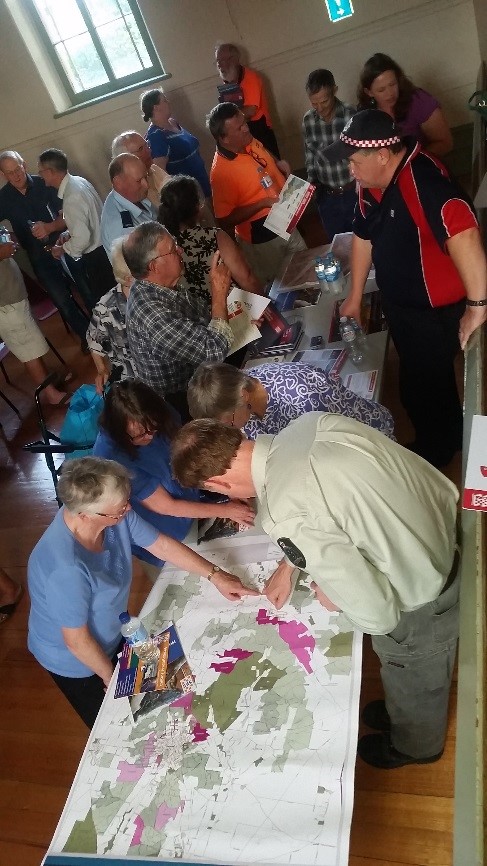 The project was about enabling community leaders to take control and support shared responsibility in planning for disasters (all hazards). The idea behind the program was to find ways to support communities to do ‘it’ for themselves. Owned and delivered by the community for the community.
Background and Situation Context
The project was conducted in the communities of Dunolly, Bealiba, Daisy Hill, Carisbrook and Talbot in the Central Goldfields Shire (CGS). The Shire identified the need to engage on a deeper level with communities to foster the desired outcomes of shared responsibility in disaster preparedness activities. ARC Ventures, the contracted project manager, undertook the project methodology and design
The project aimed to harness the energy and leadership that already exists in a community and enable these leaders to take ownership of a process aimed at making the community safer and more resilient. Rather than coming into the community and leading them through the process of planning for disaster this project looked to develop and support the leaders that already exist. The key success factors for this project directly related to local understanding and the ability to implement activities to meet the individual needs of the local community.
The defining factor of this project compared to many other community-led projects was that local people led the process. Volunteers were empowered to lead through support provided by a third party. Agencies and local government played a support role as subject matter experts but did not drive or influence the decisions-making or associated activities.
Activities
Following the selection and training of the community leaders, a local steering committee of 8-10 well-connected community members was established. These steering committee members were then responsible for deciding how the process would be implemented in their community taking into consideration the individual community makeup.
The program followed a 5-staged approach (community profiling, risk analysis, community engagement, plan development & plan implementation, & review). This approach helped the communities understand their own community make up and local risks. This process also involved the establishment of a community engagement plan that reflects the way in which the community best engages in and contributes to the creation of community initiatives with an action plan created that supports communities being prepared before, during and after a disaster. Key resources developed were
- Dunolly/Bealiba Community Action Plan
- Dunolly shortwave radio communications plan
- Dunolly – Flood information packages for areas at risk of flooding
- Daisy Hill Community Action Plan
- Daisy Hill Telephone Tree – Magnets and flyers
- Talbot Community Action Plan
- Carisbrook Community Warning System – Magnets and flyers Events/activities – involving CFA, SES, Department of Environment, Land, Water and Planning, North Central Catchment Management, CGS
- Daisy Hill – understand your risks information evening
- Daisy Hill – Preparing for the fire season information evening
- Dunolly – community risk workshop
- Talbot – Emergencies information evening future.
Results
Some of the key outcomes included
- Creation of three community action plans.
- Creation of a communication plan/strategy to better inform residents of local emergency warning systems already in place.
- Establishment of a community tree phone in Daisy Hill, to connect neighbours in a community where little opportunity for interaction is available.
- Changes made to the Municipal Emergency Management Plan to incorporate the availability of the shortwave radio club – a secondary communication system when other systems fail.
- A better understanding of the level of vulnerability in each community.
- Establishment of relationships between community leaders and Emergency Service agencies to support opportunities to work together.
- A core community leadership group who are better engaged with the CGS and empowered to take action in creating a safer community and building resilience.
Some of the broader outcomes included
- The Daisy Hill committee are now a subcommittee within the already established group - Daisy Hill Community Centre Inc.
- The Emergency Management Manager of the CGS formed relationships with each local community committee and will be the contact point for each group into council.
- There is a clearer understanding of residents’ thoughts and actions in preparing for emergencies through community surveys conducted in Dunolly, Bealiba, Daisy Hill and Talbot.
- Dunolly/Bealiba committee has become an incorporated association.
- Talbot committee are now the Talbot & District Emergency Self Help Action Team.
- Relationships between community and council have been strengthened and in some cases repaired.
What knowledge or product outcomes did the project accomplish?
- Winner of Resilient Australia Awards 2016 - Business Category (Victoria) Finalist in Fire Awareness Awards 2016
Reflection
A decision to engage a local project manager, independent from council and isolated from council responsibilities, supported the locally owned and driven process with the community decision-making powers. The project manager acted as a conduit between the community, council and emergency services helping to build relationships and strengthen partnerships.
Critical Success Factors
- Local leaders as facilitators were able to utilise their established local networks throughout the project lifecycle.
- Group training of facilitators created a team atmosphere and mentoring/support network.
- Provision of ‘coffee/tea packs’ and ‘administration toolbox’ to ensure local facilitators were not left out of pocket.
- Ongoing mentoring, coaching and support of facilitators were provided by an experienced practitioner.
- Support was provided from DELWP, CFA, CGS, SES and North Central Catchment Management Authority (NCCMA).
- Local facilitators were able to engage better with the community.
- Local knowledge and background provided an established credibility of the facilitator.
- A local project manager had an understanding of the local communities and a background in community engagement/ development, emergency management and strong networks both locally and within Emergency Management agencies.
Barriers to Success
- Relying on one local volunteer facilitator put pressure on that one person. When circumstances prevented that person from participating, the process stalled. One way this could be overcome would be to look at co-facilitation. Training two community leaders in the community-led planning process so that they can support each other in a leadership role.
- Difficulty in engaging local leaders to participate as a facilitator. In some locations, this took many weeks/months. In many cases local leaders who were approached were burnt out from many volunteer roles.
- In one community, there was a push to put all identified risks back onto the responsible authority to manage. This situation was managed through strong leadership (facilitator) and support from the project manager.
- Volunteer Fire Brigade members & SES need to be involved in the process whilst understanding that they are not the drivers.
Additional Project Details
| Lead organisations | ARC Ventures |
| Partner/s | Community Leaders Lisa Mahon, Dunolly Bill Best, Bealiba Christine Greenwood, Daisy Hill Adrian Holland, Talbot Ian Boucher, Carisbrook Central Goldfields Shire. |
| Funding source | Not specified |
| Funding amount | $68,800 |
| Contact name | Raelene Williams - ARC Ventures |
| Contact email | raelene@arcventures.com.au |
| Contact telephone | 0412 507 418 |
| Hurdles submitting details of project | N/A |
| Project URL | www.arcventures.com.au |