
Neighbour Day Celebration
Project Summary
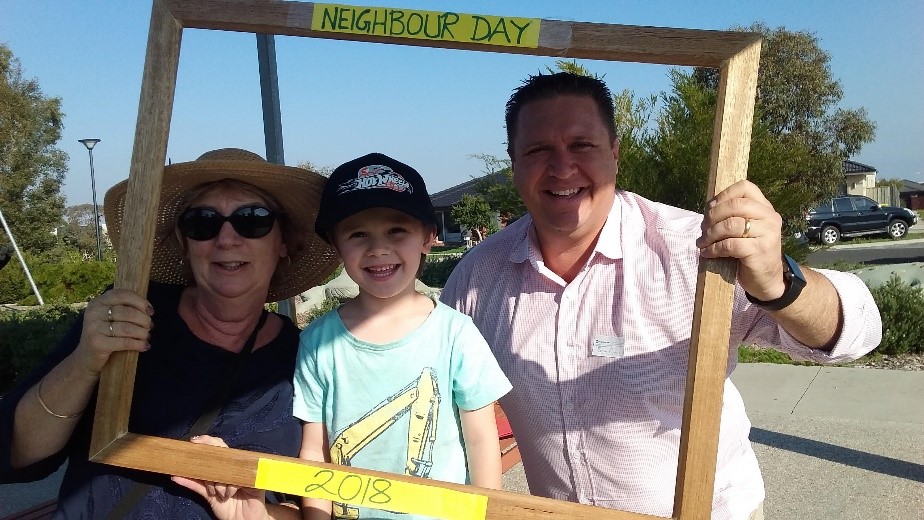 This community-based event aims to connect neighbours and provide the opportunity to get to know neighbours in a family-fun environment. The intention being to gain multiple positive impacts, such as a safer neighbourhood, particularly for children and preparedness for unexpected emergencies.
Background and Situation Context
The Relations Australia Neighbour Day website shows that Australia is in the midst of a loneliness crisis, with many in our population experiencing a deficit of social connection. This means people lack meaningful relationships in their lives that sustain and nurture them, particularly through difficult times.
Many Australian households have become time poor, with all adults employed having less time to engage with community or connect with neighbours. Fewer people know or interact with their neighbours or become members of community groups. Consequently, the circle of people we can turn to when we need a helping hand, or a shoulder to cry on, shrinks across all age groups.
Loneliness crosses all borders and has become a recognised phenomenon in many western nations. Indeed, in 2017 the UK Parliament established a national inquiry into the problem and subsequently established a Ministry for Loneliness. In Australia, Neighbour Day believes it is critical that we reinvigorate communities; get people to connect with their neighbours and in so doing, drive a dent in loneliness.
The Relations Australia Neighbour Day website points to confronting research:
- Loneliness is associated with poor physical health, poor socio-economic outcomes, social anxiety, and poor mental health.
- It increases the likelihood of mortality by 26% – similar to the effect of smoking 15 cigarettes a day.
- Loneliness is associated with an increased risk of coronary heart disease and stroke, high blood pressure and the onset of disability. People who are socially isolated, or do not have good quality social support, are at greater risk of dying earlier than those with good social connections
- Teenagers who do not have close friendships and good social networks have lower levels of self-esteem are poorly adjusted and at higher risk of suicide.
- Particular people are at increased risk. For example, single parents, particularly men, those who have lost a partner and those experiencing poor health.
- Australia is in the midst of a loneliness crisis, with many in our population experiencing a deficit of social connection, that is, they do not enjoy meaningful relationships in their lives to sustain and nurture them, particularly through difficult times.
In Melbourne’s southeastern suburbs, increasing neighbourhood diversity adds another level of complexity to loneliness. Diversity can imbue a sense of uncertainty due to unfamiliar cultural beliefs or customs that can unwittingly create boundaries and detachment and so add to scepticism and loneliness. Yet, diversity can imbue significant cultural richness and infuse tremendous opportunities to engage with and learn from diversity.
Overcoming uncertainty, unfamiliarity scepticism, or loneliness characterises the aim of our Neighbour Day in southeastern Melbourne. Joining in with Neighbour Day allows residents to learn about each other and become familiar with different ways of life, and join in the fun of inspiring new cultural practices. When residents begin to share experiences and understand the cultural significance of different customs, people can embrace and enjoy such diversity. Connecting with neighbours and people within communities reinvigorates communities, gets people connected with their broader community. Neighbour Day encourages families to come together to start communication and unlock hidden potentials.
The specific design of the southeastern Neighbour Day aimed to act as an icebreaker and achieve stronger community connections first step towards building a stronger and more resilient community. The natural benefits of embracing a safer community go beyond connectedness and encourage people of all ages to seek help in the event of an emergency. A diverse neighbourhood can make a difference such as promoting belongingness and integration, learning about and respecting other cultures and creating enjoyable social events.
As a next step, Neighbour Day proffers endless opportunities to motivate the community to consider actions and issues surrounding their preparedness should unexpected emergencies occur. Such an achievement would equate to an important future resilience-building outcome. Such actions and issues might include
- what types of emergencies might occur, for example fire, wind, storm, power outage etc.
- how to manage potential emergences
- what resources might the community need
- how to identity a community gathering place
- how to establish a communication tree
- brainstorm other actions that the community might need
Community members getting together to exchange views about these topics and discuss ideas about potential threats, reflects contemporary community strengthening initiatives.
Activities
My involvement with many community projects and initiatives over the past few years led me to recognise the potential for positive outcomes when a community works together. The greatest challenge I discovered, was getting people together, and to start a meaningful conversation – a good prompt helps! I came to learn about the annual Neighbour Day that, as noted above, encourages people to connect with neighbours and each other. I instantly knew that this kind of event held a lot of potential for my neighbourhood. Since I wanted to do more than just an afternoon tea, I reached out to my network in the local council and applied for a small fund to cover the cost. I wanted to have fun activities for adults and children and thought a horse riding activity would be a fantastic hit with young children. I contacted my friends at Bevis Equine Education, who are specialists in horse riding education and organised horses for that day. I also prepared some games from my childhood such as ‘Lollipop picking’ and races for the children, while ‘tug of war’ kept adults and children entertained. People brought fruits and snacks to share and people’s participation was above expectation. These simple activities provided the first step for a much wider scope of the event that offers much potential for bigger events that incorporate cultural activities, which are inclusive, culturally relevant and perhaps go some way to overcoming loneliness.
I plan to leverage the positive outcomes of this event to create resilience projects, such as disaster preparedness that incorporates a communication resilience strategy.
Results
The event was successful as it achieved its goal by bringing neighbours together to get to know each other together with a high level of participation. As word of mouth spread among our community, more people attended and they enjoyed the activities. People, who participated, had the opportunity to get to know more people within our neighbourhood.
I would expect even greater participation and enthusiasm in future events. It is too early to measure the benefits and gather evidence, but the opportunity exists to conduct research on the outcomes of this small community-based initiative.
There are many good ideas that the community could do and become involved. This event represent the first step in what could become an even bigger event. The most important initiative would be to gather community members to discuss potential resilience activities to strengthen the neighbourhood in case of unexpected emergencies. Some solid steps could materialise. I have some ideas to discuss such as an evacuation plan in case of fire danger, home safety and safety on our streets, family violence, homelessness, food movements, information availability and many more. I would like to listen and learn from experiences brought by our diverse community and agree on further initiatives. Many opportunities exist that we can continuously work on for a better community experience.
What knowledge or product outcomes did the project accomplish?
The most important achievement was people in our neighbourhood connected and met new people. They had some great time to enjoy and talk about themselves. The important thing would be not to lose this community impetus and to use it as the pivot for great future initiatives.
Reflection
The most critical challenge was marketing the event and convincing people to attend Neighbour Day. I created the event on Facebook and shared within my various neighbourhood networks and groups. I did further door-to-door knocking to ensure people were aware of the event and to hopefully increase greater community participation. Once the word spread, more people started coming. If I do Neighbour Day again, I would create a bigger event with multicultural food stalls, performances and much more activities on a larger scale. I would like to involve other community organisations such as SES, CFA, Vic Police, Diabetes Australia, etc.to enhance community understanding and resilience.
Critical Success Factors
- Communication skills were critical to promoting this event. The ongoing success of this community event largely depends on persistent networking and learning for future growth.
- Rapport with activity providers from previous events and personal contacts enables affordable activities and reasonable costs. If needed, this also includes reaching out to friends of attendees on an ongoing basis to build additional sources of support and rapport.
- The help and support from family was critical to overcoming the challenges of limited funding.
- Media coverage provided marketing to expand on coverage and increase attendance rates.
Barriers and Solutions
- An acknowledged barrier to the success of the event prior to its delivery was overcoming barriers to reach a diverse community population. It was difficult to reach out to everyone with easy to understand event information regardless of its delivery.
- As the sole organiser, and with a family, the event was time consuming to manage. Support from the family and volunteer help was essential.
- The event was organised through the local council and its insurance requirements represented a barrier to the event organiser and activity providers. The requirement to book and complete a risk assessment for $20M public liability was time consuming and had associated expenses. $10M for these types of activity providers usually provides adequate coverage but council currently would not accept this lower amount. To overcome this for future events the Living Learning Centre in Pakenham now covers public liability insurance.
- Weather was a potential barrier. Although the weather was favourable at this event, alternative plans/activities need consideration for future events.
Additional Project Details
| Lead organisations | Shoheli Sunjida |
| Partner/s | Cardinia Shire Council Bevis Equine Education |
| Funding source | Cardinia Shire Council |
| Funding amount | $500 |
| Contact name | Shoheli Sunjida, Community Engagement Coordinator |
| Contact email | shoheli.sunjida@yahoo.com.au |
| Contact telephone | Not provided. Please use email. |
| Hurdles submitting details of project | Nil |
| Project URL | https://pakenham.starcommunity.com.au/gazette/2018-05-04/learn-to-love-thy-neighbour/ |