
People in the community who can help us – virtual excursions
Project Summary
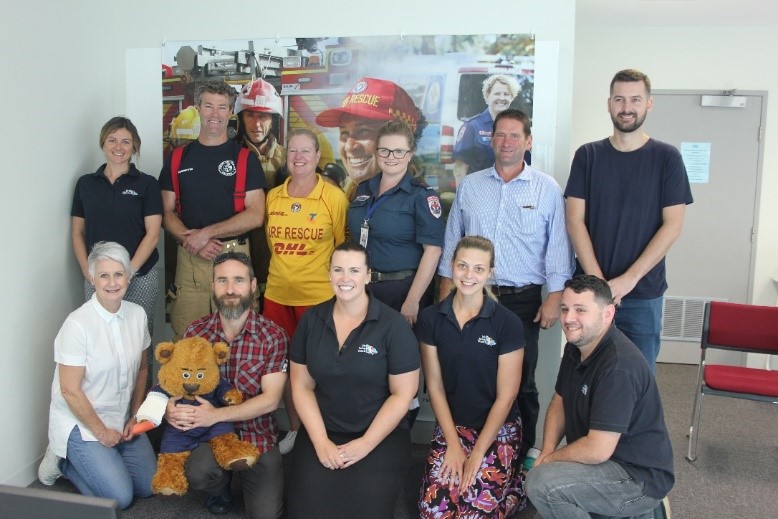 The project delivered disaster resilience education to school children via virtual excursions. The aim was to evaluate the benefits of inter-agency collaboration and improve access to education for regional and rural communities.
Background and Situation Context
In Victoria, providing essential disaster resilience education (DRE) to over half a million primary school students embodied an important, yet challenging task for emergency management agencies and schools. Life Saving Victoria (LSV), Ambulance Victoria (AV) and Country Fire Authority (CFA) adopted a collaborative approach to delivering DRE, using video conferencing technology. Virtual excursions (VE) connected students with emergency management personnel in real-time and over distance, improving sustainability and accessibility for students, particularly in regional and rural areas. The aim of the project was to evaluate the feasibility of inter-agency VE to increase student safety awareness, knowledge and personal resilience.
Activities
Following inter-agency scoping activities, the project delivered to 70 students in two Foundation (Prep) classes in metropolitan and regional Victoria. The program consisted of a virtual excursion, which focused on the theme of ‘People in the community who can help us’. Education experts from LSV, AV and CFA developed and delivered subject matter. Evaluation comprised direct observation, agency and teacher interviews and student questionnaires.
Results
Stakeholders agreed that VE was logistically feasible, encouraged inter-agency collaboration and met curriculum requirements for cost-effective and sustainable delivery. Students correctly linked the emergency personnel with their role following the VE and demonstrated increased positive sentiment towards the agencies.
Reflection
This project demonstrated the overall effectiveness of providing essential DRE to students via a virtual excursion. The project was determined feasible from a logistical perspective in that it encouraged inter-agency collaboration and met curriculum requirements using a cost-effective and sustainable delivery method. The content and format was engaging for the students and improved their knowledge about who could help them in an emergency. While the project encountered some minor technical issues, we identified potential solutions and the overall benefits outweighed any issues. To improve the impact of future VE conducted by the emergency management agencies, we recommended that key elements of successful delivery are considered, including pre- and post-excursion activities, technical and agency briefing requirements and list resources and techniques intended to maximise student engagement and learning outcomes. Furthermore, we recommended an increase in inter-agency collaboration, by engaging additional agencies to form lasting partnerships that will deliver important, innovative and unified DRE to Victorian students.
Additionally, virtual excursions and other digital technology activities in the emergency management sector would benefit from the creation of a central website, which hosts online resources developed by the agencies in collaboration, and which includes professional development opportunities for teachers and the broader community. Project partners should also seek to engage with other video conferencing providers such as Virtual Excursions Australia, to broaden the scope and the audience of the product. Lastly, we recommended an exploration about how the virtual excursion format can be adapted for different age groups, language groups and locations, larger audiences, including connecting different schools to interact.
The virtual excursions enhanced students’ personal resilience in a variety of ways, including being safe and well, connected and empowered, reflective, aware and engaged. The teachers also found the session improved the students’ resilience for several reasons; including the competence to respond effectively in an emergency and the level of student engagement and interest.
Broadly, the project improved the disaster resilience knowledge of teachers, students and agencies by providing easily understood messages on the best ways to respond to an emergency. This project also informed of the effectiveness of using videoconferencing to engage students in future disaster resilience initiatives.
Critical Success Factors
- An ‘all emergencies, all communities’ approach to safety education in Victorian schools
- Positive inter-agency collaboration
- Opportunity to utilise online platforms and innovative video conference technology
- VE a feasible option for schools, particularly in regional and remote areas
Barriers and Solutions
- Increase the involvement of emergency services such as Police and SES.
- Personalise the participant experience by using student names and increase student engagement and by giving participants practical activities throughout the lesson.
- Use props such as safety equipment and clothing to engage with the participants and reiterate key safety messages.
- Minimise potential technical issues with internet connection, sound and visual quality by setting up IT elements in advance of the lesson.
Additional Project Details
| Lead organisations | Life Saving Victoria |
| Partner/s | Country Fire Authority (CFA) Ambulance Victoria (AV) |
| Funding source | Helen Macpherson Smith Trust |
| Funding amount | Not specified |
| Contact name | Melissa Laird, Manager; Education Program Delivery, Life Saving Victoria |
| Contact email | melissa.laird@lsv.com.au |
| Contact telephone | 03 9676 6954 |
| Hurdles submitting details of project | Nil |
| Project URL | https://lsv.com.au/wp-content/uploads/Virtual-Excursions-Pilot-Report-2017-FINAL.pdf |