
Rural People: Resilient Futures
Project Summary
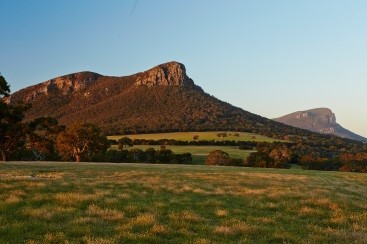 The Rural People: Resilient Futures (RP:RF) project investigated vulnerability in a rural shire and worked to increase capacity of health and community service agencies to enhance resilience.
Background and Situation Context
According to the Victorian Council of Social Services (VCOSS) (2007) the impacts of climate change will be felt most by those who are already subject to social or economic marginalisation. Climate change and environmental sustainability are emergent issues in the health and community services sector. Although inherent concern exists, there has been little increase in capacity to create systemic change. This limited capacity poses a barrier to action. Similarly, the language of environmental sustainability and climate change could seem alien to agencies or even disengaging. Linking with Southern Grampians Glenelg Primary Care Partnership (SGGPCP) demystified the language and enabled creation of a shared conversation to highlight relevance and opportunities. SGGPCP is a partnership of 20 health and community services agencies who work together to improve the health and wellbeing of the community.
The project objectives were
- Understand the context and nature of social vulnerability in a rural Victorian Shire and compare this to the academic and policy definitions
- Understand how vulnerability is likely to change in this context under the impacts of climate change
- Increase the capacity of community service organisations under the SGGPCP platform to plan for the impacts of climate change on their operations, service delivery and clients
- Develop a model of engagement to promote throughout the community service sector, and increase the resilience or rural communities across Victoria and potentially Australia
Through building awareness and capacity of agencies who work with vulnerable people it was anticipated that both the agency and the community would benefit from RP:RF.
Activities
RP:RF was a collaboration between SGGPCP, RMIT and Southern Grampians Shire Council with support from the Victorian Department of Environment and Primary Industries (now the Department of Environment Land Water and Planning) as part of the Victorian Adaptation and Sustainability (VAS) Partnership conducted in 2013 - 2014.
RP:RF employed an action research approach that enabled the project team to engage with local community service providers through the platform of SGGPCP to determine the current context of social vulnerability. Agencies were asked who is doing it tough in their community and what would make like easier. Agencies then used relationships with community to enable further consultation with community groups.
Phase 2 of the project engaged with agencies to identify climate change impacts on their service delivery and client groups. A workbook was developed to support this phase and consultations were conducted with agencies to work through the major themes. The next phase involved planning for the future and integrating adaptation into operations, procedures and policy. The final phase of the project ensured information was disseminated to other stakeholders including the research and policy sector. Outcomes and learnings were documented in reports, papers, case studies and a short film was produced.
Over 30 consultations with partner agencies and community were conducted in the Southern Grampians Shire to investigate vulnerability. Project partners identified low-income families and farming families living in isolated areas as particularly vulnerable while socially isolated individuals and those living with cognitive difficulties were also mentioned often. The literature review highlighted that managing social vulnerability needs to be highly contextual requiring local community knowledge and engagement.
Five community agencies completed all the steps in an adaptation handbook developed through the project. Other stakeholders and partners learned about the project as observers and through workshop and media engagements. Agencies reflected that as a result of participation in the project they had increased networks and partnerships, reviewed policy and operational procedures, initiated education programs and advocated to leadership, government and peak bodies.
This project is completed.
Results
RP:RF produced a number of co-generated outputs including
- Literature review Click here
- Project Report Click here
- Short Film
- Agency Case studies
POSITIVE impacts/changes/benefits for the target beneficiaries
Understanding social vulnerability has uncovered four top categories of those doing it tough including low income families, farming families living in isolated areas, socially isolated individuals and those with cognitive difficulties. It was important to further understand through the literature review and consultation that managing vulnerability needs to be highly contextual and requires local community engagement to better understand effective ways for individuals and communities to adapt to a changing climate and its socio-economic consequences. RP:RF also found that access to services (transport, community service organisations, health), community support and social engagement and access to consistent and accurate information made life easier.
Agencies and stakeholders reported that the most valuable aspect of the project were learning more about social vulnerability, learning about climate change , learning from researchers and from other agencies.
NEGATIVE impacts/changes for the target beneficiaries
No negative impacts were observed or described in feedback from agencies. When working with community during the consultation phase, PCP worked with community agencies who then introduced PCP to community making the most of trusted relationships.
Next Steps
The next steps have already begun through the Enhancing Networks For Resilience Project (EN4R). This project will build more on understanding the relationships and networks that enhance resilience.
Reflection
Factors that were unique/good practice
- Utilising the PCP platform has capitalised on the already existing and trusted relationship the PCP has with partner agencies. This enabled consultation to be easily conducted with agencies and introductions to community. This relationship was critical to the success of the project particularly given the limited capacity of agencies and likely low priority of climate change adaptation.
- Partnering with DELWP enabled a multi-sectoral approach increasing capacity for both SGGPCP and the state government.
Critical Success Factors
- The leadership platform in the PCP and the relationship with agencies was a key critical success factor to enable engagement of agencies.
- The partnership with RMIT was critical to enable co-generation of the research bringing new knowledge and links to the partnership. It was key to note that when participants were asked what the most valuable aspects of the project were the opportunity to learn from research experts was among the highest responses (under learning about vulnerability and climate change).
Barriers to Success
Community Service agencies are generally unused to discussing climate change impacts and could easily have been disengaged from these conversations with a myriad of conflicting priorities coupled with limited capacity. On the other hand, community service agencies have strong connections with vulnerable community members, however possible limited capacity to build adaptation to enhance resilience into their practice. Linking with the PCP enabled agencies an opportunity to identify opportunities and integrate actions into everyday planning, policies and operations.
Areas for improvement
Typically there were only one or two representatives from each agency engaged and generally participants were working at a practitioner level. This meant that embedding adaptation to build resilience required leadership support in agencies. This tended to be easier to implement in smaller agencies than those with bigger more complex structures.
Recommendations for further projects
- Understand local connections and relationships
- Use language relevant to the agency and the consumer groups
- Consider communication options – we produced a short film which has assisted to tell the story of the project, but also engaged agencies and the community making the film
- Provide opportunities to share and learn from each other.
Sustainability and potential for replication in other settings
There are 29 PCPs across Victoria; however, other peak bodies and umbrella organisations across Australia could adopt this model.
Additional Project Details
| Lead organisations | Southern Grampians and Glenelg Primary Care Partnership (SGGPCP) |
| Partner/s |
Southern Grampians Shire Council (SGSC) RMIT University (RMIT) |
| Funding source | Department of Environment Land Water and Planning (DELWP) formerly Department of Environment and Primary Industries through a Victorian Adaptation and Sustainability (VAS) Partnership Grant |
| Funding amount | $67,760 from DEPI |
| Contact name | Jo Brown |
| Contact email | joanne.brown@wdhs.net |
| Contact telephone | 03 55518563 or 0428310280 |
| Hurdles submitting details of project | Nil |
| Project URL | http://sggpcp.com/?page_id=241 |