
Research reports
Browse our latest reports and publications below, or click the links below to skip to the relevant section. For more information, please contact us at med-HWLRGroup@monash.edu
Research examining pathways to secondary psychological injury
Mental health and psychological injury have become a growing priority for Australian workplaces. Workers’ compensation claims for primary mental health conditions last significantly longer than claims for physical conditions and have increased significantly in recent years.
Concerns have also been raised about the impact of secondary psychological injury on worker recovery and return to work, claims costs and compensation scheme sustainability. However, while some of the features of secondary psychological injury are understood, there has been no commonly accepted working definition that allows consistent understanding of secondary psychological injury.
A new report produced by researchers from the Healthy Working Lives Research Group and funded by Safe Work Australia provides a critical step forward.
This research brings together evidence from literature reviews, industry stakeholder consultations, injured worker surveys, and workers’ compensation claims data to develop a nationally consistent working definition of secondary psychological injury.
Importantly, the report also identifies:
- Key drivers of secondary psychological injury
- When and how these injuries tend to develop
- Practical recommendations for policy, practice, and future research
As mental health continues to shape the future of work and compensation systems, this report offers an evidence-based foundation to improve prevention, early identification, and system responses for injured workers.
Read the full report here.
Workforce Health in Australia
Report (PDF)
Pain and psychological distress are common in Australian workers.
This report shows that 39 percent of workers reported pain interfering with their work, and 40 per cent reported psychological distress in 2020-21.
The study also shows that 43 per cent of workers reported that their job was very demanding, and 12 per cent had a disability or long term condition affecting their work. Poor mental health led to 42 million days of lost work per annum in 2020 to 2022.
Design for Care
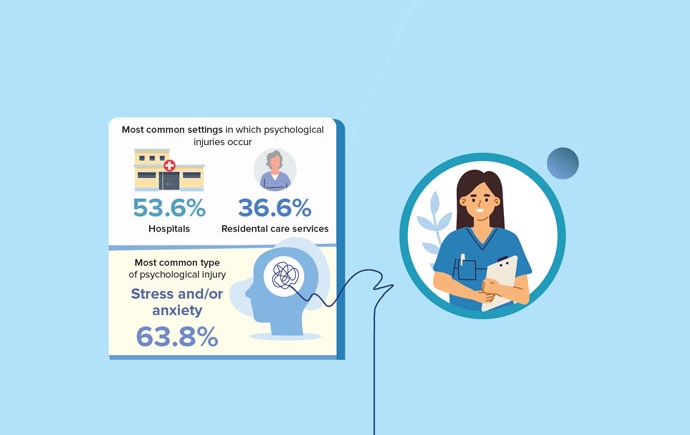
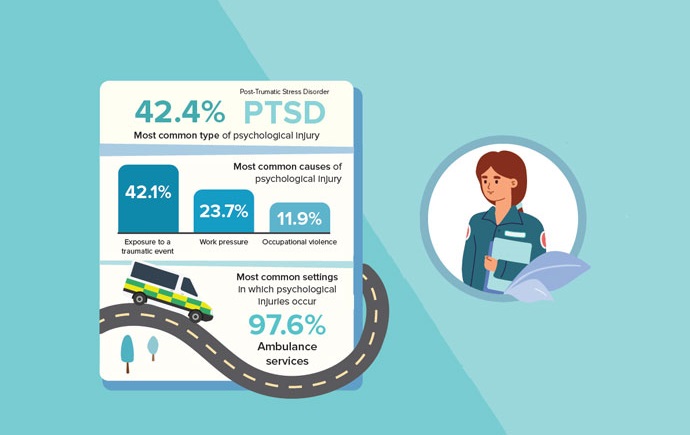
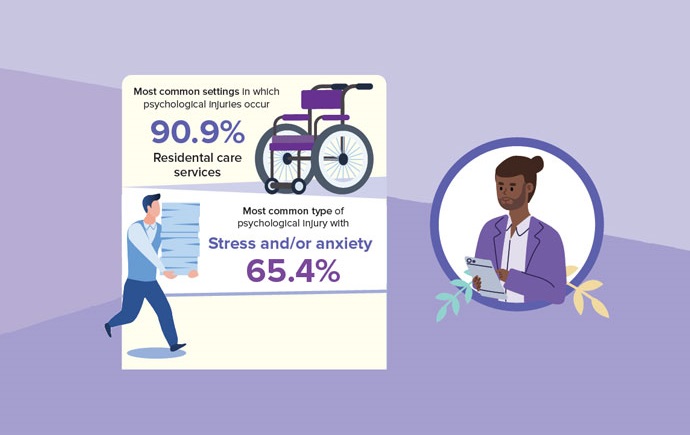
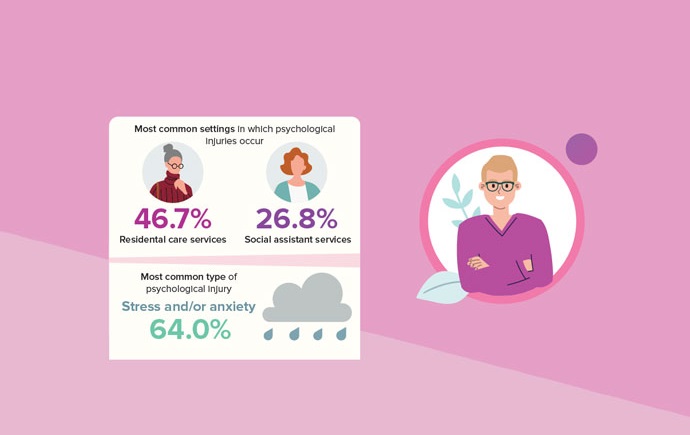
This research aims to understand and improve workplace mental health and well-being in Australia’s Healthcare and Social Assistance (H&SA) industry by developing evidence-based work design interventions to prevent psychological injury, which include but not limited to burnout and sustained work stress
At the heart of Design for Care is the prevention of psychological injury through good work design.
Reports (PDF)
- Report #1: Risk factors associated with psychological injury among Healthcare and Social Assistance
workers in non-hospital settings: Systematic scoping review (June 2022) - Report #2: Psychological injury in the New South Wales Healthcare and Social Assistance industry: A retrospective cohort study (August 2022)
- Report #3: How work design shapes mental health in the Healthcare and Social Assistance industry
(July 2023) - Report #4: Changing work design to improve mental health in the Healthcare and Social Assistance
industry (April 2024)
Driving Health
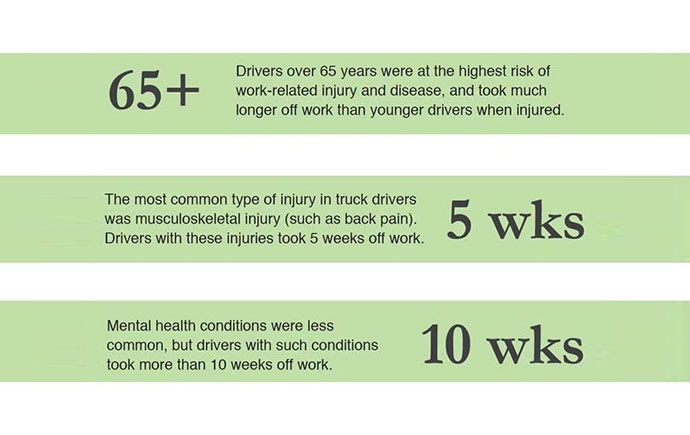
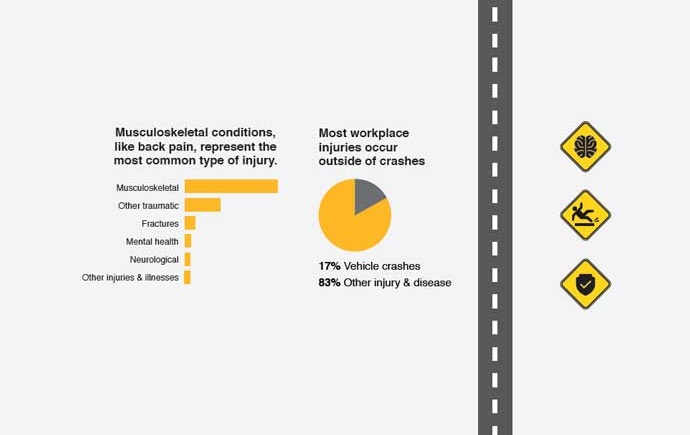
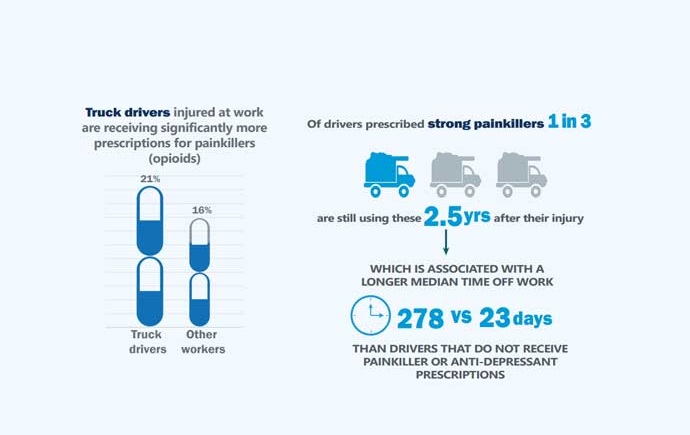
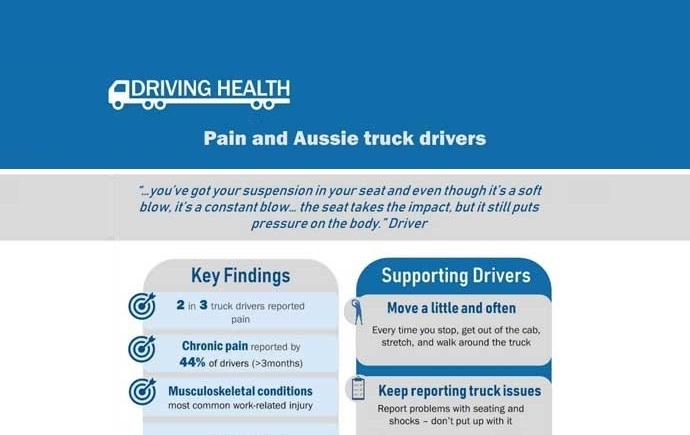
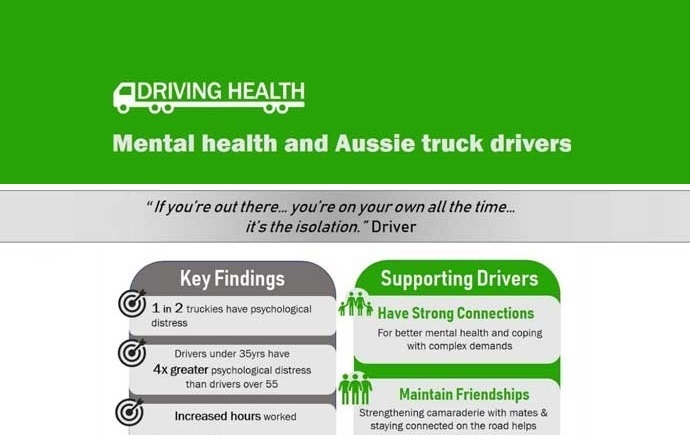
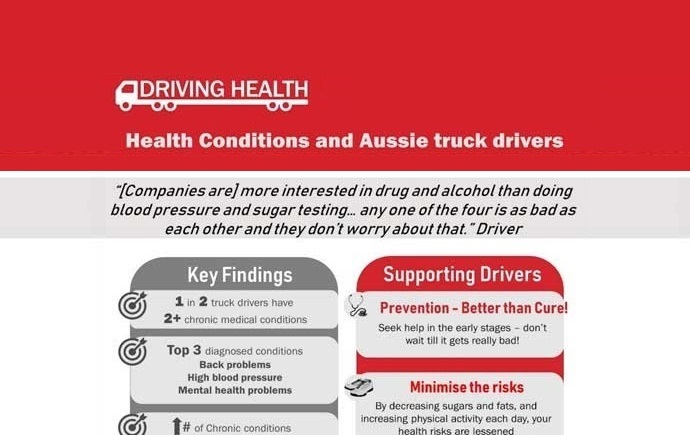
The Driving Health project aims to develop evidence-based strategies to improve the health of the Australian Truck Driver. Visit the Driving Health website to find out more.
Reports (PDF)
- Report #1: Work-Related Injury and Disease in Australian Transport Sector Workers
- Report #2: Profile of Work-Related Injury and Disease in Australian Truck Drivers
- Report #3: Health Service Use Following Work-Related Injury and Illness in Truck Drivers
- Report #4: Use of Medications Following Work-related Injury and Illness in Truck Drivers
- Report #5: Analysis of Life Insurance claims data
- Report #9: Direct managers influencing truck driver health – Driving Health Allocator Training (DHAT) Program
COMPARE Project
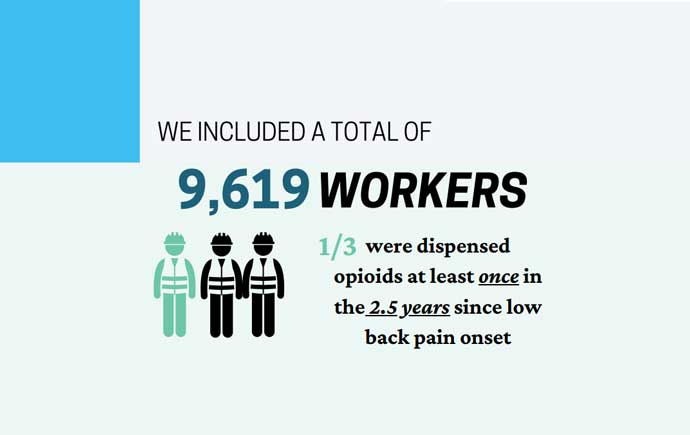
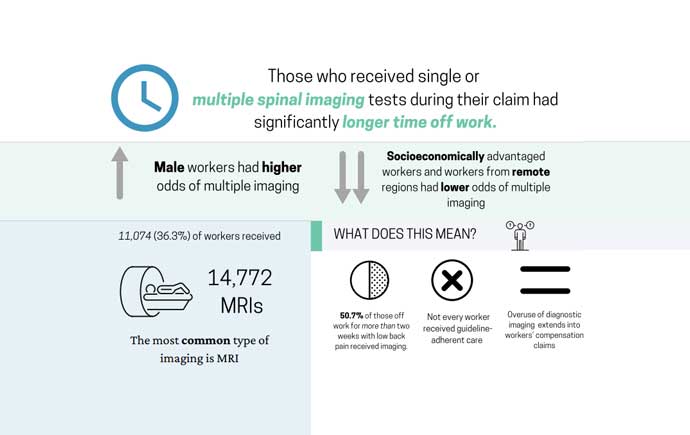
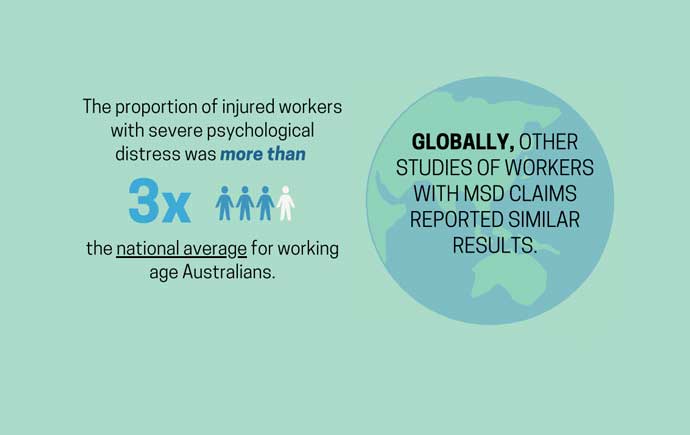
The COMpensation Policy And Return to work Effectiveness (COMPARE) project was established to develop an evidence base that can support development and implementation of effective return to work policy in Australia. Find out more here.
Reports (PDF)
- Claims Experience in Injured Australian Workers: Overview and Association with Return to Work
- Employer Support for Making a Workers' Compensation Claim: Overview and Association with Return to Work
- Employer Support for Injured Australian Workers: Overview and Association with Return to Work
- Return to Work Plans for Injured Australian Workers: Overview and Association with Return to Work
- Long-Term Workers' Compensation Claims in Australia
- Determining the Association Between Workers' Compensation Claim Processing Times and Duration of Compensated Time Loss
- Workers' Compensation Claims in Government Employees
- Comparison of Return to Work Practices and Outcomes in Self-Insured and Scheme-Insured Organisations
- Evaluating the impact of the 2012 legislative amendments to the NSW workers' compensation scheme
- Benefit Generosity, Claiming, and Disability Duration
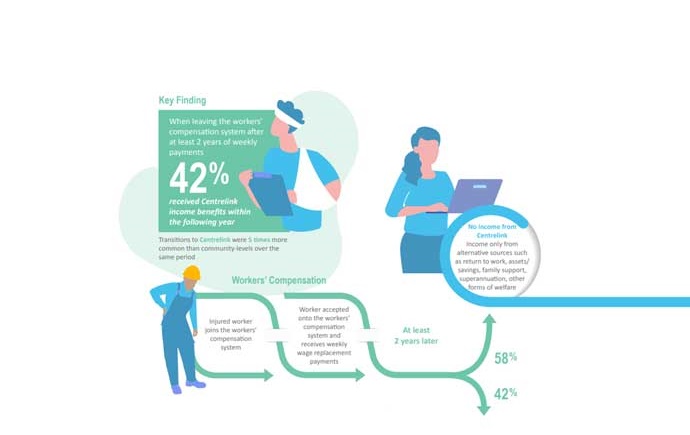
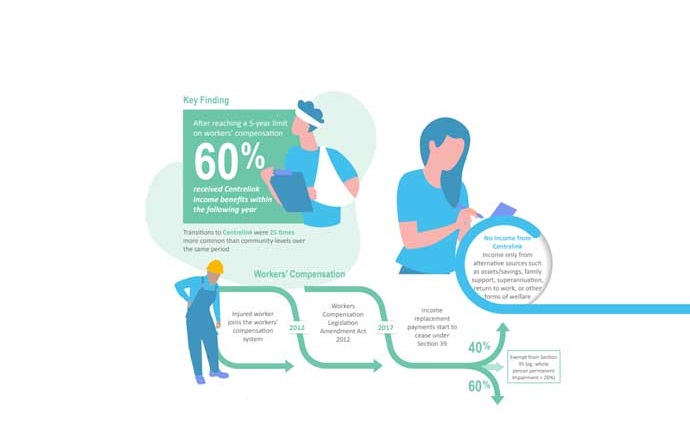
Transitions Study
Reports (PDF)

Report (PDF)
- Risk Factor Identification for Delayed Return to Work – Best Practice Statement – An outline of the key concepts underpinning best practice in risk factor identification for delayed return to work based on available evidence and knowledge of current practice in workers' compensation case management. April 2018.
The DSP Study
The DSP Study aims to build an evidence base on the health and experiences of people receiving the Disability Support Pension, and on the impact of government policy changes on access to Centrelink payments. Visit the Study website to find out more.
Report (PDF)
- The Health of Disability Support Pension and Newstart Allowance Recipients – Analysis of national health survey data – This report uses National Health Survey data to compare the health and health service use of people receiving the Disability Support Pension or the Newstart Allowance with other working age Australians. September 2019.
National Work Health and Safety Leading Indicator Survey
Reports (PDF)
- National Work Health and Safety Leading Indicator Survey Summary Report – The relationship between three validated leading indicator measures and lagging indicators of workplace health and safety, in a large and diverse sample of Australian workers. May 2017.
- Developing a leading indicators questionnaire to identify Victorian workers at increased risk of work-related harm – Summary report, 9 November 2023.