
Energy from fuels
A fuel is a substance with a useful amount of stored energy that can be released relatively easily. Hydrogen gas, wood, petrol and sugar are all examples of fuels. A range of commercial fuels are available to society to meet its energy needs. Some of the factors that need to be considered when choosing a fuel are: its abundance, the technology required to utilise the fuel, its sustainability and its impact upon the environment.
Commercial fuels
Commercial fuel s are classified as either renewable or nonrenewable.
Non-renewable fuels are resources that are used faster than they can be replaced. Fossil fuels are formed in the Earth’s crust over millions of years, hence are a finite resource.
Renewable fuels are resources that can be replaced at a sustainable rate. A canola crop, for example, can be grown each year to supply a similar quantity of biodiesel.
Most fuels used by society are derived from fossil fuels and are classified as non-renewable. Some newer alternatives are sourced from plant or animal matter that can be replenished, and so are considered renewable.
| Fuel | Renewable /Nonrenewable | Characteristics | Considerations |
|---|---|---|---|
| Coal | Non-renewable |
|
|
| Crude oil | Non-renewable |
|
|
| Natural gas | Non-renewable |
|
|
| Biogas | Renewable |
|
|
| Bioethanol | Renewable |
|
|
| Biodiesel | Renewable |
|
|
| Hydrogen gas | Can be renewable or nonrenewable |
|
|
The majority of commercial fuels, both renewable and non-renewable, consist of carbon-based molecules. Hydrogen is the only exception. Investigate the chemical structure of various common fuels in the figure below.
Since the turn of the century, the limitations of non-renewable fossil fuels have become more apparent. The issues with fossil fuels are:
- dwindling reserves.
- production of high volumes of greenhouse gases and other emissions. Energy is usually obtained from fossil fuels through their combustion. The main products formed are CO2 and water.
- direct risks to workers and the environment from fossil fuel extraction methods such as mining and drilling.
As reserves dwindle and the emissions from the combustion of fossil fuels are threatening climate stability, most countries are attempting to transition to more sustainable options.
The graph below tracks Australia’s progress in transitioning from fossil fuels to renewable energy sources.

Biofuels
The non-renewable nature of fossil fuels has driven interest in renewable alternatives, including biofuels. While they can address the dwindling reserves of fossil fuels, biofuels are still carbon based and so may still contribute to the production of greenhouse gases. The three main biofuels are bioethanol, biodiesel and biogas.
Biodiesel is formed from the reaction between an alcohol such as methanol and a triglyceride (a fat or oil) . Triglycerides are formed in plants and animals. They are large molecules with three long hydrocarbon chains and three ester bonds.

A transesterification reaction occurs when triglycerides are reacted with methanol in the presence of a catalyst. The ester bonds break and new ester bonds are formed between the hydrocarbon chains and the methanol.
Each triglyceride forms three biodiesel molecules

Biodiesel is usually blended with petrodiesel and used as transport fuel. A typical diesel engine can use a biodiesel blend without any modification. Combustion of biodiesel still produces emissions but the impact of the emissions is balanced by the CO.
Match the terms below to their correct chemical structure to review your understanding of biodiesel manufacture.
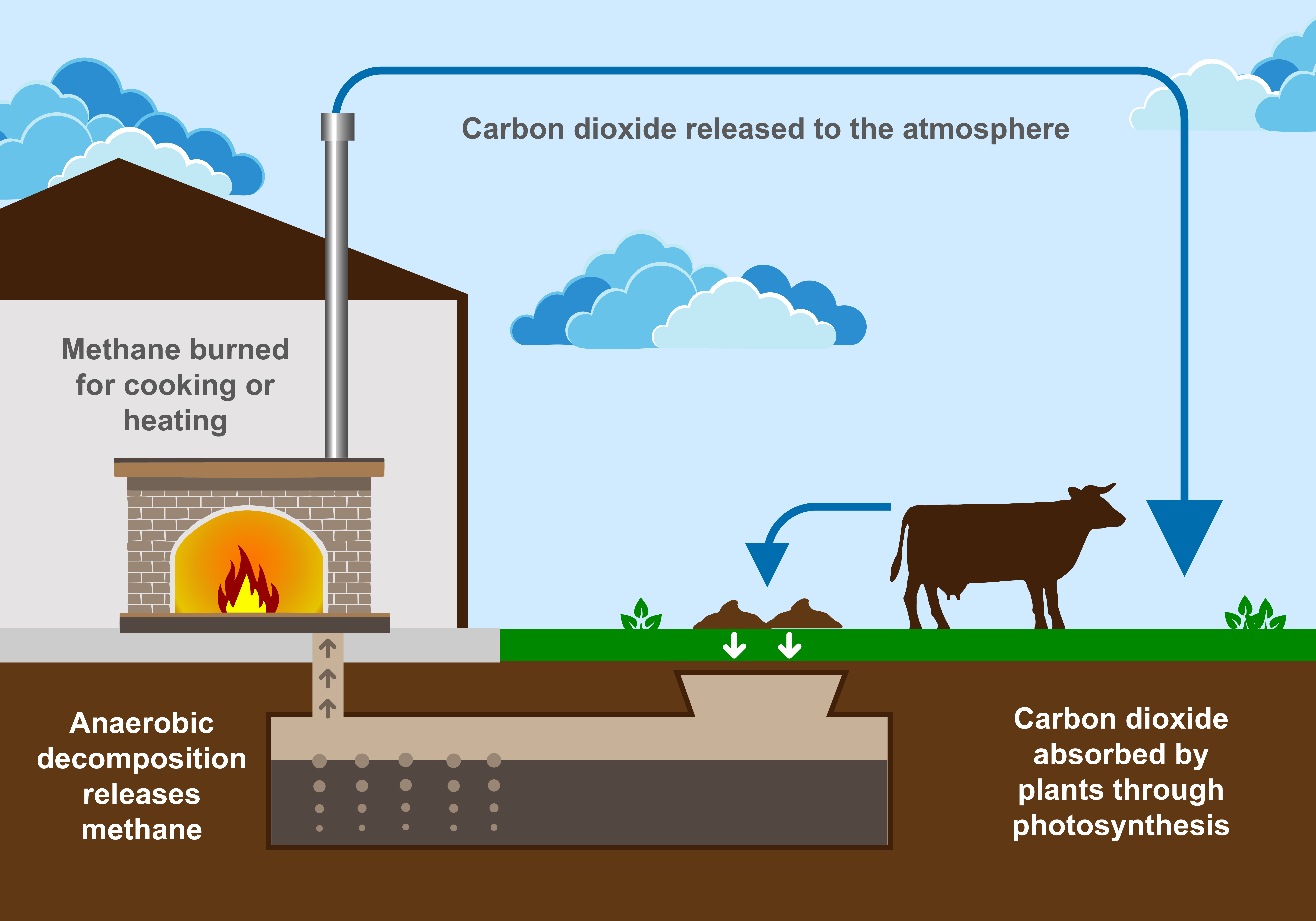
Biogas is formed when plant or animal waste is added to an anaerobic digester, where microorganisms ferment it to a mixture of methane and other gases. The methane produced can be burnt in a generator to produce electrical energy. The equation for the complete combustion of methane is:
CH4(g) + 2O2(g) → CO2(g) + 2H2O(l)
The biogas is renewable as the released carbon dioxide returns to the atmosphere to be reabsorbed by plants, continuing to cycle.
| Chemical | Formula | % |
|---|---|---|
| Methane | CH4 | 50-80 |
| Carbon dioxide | CO2 | 15-50 |
| Nitrogen | N2 | 0-10 |
| Hydrogen | H2 | 0-1 |
| Hydrogen sulfide | H2S | 0-0.5 |
| Oxygen | O2 | 0-2.5 |
The production of biogas is limited by the availability and accessibility of biowaste. Sewerage farms, dairy farms and piggeries are examples of suitable sites for biogas generators.
Bioethanol is produced from glucose and other sugars in a fermentation process. Various enzymes and microorganisms such as yeast catalyse the breakdown of glucose to ethanol and carbon dioxide. The main reaction occurring during fermentation is:
C6H12O6(aq) → 2C2H5OH(aq) + 2CO2(g)
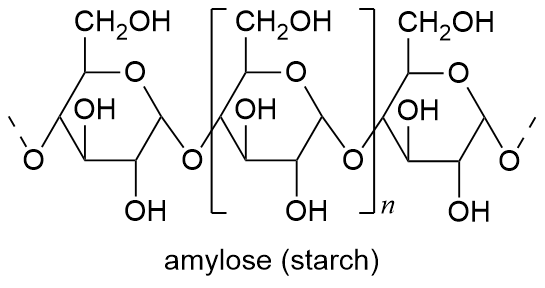
The chemical structures of sucrose and starch below show they contain smaller carbohydrates such as glucose that are suitable for fermentation.

Bioethanol production involves the following common steps (see flowchart below).
- pulping with water to break the structure of the cells in the waste
- hydrolysis of the carbohydrates to break them down to smaller molecules like glucose
- fermentation of smaller sugar molecules (can take several weeks)
- distillation of the alcohol solution to concentrate the ethanol

The distillation process (see below) is used to concentrate the ethanol so that it is a useful fuel. Distillation uses the difference in boiling points between ethanol and water to separate the two liquids.The temperature of the column is carefully controlled to ensure the ethanol is gaseous and rising in the column, while the water is a liquid that condenses to the bottom.

Bioethanol
- is used extensively in Australia, often in a blend with petrol, labelled as E10. The ‘10’ refers to the usual ethanol content of around 10%.
- has a lower energy density than petrol, so a greater volume of fuel is required to travel the same distance.
- should lead to lower carbon dioxide emissions, as CO2 is absorbed when the plants used to produce bioethanol grow.

