
Representing Organic Compounds
Use this page to revise the following concepts within Representing Organic Compounds:
In organic chemistry, compounds can be represented in various ways to convey information about their composition and structure. The most common representations include molecular, structural, semi-structural (or condensed) and skeletal formulas as shown in the table below.
| Formula | Representation |
|---|---|
| Molecular formula | C4H8O2 |
| Structural formula | 
|
| Semi-structural (condensed) formula |
CH3CH2CH2COOH or CH3(CH2)2COOH |
| Skeletal structure | 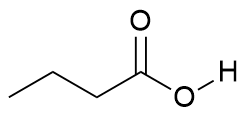 or  |
Drawing skeletal structures
Carbon atoms are implied at the ends and intersections of the lines in a skeletal structure. Each line represents a bond between two atoms, typically carbon-carbon bonds. Each vertex or end of a line represents a carbon atom. It’s understood that there are carbons at each corner and endpoint. If a carbon atom has hydrogen atoms attached, they are implied and not shown in skeletal structures.
Functional groups like hydroxyl groups (OH), carboxyl groups (COOH), amines (NH2) etc. are explicitly written in the skeletal structure, except for their carbon atoms. Double bonds are shown by two lines between carbon atoms (C=C), while triple bonds are shown by three lines (C≡C). Branches or side chains are represented by lines that come off the main chain.
Example: Pentanoic Acid

The carbon atom furthest to the left in the structure above will be attached to three hydrogen atoms (CH3). The next three carbon atoms will each be attached to two hydrogen atoms (CH2).The carbon double bonded to the oxygen has no hydrogen atoms attached to it, implied as this carbon is already forming four bonds.
IUPAC naming
IUPAC naming is a system of naming organic compounds that identifies the number of carbons, presence of functional groups, and the homologous series the compounds belong to.
The prefix represents the number of carbons in the molecule.
| # of carbons | Prefix |
|---|---|
| 1 | Meth- |
| 2 | Eth- |
| 3 | Prop- |
| 4 | But- |
| 5 | Pent- |
| 6 | Hex- |
| 7 | Hept- |
| 8 | Oct- |
| 9 | Non- |
| 10 | Dec- |
Functional groups
Functional groups are specific arrangements of atoms within molecules that determine the chemical properties of the compound (and reactions it can participate in). Therefore, functional groups are used to categorise organic compounds. IUPAC naming ensures each molecule has a unique name based on its structure.
Homologous series
Homologous series refer to groups of organic compounds that share a common functional group and exhibit similar chemical properties, differing only by a specific number of CH2 units. The addition of a CH2 group to a molecule in a homologous series causes a change in the molecule's prefix. For example, in the alkane homologous series, adding a CH2 group to methane (CH4) creates ethane (C2H6), changing the prefix from "meth-" to "eth-".
Check your understanding of representing organic compounds by answering the following questions.
 Check your understanding
View
Check your understanding
View

Investigate the different homologous series, or types of organic molecules based on their functional groups.

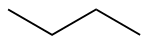
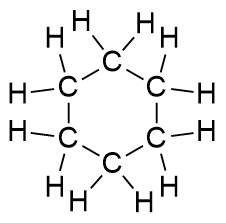


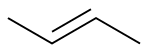
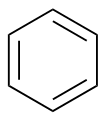
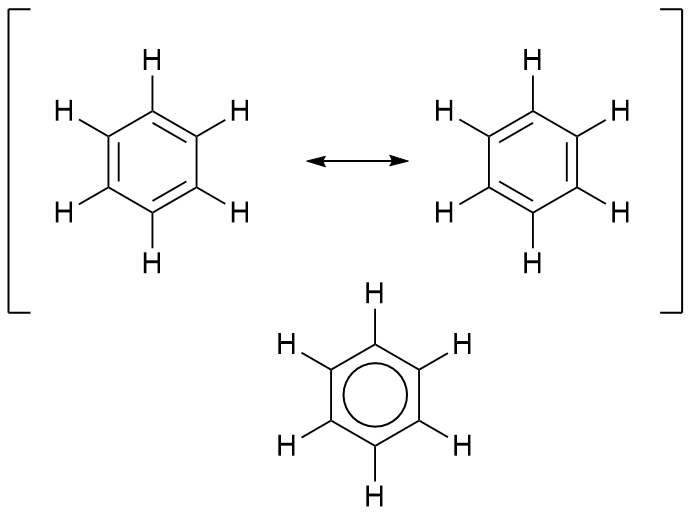
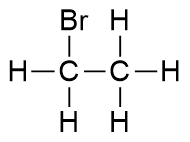


Check your understanding of these organic compounds.
Check your understanding
View
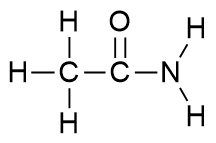


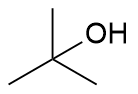


Check your understanding
View
IUPAC priority system
The priority system in organic chemistry, often referred to as the IUPAC priority system, is used to determine the order of functional groups when naming compounds, especially when multiple functional groups are present. The highest priority functional group typically determines the suffix of the compound’s name. Lower priority groups are indicated as prefixes. Carbons are numbered so that the priority functional group is numbered as low as possible.
The table below shows the classes of compounds listed in priority order from highest to lowest.
| Class of compound | Functional group name | Prefix | Suffix |
|---|---|---|---|
| carboxylic acid | carboxyl | - | -oic acid |
| ester | ester | - | -oate |
| amide | amide | - | -amide |
| aidehyde | aidehyde | - | -ai |
| ketone | carbonyl | - | -one |
| alcohol | hydroxy/hydroxyl | hydroxy- | -ol |
| amine | amino | - | -ene |
| halogen | 'halo' (i.e. bromo, chloro, flouro, iodo) |
bromo- chloro- fluoro- iodo- | - |
Example 1: 2-hydroxypentanoic acid

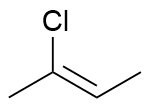
Example 2: 2-chlorobut-2-ene
Check your understanding of IUPAC naming by answering the following questions