
Chiral compounds
Use this page to revise the following concepts within chiral compounds:
Chiral centres
A chiral molecule is a molecule that cannot be superimposed on its mirror image. For a molecule to be chiral, it must contain at least one chiral carbon atom - a carbon atom bonded to four different groups.
Of the three molecules below, the first two are chiral but the third is not, due to the symmetry on the central carbon. The carbon atoms marked with a red asterisk are chiral carbon atoms. The middle carbon in the third molecule is only attached to three different groups.

A simple example of chirality is your hands: the left and right are mirror images of each other, but cannot be superimposed.

The molecules below are chiral: they are mirror images of each other and cannot be superimposed on each other.

The above pair of chiral molecules are called enantiomers - they are mirror images of each other but are not superimposable. Molecules with chiral centres that have the same connection of atoms but cannot be superimposed are also known as optical isomers. Enantiomers are optical isomers.
Most physical properties of enantiomers, such as melting point and solubility, are identical. However, optical isomers rotate polarised light in different directions and they can function differently in living things.
Check your understanding
View

Enantiomers often differ in their involvement in the biological reactions in the body. An example is carvone, a compound found in both caraway seeds and spearmint. R-carvone gives a spicy aroma while S-carvone is noted as having a minty taste.

The R- and S- enantiomers of carvone molecules have different 3D shapes, allowing them to fit into different enzymes. The S-carvone is synthesised by enzymes in the spearmint plant and are responsible for the spearmint odour. Conversely, the R-carvone results from a different enzyme, releasing molecules that produce the caraway odour of caraway seeds. These molecules interact with different protein receptor molecules in our nasal airways.
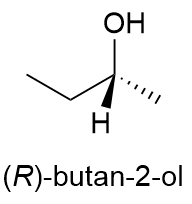
NoteThere are two common conventions used to distinguish enantiomers, either L- and D- or R- and S-. These letters refer to the direction they rotate light. |
Check your understanding
View
Enantiomer medicines
Many medicines function effectively as they fit the active sites of enzymes in the body and cause favourable reactions to occur. One optical isomer might fit the active site, while the other does not.
Ascorbic acid (vitamin C) has four optical isomers, as shown below, out of which there are two pairs of enantiomers. Only one out of these four is the active component that can bind effectively to the enzyme and function as its biological activity in the body.

Another example is adrenaline. R-adrenaline and its S form are enantiomers and have different 3D shapes. The R- form can fit the target active site but the S form can not, making R-adrenaline the only active optical isomer.

There are three possible outcomes when comparing the effectiveness of enantiomers:
- One enantiomer is effective and the other has no impact e.g. the pain-reliever ibuprofen.
- One enantiomer is effective for one reaction while the other is effective for a different reaction, e.g. the opioid pain-reliever propoxyphene.
- One enantiomer is effective, while the other is harmful, e.g. thalidomide, a medication used for certain cancers and inflammatory disorders, which was originally developed as a sedative.