
Organic reactions: Condensation
Condensation reactions occur when two molecules combine to form a larger molecule, releasing water as a byproduct. This type of reaction is crucial in the formation of various biological macromolecules, such as proteins and polysaccharides, where amino acids and monosaccharides combine, respectively.
Proteins
The basic building blocks for proteins are 2-amino acids.
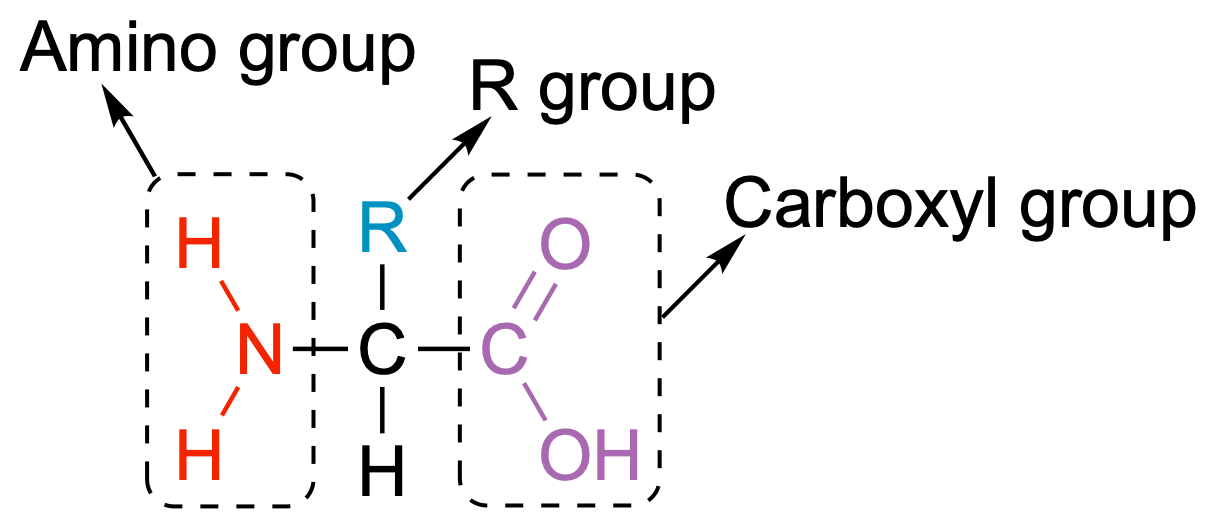
The basic structure of an amino acid has a central carbon atom bonded to:
- An amino group
- A carboxyl group
- A hydrogen atom
- A variable side chain (R group), which determines the specific properties of the amino acid.
Formation of proteins
Amino acids are linked together through peptide bonds to form proteins.
A condensation reaction occurs when a peptide bond forms between the carboxyl group of one amino acid and the amino group of another, releasing a molecule of water.

Carbohydrates
The basic building blocks of carbohydrates are monosaccharides.
Monosaccharides are the simplest form of carbohydrates. They are glucose, galactose and fructose.

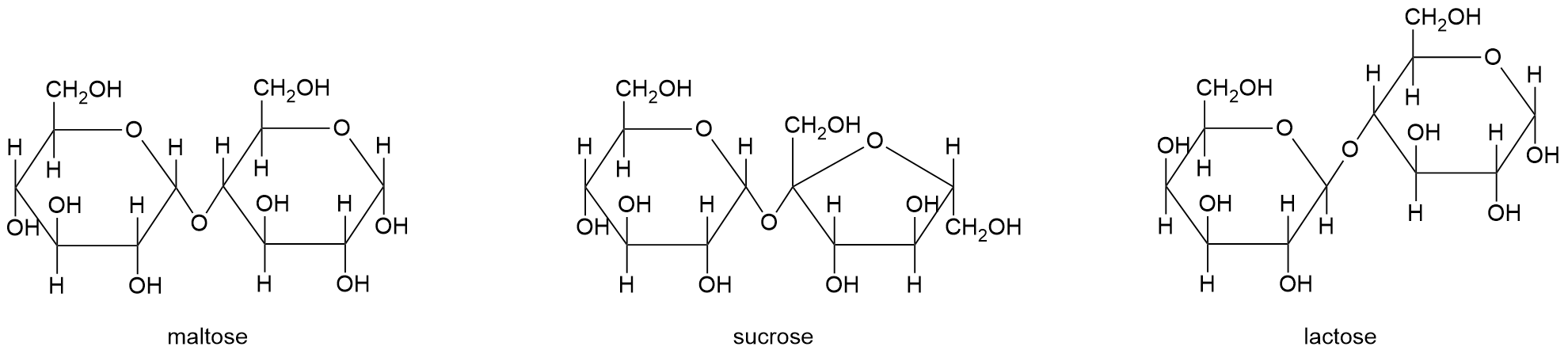
Disaccharides are composed of two monosaccharides linked by a glycosidic bond.
Sucrose is composed of glucose and fructose. Lactose is composed of glucose and galactose. Maltose is composed of two glucose molecules.
Polysaccharides are long chains of monosaccharide units.
For example, starch is a polysaccharide that serves as a major storage form of energy in plants. It is composed primarily of long chains of glucose units linked together by glycosidic bonds.

Formation of carbohydrates
Condensation of carbohydrates is where monosaccharides join together to form a glycosidic bond, releasing a molecule of water.
Monosaccharides can combine to form disaccharides or polysaccharides.
Example

Triglycerides
A triglyceride is a type of fat (lipid) made up of one molecule of glycerol and three fatty acids.
Each fatty acid is a long chain of hydrocarbons with a carboxyl group at one end.
Formation of triglycerides
The formation of a triglyceride is a condensation reaction which involves glycerol reacting with three fatty acid molecules. During the reaction, each fatty acid forms an ester bond with the hydroxyl group of the glycerol molecule, and in the process, three water molecules are produced as byproducts.


