
Every Drop Counts: New evidence for valuing Australia's rivers
A/Prof Gordon Leslie, 2026
Purpose
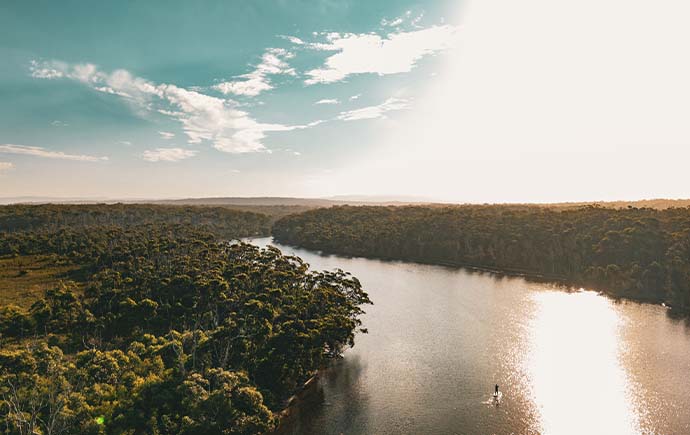
Australia's Snowy Mountains Scheme captures headwaters that historically ran into the upper Murrumbidgee River, diverting substantial amounts of water via tunnels and other rivers, generating power at hydroelectric facilities and allowing more water to be managed for irrigation further downstream. The December 2019 cease-to-flow event – where the river ran dry across stretches of the upper Murrumbidgee – exposed a critical governance failure: the river ran dry within the bounds of the existing water licence held by the hydroelectric scheme operator. This stark, environmentally damaging example showed that existing frameworks could not efficiently allocate water across its competing uses, including energy generation, environmental flows, irrigation, drinking water, and cultural and recreational value – motivating research by Associate Professor Gordon Leslie and co-authors to understand the value of stored water and what policy mechanisms could achieve better whole-of-public outcomes.
Practice
Using wholesale electricity bidding data from Australia's National Electricity Market, the team developed a method to infer the opportunity cost of generating electricity in hydroelectric schemes – a key input into measuring how additional releases into the upper Murrumbidgee translate to less electricity revenue: more releases mean less stored water available to later generate electricity. The research shows this value is tied to expectations on future electricity prices and water levels, and estimates it remained stable during the 2019 cease-to-flow event, demonstrating that the electricity and environmental values of water are distinct, and that river health can be improved with a practical compensation mechanism that reallocates water releases. These concepts and findings informed Associate Professor Leslie's submission to the Independent Review of the Snowy Water Inquiry Outcomes Implementation Deed (SWIOID), and a public webinar hosted by the Australian River Restoration Centre and attended by 150 to 200 people, including many stakeholders engaged with the review.
Output
The Independent Review Panel's July 2026 draft report cites Associate Professor Leslie's submission in developing Recommendation 24: Governments establish a rule-based compensation framework that limits compensation to clearly defined circumstances and supports adaptive system management. The report suggests specific approaches that directly relate to Associate Professor Leslie's submission and research.
Outcome and impact
If this recommendation is implemented, environmental agencies and downstream communities gain a principled, predictable mechanism to secure any necessary additional environmental flows, reducing the risk of future cease-to-flow events and the significant environmental and biodiversity damage they can cause. This can further be extended to any water user that can create value from water releases exceeding the electricity-generating benefits stored water can provide, including the water utility that serves the growing Canberra region.