
Every Speaker Marks a Turning Point: Bringing the real world into first year
Mrs Claire Smith, 2026
Purpose
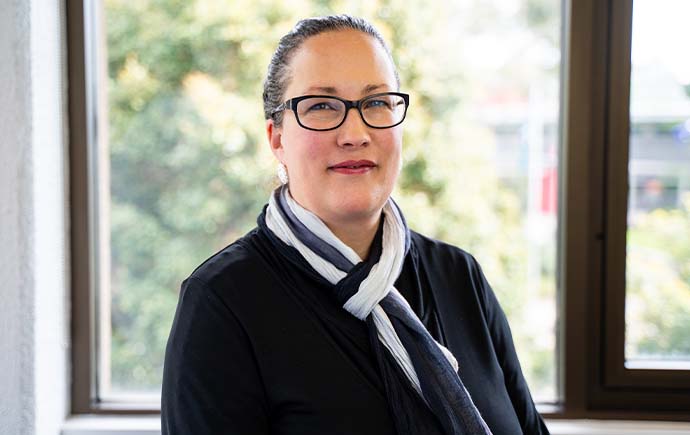
Mrs Claire Smith
Co-designed by a team of chief examiners from four departments, the Industry Seminar Speaker Series began as an attempt to build a tangible, holistic connection between different areas of study for students – and has since evolved to meet a broader need: helping students explore ideas of real-world consequence in business. It has become a deliberate vehicle for embedding responsible management concepts – sustainability, equity and Indigenous perspectives – directly into the curriculum. Each year, the School invites a speaker from the social enterprise sector, a speaker from the general corporate sector, and now also a speaker from Indigenous business leadership, ensuring students engage with these themes as core learning rather than optional add-ons, and are facilitated to think about the broader impacts and goals of their future careers.
Practice
Three sessions are timetabled across the first semester for the entire Peninsula campusl first-year cohort, held in weeks 3, 6 and 9. All students, across every unit, attend together, and each session introduces an industry speaker followed by 30 to 60 minutes of Q&A – consistently the students' favourite component. Sessions are facilitated by the chief examiner for management, supported by the chief examiner for marketing, with additional input from economics colleagues during Q&A. By pairing traditional business speakers with social enterprise and Indigenous voices, the series integrates responsible management practice directly into the shared pedagogical experience of the cohort.
Output
Students showed immediate engagement, formulating thoughtful questions and reporting appreciation for the operational, managerial and economic insight that brought theoretical learning to life. The social enterprise sessions proved particularly enriching, prompting students to compare the passion and commitment on display with other business presentations. The series also revealed a significant gap in the cohort's knowledge of First Nations issues – international students especially requested more content in this area, while domestic students acknowledged limited prior exposure to Indigenous voices in their education.
Outcome
The primary stakeholders are students, educators and speakers alike. For educators, the sessions have become embedded teaching resources: speaker businesses now serve as live cases that illustrate theoretical concepts in a tangible way, and these interactions inform assessment design, giving students greater scope and security to engage in depth with a real organisation. Many students go on to contact speakers directly after the session, deepening the relationship beyond the classroom. Speakers consistently report enjoying the sessions and value the opportunity to learn about the opinions and needs of this younger cohort. Most notably, student feedback repeatedly and consistently identifies these industry sessions as a standout value-add to their studies.
Impact
Beyond the immediate cohort, the series is reshaping how responsible management is taught at scale. By consistently exposing an entire year group to equity, sustainability, economic responsibility and Indigenous cultural safety as core business considerations, the School is embedding these values in the pedagogy of future business leaders. This curriculum-wide approach ensures responsible management is not confined to a single unit or elective, but is reinforced as integral to how business is taught and understood across the school.