Small Actions, Shared Widely: Making sustainability everyone's business

A/Prof Glen Croy, 2026

Purpose

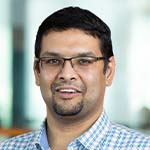
Associate Professor Glen Croy

Associate Professor
Glen Croy.

Across Australia and New Zealand business schools, commitments to the UN Principles for Responsible Management Education (PRME) often existed as isolated pockets of excellent practice rather than embedded, school-wide approaches. Monash Business School had experienced this directly: strong individual examples of ethics, sustainability and impact work existed, but lacked systematic coordination across governance, curriculum, research and recognition structures. The Forum was convened to share the Monash experience, and those of other Chapter business schools, to address this shared regional challenge – helping business schools move from fragmented “islands of impact” toward systematised, sustained adoption of responsible management principles at the faculty, department and individual levels.

Practice

The day-long, hybrid (in-person and Zoom) event brought together academics, PhD scholars, professional staff and students from across the region. Structured around three escalating levels – Business School/faculty, department/cluster, and Individual – the program combined a keynote from Kate Dundas (UN Global Compact Network Australia), showcase presentations (including Monash Business School's own systematisation journey from Associate Professor Glen Croy and student representative Ryan Bin Zaman), and interactive café-style workshops designed to co-create transferable tools. Six student presentations highlighted grassroots contributions, from curriculum feedback to community and careers initiatives. The day closed with participants drafting self-crafted action plans and the Chapter steering committee setting chapter priorities for 2026.

Output

The forum produced concrete, immediate outputs: a shared framework and practical toolkit for systematising PRME at three organisational levels; individual action plans crafted by every attendee; a Climate Action Working Group update; and a defined set of chapter priorities for 2026. Cross-institutional relationships were strengthened, evidenced by participants from Deakin, Griffith, Swinburne and the University of Canterbury actively exchanging practices. Student leadership was also formally recognised, with Ryan Bin Zaman presenting on the team's award-winning PRME representation, including the development of the PRME Student Progress Report.

Outcome

For Monash Business School, the forum consolidated three years of structural and cultural change – PRME ambassadors, cross-departmental governance and a student advisory panel – into an externally validated model now available for adoption by peer institutions. For the PRME Australia-New Zealand Chapter, the event strengthened its role as the region's coordinating body, deepening ties between chapter leadership (Associate Professors Joya Kemper and Rob Hales) and member schools. Participating academics and students gained tools and networks to embed responsible management practices more systematically within their own institutions, while student representatives gained genuine influence over curriculum and strategy, reinforcing PRME's principle of student voice in governance.

Impact

Beyond the immediate participants, the forum contributes to a broader shift toward systematised responsible management education across the Australia-New Zealand region and internationally, as reflected in engagement from other global PRME signatories. By sharing the School's embedding methodology, the forum supports sector-wide capability building, helping business schools translate ethics and sustainability commitments into structural practice rather than isolated initiatives. This strengthens the pipeline of business graduates equipped with responsible management capabilities, extends UN Global Compact priorities into regional business education, and builds lasting institutional infrastructure – governance models, action plans and cross-university networks – that will continue generating impact for students, employers and communities well beyond the single-day event.