
Ultra-Fresh, Ultra Costly: Measuring fast fashion's hidden price tag
Dr Shiqing (Frank) Yao, 2026
Purpose
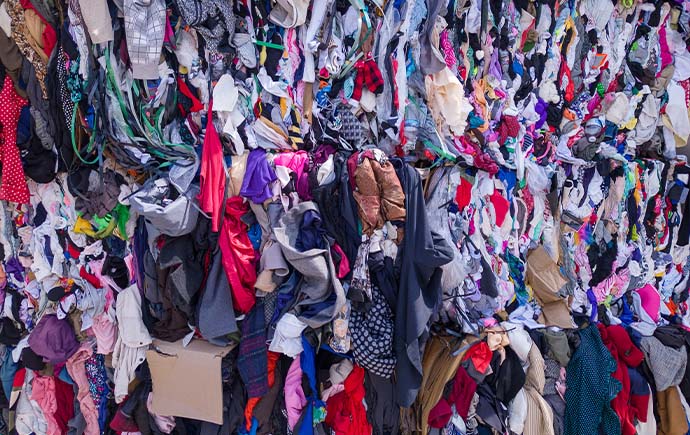
Ultra-fresh fashion is the new business trend in the fast fashion sector. Firms such as Shein and Temu use ultra-agile supply chains to launch new products with unprecedented frequency and variety – Shein can introduce about 6,000 new items a day, while Zara introduces about 10,000 a year. This strategy has achieved great commercial success and worldwide popularity, but its negative impact on the global environment is significant. As a responsible researcher, Shiqing (Frank) Yao saw a duty to study this business model, measure its environmental consequences, and propose solutions.
Practice
Yao carried out the research with Professor Hau Lee of Stanford and Professor Li Chen of Cornell. The team visited garment factories and interviewed industry participants to ground their understanding of ultra-fresh operations, then built an analytical model of the ultra-fresh strategy. The model links demand creation at the front end, where frequent product launches stimulate latent customer demand, with product design and production at the back end, quantifying outcomes on the triple bottom line: firm profit, consumer surplus and environmental impact. Their analysis shows that the ultra-fresh strategy raises firm profit and benefits consumers in aggregate, but can harm the environment if left unchecked. They then proposed remedies, including a production tax and a sales tax, and showed that the two induce the same market outcome.
Output
The research produced three publications. The core study, Ultra-Fresh Fashion: Creating Demand with Freshness and Agility, appeared in Management Science (2026), a top-tier academic journal. A companion article, Ultra-Fresh Strategies with Ultra-Agile Supply Chains, appeared in Management and Business Review, a journal written for practitioners. A book chapter, Ultra-Fresh Fashion and Sustainability, examined further measures for sustainability, including consumer education, circular fashion and local sourcing, in a Springer volume – together carrying the findings to academics, managers and policy audiences.
Outcome
The research is now included in Master of Business Administration and Master of Business teaching at Cornell, Monash and La Trobe, and it influences over one thousand students each year. Students engage with the insights of this research directly, learning to weigh profit, consumer benefit and environmental cost as one problem rather than three separate ones.
Impact
The wider stakeholders include younger consumers, regulators and the fashion industry. Learning from this research helps younger generations build environmental awareness – the model shows that customers' interest in product freshness drives launch frequency, so consumer education can dampen the very force behind the environmental damage. The research also provides theoretical guidance for regulators considering levers to curb the environmental damage of the fast fashion industry: it identifies when a production tax raises total social welfare and when no intervention is needed, and shows that a sales tax can achieve the same outcome. In this way the work supports responsible consumption and production across the sector.