Projects

Our research improves how Australia’s buildings are built and the quality of the resulting built form. We believe in deep collaboration, working on applied research projects with industry, community, and government stakeholders. We’re also creating new educational content to support the existing industry and the next generation of built environment professionals.

Products and processes

Exploring new building systems and techniques

We have expertise in design for manufacture and assembly (DfMA) to ensure that designs can be constructed with logic and efficiency. Whether onsite or offsite, our researchers understand the design-production interface. We explore the development of kit of parts building systems through product platforms, new modes of delivery, and the required business model changes that underpin this future.
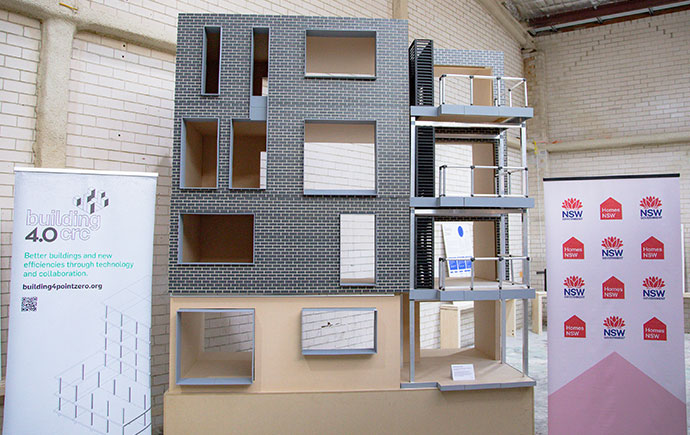
Homes NSW MMC Program
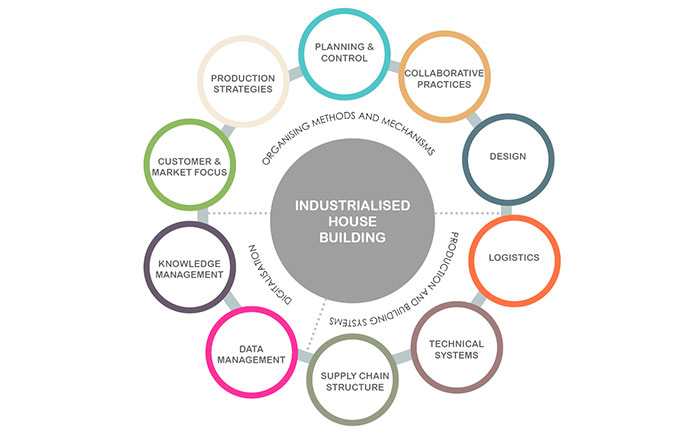
This project spearheads research efforts aimed at assessing the contemporary landscape of Lean principles and Design for Manufacture and Assembly (DfMA) knowledge within the construction sector.

Long-span low-carbon floor systems (scoping study)

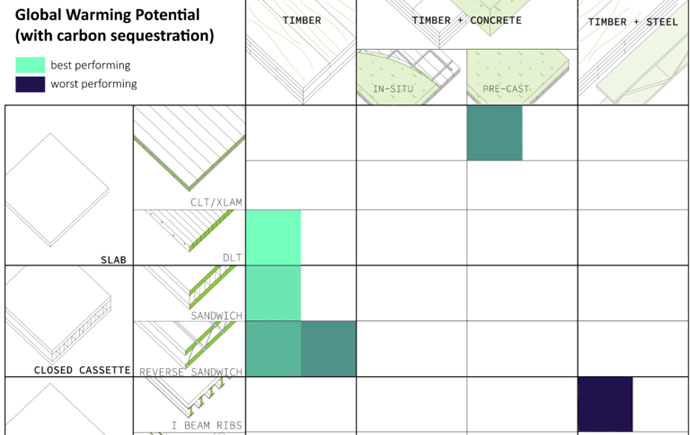
This project addresses the lack of data-informed product evaluation methods in construction through the benchmarking of nine long-span, low-carbon floor systems, in partnership with the University of Melbourne, Lendlease Digital, and Sumitomo Forestry Australia.

Demystifying volumetric construction: A Study of the bathroom pod
Volumetric construction promises faster builds, better quality, and less waste. However, increased transportation costs, structural redundancies, and higher overhead expenses can negate these benefits, limiting its widespread use.

Malvern East apartment development

This project has focused on elevating the application of off-site construction within the building industry.

Guidelines for implementing Design for Manufacture and Assembly (DfMA) and Lean Construction principles in building projects

This project spearheads research efforts aimed at assessing the contemporary landscape of Lean principles and Design for Manufacture and Assembly (DfMA) knowledge within the construction sector.

Society and market

Human-centric solutions demanded by all

The research we lead is socially aware and focused on improving living conditions for all – we look for solutions that increase equity and respond to social need. We work to address humanity’s global challenges of affordability, building shortages, and climate response and develop solutions that align to market need to ensure uptake and impact.
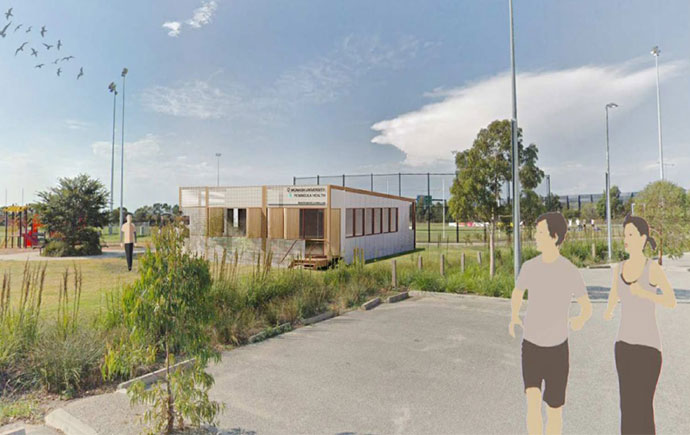
The National Centre for Healthy Aging (NCHA) Independent Living Lab

This Living Lab aims to support research and related activities to deliver the NCHA vision and aims, by providing a simulated home environment for multidisciplinary research, testing and demonstration of integrated spatial, assistive technology, and care models for healthy living and ageing.

Building productivity – product, process, people
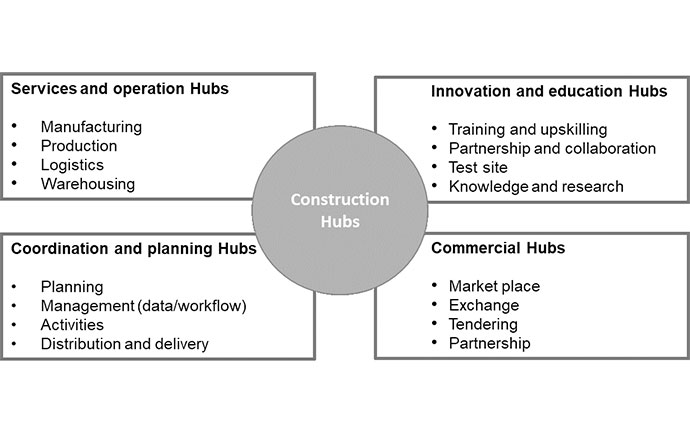
The research explores how the capture, analysis and use of data can contribute to waste reduction, quality assurance, and improvements in efficiency and effectiveness in the building industry.

Victorian Government Digital Build – translating theory into practice

This cross-sector collaboration aimed to bridge the gap between theory and practice, facilitating an increased adoption of digitally integrated building and offsite construction in Victoria.

uTecture Industry Test Group Report

Single dwelling design tools for improved customer outcomes.

Environment and resources

Enabling a sustainable and resilient building value chain

We are defining circular building principles in support of sustainable building design and procurement. Our researchers undertake lifecycle assessments, carbon analysis and study material flows to reduce waste. We work with partners to develop decarbonisation strategies and design-support tools that inform low-carbon decision-making.

Environmental credentials for building technology platforms
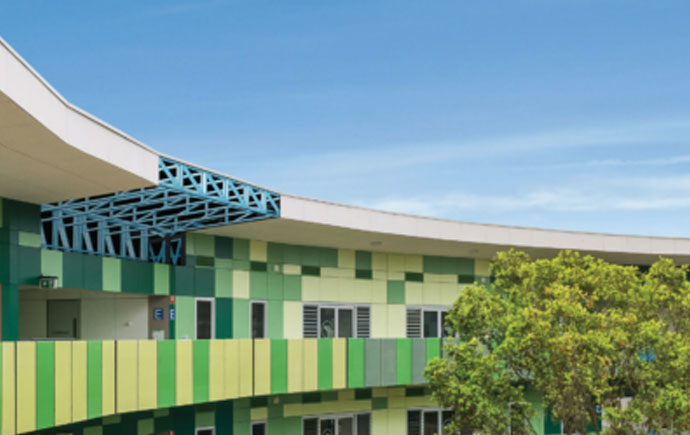
In partnership with uTecture Australia and Coresteel Buildings, we developed an International Organisation for Standarisation (ISO)-compliant Life Cycle Assessment (LCA) framework.

Environmental decision-support for structures

This project generated a knowledge base to inform the development of decision-support systems, supporting environmentally efficient building design.

Development of artificial neural network and automated Life Cycle Assessments for cloud-based residential energy estimations

We are developing an embodied carbon emissions dataset for Australia and New Zealand.

Construction Waste Reduction through Prefabrication

This project evaluated the potential waste reduction associated with CLOS’ offsite timber panel manufacturing operation, together with a cost-benefit analysis exploring strategic opportunities for industrialised building in Victoria.

Digitisation and computation

Developing digital technologies to assist design decision-making

Our researchers are developing new understandings of Artifical Intelligence (AI) and Machine Learning tools for design generation. We utilise digital data to improve the design of buildings and associated workflows for procurement, production, and assembly. We investigate sensing technologies and Internet of Things (IoT) to understand data capture possibilities along with the use of mixed-reality technologies for visualisation and communication of design.

Generative architectural design engine

In this project, we partner with Lendlease Digital Delivery to investigate avenues to integrate these new technologies into a ‘design for construction’ pipeline.

Process engineering and design and estimating automation of Fleetwood’s product platform

The aim of this project is to leverage existing technologies, like Building Information Modelling (BIM) and computational design tools, along with state of the art machine learning and artificial intelligence (AI) techniques, to digitalise and optimise design and estimating workflows, increasing accuracy and efficiency in the production of documentation for tender and fabrication.

Mixed-reality construction demonstration

For this project, Monash University collaborated with Holmesglen Institute, Ynomia, and Fologram to leverage Augmented Reality (AR) technologies to advance the assembly processes of prefabricated components within carpentry and construction sectors.