
MARC Students
MARC PhD Network
 The Monash Addiction Research Centre (MARC) PhD network aims to bring together Monash PhD students, from across various disciplines, departments and faculties, who have an interest in or are undertaking addiction-related research. The network connects students with other students doing research in similar areas, encourages future collaborations, promotes student's work, and provides opportunities to participate in addiction-related research events, professional development, workshops and networking opportunities.
Being a member of the MARC PhD network is free and you can be involved as much or as little as you like – from simply receiving our monthly newsletters to attending or speaking at our events or applying for funding opportunities.
Email us: marc-phdnetwork@monash.edu
Become a member of the MARC PhD network
MARC PhD Network: Useful resources for PhD students
Meet the 2026 MARC PhD network committee
MARC PhD Network News
September 2026 - Why I'm Looking Forward to APSAD 2026
By Rose Laing
Attending my first APSAD Conference last year on Gadigal Country (Sydney) was a highlight of my PhD journey. As an emerging researcher, I was inspired by the breadth of perspectives represented throughout the conference, particularly the presentations delivered by First Nations researchers, peer workers, and people with lived and living experience of substance use. These presentations challenged many of my assumptions and broadened my understanding of the diverse ways substance use is experienced across communities. They reinforced the importance of community-centred research, policy, and practice that not only supports people affected by substance use but values their expertise and leadership in shaping solutions. Beyond the conference sessions themselves, APSAD provided a unique opportunity to connect with researchers, clinicians, policymakers, and fellow HDR students from across Australia and internationally. The conversations I had throughout the conference expanded my professional network and sparked ideas for future collaborations and research directions.
With APSAD 2026 approaching, I am excited to continue learning from emerging evidence, community-led innovations, and sector-wide discussions that are shaping the future of alcohol and other drug research and practice. For PhD students with an interest in substance use, public health, psychology, or related fields, APSAD offers an invaluable opportunity to learn from leaders in the field, share ideas with peers, and become part of a supportive and interdisciplinary research community. If you have not already registered to attend APSAD 2026, it is not too late to register. This year it will be held in Walyalup (Fremantle, WA). Students receive a heavily discounted rate for registrations, and if you are an APSAD member (which is free to join for PhD students) the registration fee is further discounted.
For those that are attending, the MARC PhD committee is organising a tour of the Fremantle Prison. If you are interested in attending, please email an expression of interest to marc-phdnetwork@monash.edu.
May 2026 - Support for Students
Hello fellow PhD students,
Many of you know me as the Chair of the MARC PhD Committee, but fewer may be aware that I also serve as a Monash Mental Health Ambassador. In this role, I provide guidance to students and staff, support individuals who may be experiencing a mental health crisis and help encourage our community to engage with mental health initiatives and workshops.
As the year progresses, it’s common for PhD candidates to feel overwhelmed by the combined pressures of research, work, and life responsibilities, all of which can significantly affect mental health and wellbeing. Yet many people are not fully aware of the breadth of support services Monash offers to help you navigate these challenges whenever you need them.
🔍 Signs you might need some extra support
- Sleeping too much or too little
- Skipping meals or overeating
- Avoiding friends or class
- Not enjoying your usual hobbies
- Feeling on edge or overwhelmed
These are all common early signs of overwhelm and completely okay to ask for help about.
Please find below a list of a few of the resources available for students and staff:
Monash University has many counselling resources, that are free for students to access.
Free on-campus counselling: Just call 9905 3020 or pop into your campus counselling service to organise and appointment (these are quite often available on the day)
Phone counselling: Call 1300 788 336 (or 1300 STUDENT) for telephone counselling 24 hours.
Counselling help online: head tomonash.edu/health/counselling/counselling-help-onlineto complete a confidential online request for information and support.
Mental Health First Aid Ambassadors: Monash mental health aid ambassadors can be found across every campus. If you need to talk to someone, use the MHFA Ambassadors directory on the website to find an ambassador near you.You can search by campus, faculty, and non-faculty areas. Ambassadors can help anyone, at any time. MHFA Ambassadors - Current students
Mental health programs at Monash: several workshops are available to help with mindfulness and common mental health issues, including social anxiety group programs, study skills programs and mental health literacy. Several workshops are available, and full details can be found on the Monash wellbeing programs website: monash.edu/health/mental-health-wellbeing/programs
For those wanting to strengthen their ability to support peers, Monash offers several training programs specifically for students.
Changing Minds: A highly interactive, online resource designed for students to increase their understanding of common mental health issues and how to support someone going through a difficult time.
Safetalk training: half-day workshop to increase suicide awareness and help you to become active in preventing suicide. More information and registration are available on the following website safeTALK – suicide prevention - Current students
Here is the link to the holistic menu describing the range of services available for students. Many of these services are either free for students, bulk billed, or offer student discounts.
If you would like any more information on resources that are available, or would just to chat, please do not hesitate to contact me at rose.laing@monash.edu, or come and find me on level 4, Building D @ the Peninsula Campus.
Rose
November 2025 - APSAD Highlights: PhD students at APSAD 2025
At the recent APSAD 2025 conference, PhD students from the Monash Addiction Research Centre took centre stage, showcasing a diverse range of inspiring and impactful projects. Their work not only highlights the depth of innovation within MARC, but also underscores the vital role emerging researchers play in advancing our understanding of addiction and shaping healthier futures.
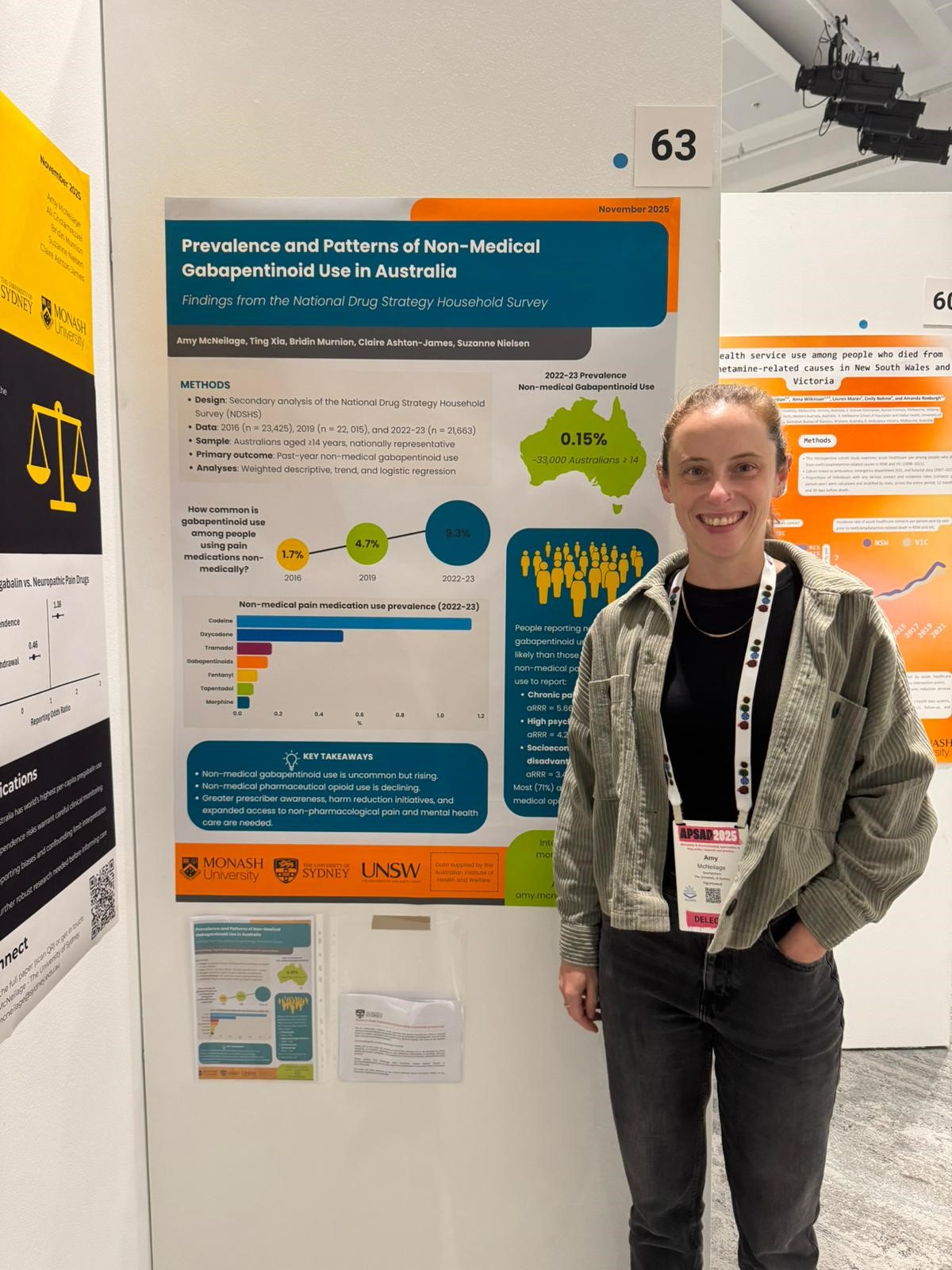
A special congratulations to Amy McNeilage, who won the judges award for Best ECR Poster for her work “Prevalence and Patterns of Non-Medical Gabapentinoid use in Australia”. Congratulations Amy!
Posters and Presentations
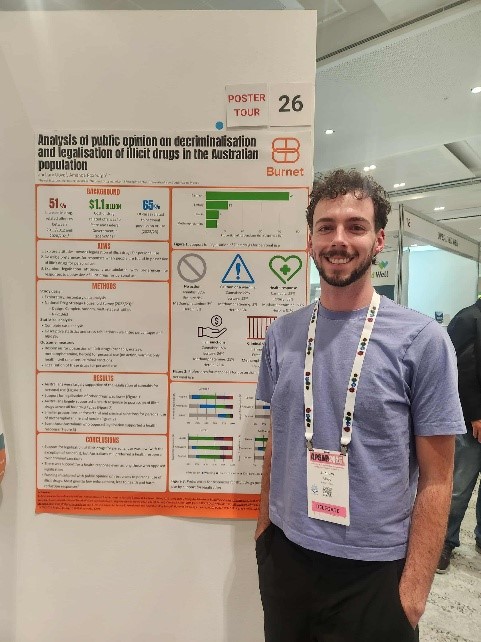
Zachary Lloyd, Analysis of Public opinion on decriminalising and legalisation of illicit drugs in the Australian population
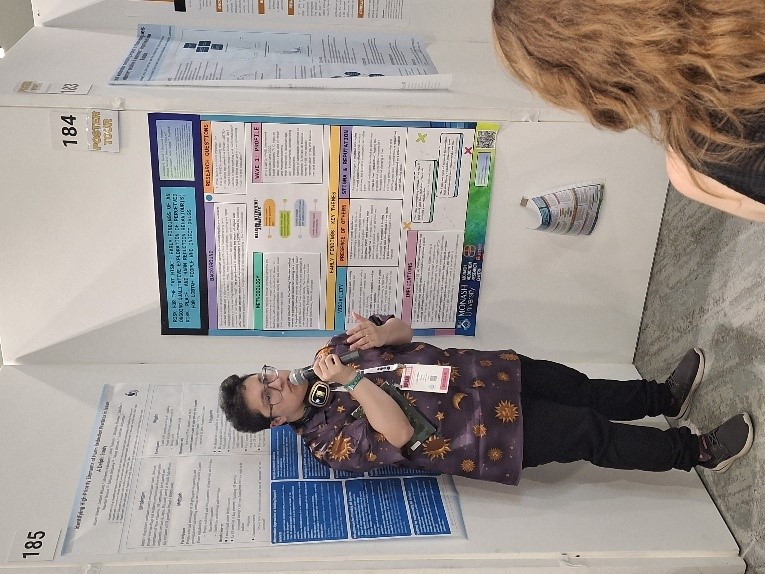
Lawrence Rivera, Risk for the “at-risk”: Early findings of an ongoing qualitative exploration of perceived risk, place, and harm reduction behaviour(s) for LGBTQ+ people who inject drugs
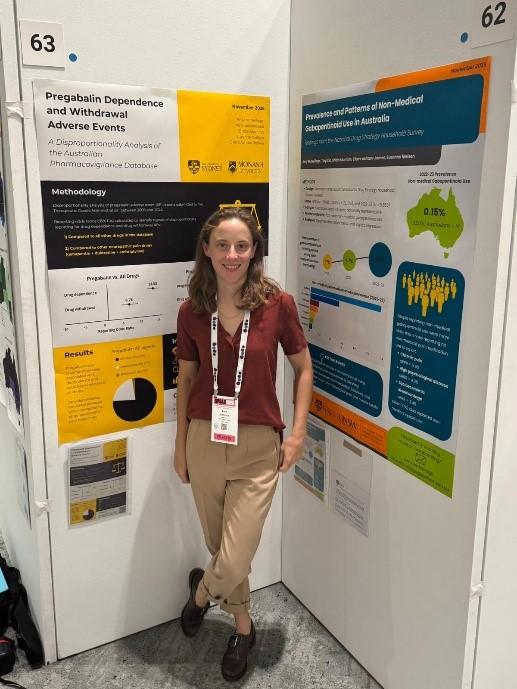
Amy McNeilage, Prevalence and Patterns of Non-Medical Gabapentinoid use in Australia and Pregabalin dependence and withdrawal adverse events
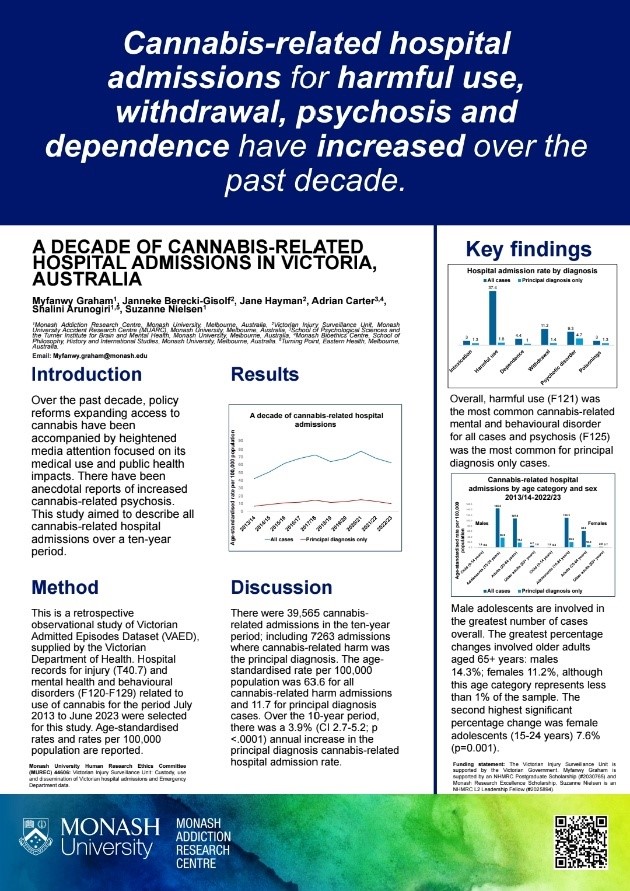
Myfanwy Graham, Cannabis-related hospital admissions for harmful use, withdrawal, psychosis and dependence have increased over the past decade
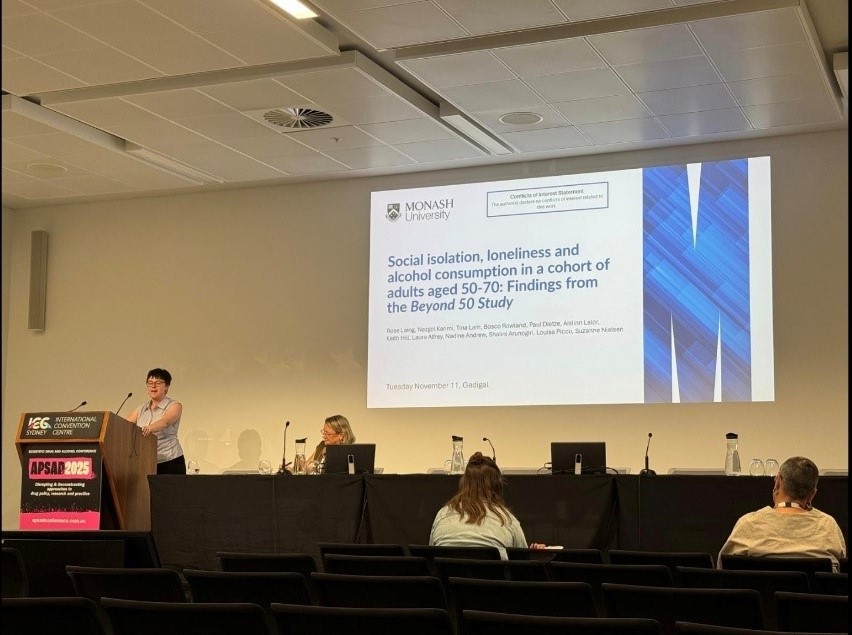
Rose Laing, Social isolation, loneliness and alcohol consumption in a cohort of adults aged 50-70: Findings from the Beyond 50 study
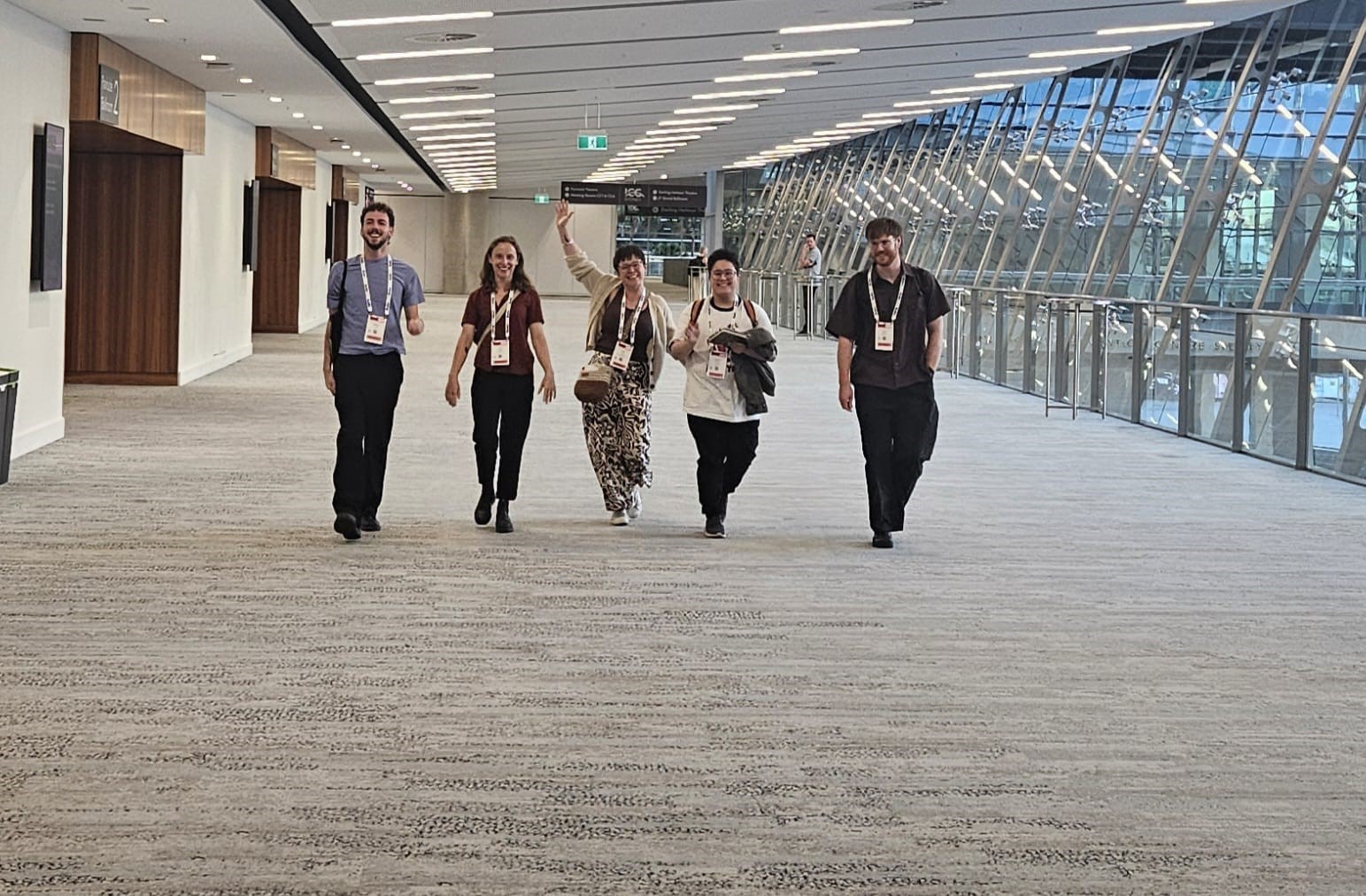
MARC PhD Network members APSAD 2025
From left to right: Zachary Lloyd, Amy McNeilage, Rose Laing, Lawrence Rivera, Oisin Stronach
APSAD 2025: Reflections from a Native disrupter
Written by PhD Network Vice Chair, Lawrence Rivera
The theme of this year’s ASPAD conference (held on the lands of the Gadigal people of the Eora nation) was “disrupting and deconstructing approaches to drug policy, research and practice”. Beyond the MARC team’s talented and award-winning showcase (including the PhD network’s own Amy McNeilage, winner of the people’s choice ECR poster award), APSAD 2025 featured a range of accomplished Indigenous scholars and practitioners, sharing their knowledge from across Australia, Aotearoa (New Zealand), and Turtle Island (North America).
As a young Native researcher, it often feels as though Indigeneity is incompatible with academia. To see Indigenous people recognised by a mainstream international institution, and given priority opportunities to speak as Indigenous scholars (not just tokens) goes beyond inspirational. It shows early Indigenous scholars that we have a place in the field - and that far from needing to be hidden, our Indigenous knowledge and experiences have power and value.
One recurring point throughout the conference was the necessity of reciprocity in our practice and research - the need to break down hierarchies, be open to learning, and to recognise the knowledge of people with lived and living experience. I was reminded of a core value held by my people - ayni. While this is often translated simply as “reciprocity”, it is a far more encompassing concept. Ayni defines how we Runa (Quechua people) interact with the world. We know that we are equal and dependent parts of a connected, living universe - one that encompasses not only other humans, but animals, plants, the Earth (Pachamama), and the cosmos. To embody ayni, we take only what we need, and we give back to the Earth in return. We help our neighbours, knowing that they will do the same for us. Ayni has no expectation of reward or repayment - it’s simply a recognition of our mutual dependence on each other and on the Earth.
Listening to the many incredible speakers at APSAD, I realised how ayni has not only informed my own research, but also aligns perfectly with what many of the scholars were advocating for - a non-hierarchical exchange of knowledge, respect, and experience. For one of the first times in my career, I saw that Indigenous knowledge does have value in the mainstream. It is not something that has to be hidden, or left unacknowledged. Instead, it can be used for transformative - some may say disruptive - change, and can be proudly shared with our Indigenous and non-Indigenous peers.
APSAD 2025 was a powerful event for the field of AOD research and practice - but it is only one step in the ongoing process of change, deconstruction, and regrowth. For Indigenous people, we carry our ancestors (and our descendants) with us. I, personally, am particularly inspired and driven by my grandmother - an incredible, well-accomplished Native woman who carved out a place for herself in education despite constant efforts to exclude her. After a lifetime of racism and oppression, my grandmother could never imagine an academic or professional setting where one would be proud to “admit” their Indigeneity. Today, I am “quietly” Native - not hiding it, but still struggling to share such an integral part of my existence. APSAD 2025 was a deeply moving glimpse of the future where our descendants can be proudly and openly Indigenous, and where our knowledge and worldviews hold just as much value as those of Europeans - and it is a reminder to all of us to continue to challenge and build new, better ways of being.
September 2025 - PhD Network's 2025 Recommended Reads
Members of the MARC PhD Network have curated a list of noteworthy publications from their research areas for the 2025 year to date.
Amy McNeilage
Focus: Gabapentinoid-related harms
➢ France’s Pregabalin Reform: After France introduced secure prescription requirements for pregabalin in May 2021, pregabalin use fell by 20% while gabapentin use increased by 35%, showing clear substitution to the less-restricted drug. Read: Michel et al. (2025) International Journal of Drug Policy
➢ Risk of Self-Harm: A UK self-controlled case series (n=10,002) found the risk of self-harm is increased before gabapentinoid treatment, persists during the initial treatment period, and rises again shortly after discontinuation. Read: Yuen et al. (2025) BMJ
➢ Global Prescribing Trends: Across 72 countries, gabapentinoid use more than doubled between 2012 and 2023 – especially in developing economies – while opioid use fell in developed countries but rose in developing ones. Read: Lie et al. (2025) Pharmacoepidemiology and Drug Safety
Rose Laing
Focus: Social isolation, loneliness, and substance use in Australian adults aged 50-70
➢ COVID-19 and Alcohol Consumption: During the COVID-19 pandemic, young adults already at risk of problematic alcohol use increased their consumption as a coping mechanism to deal with loneliness and poor mental health. Read: Botella-Juan et al. (2025) Public Health
Richard Armour
Focus: Emergency and emergency out of hospital systems of care for people who use drugs
➢ Patient Perspectives on Leave-Behind Naloxone: People with lived experience of overdose and overdose response in the UK were strongly supportive of enhanced post-overdose care by EMS, including leave-behind naloxone. Read:Hughes et al. (2025) Prehospital Emergency Care
➢ Barriers to Prehospital Buprenorphine: Despite being implemented in almost 25 states in America, only 8 unique prehospital buprenorphine programs are reported in the literature. Very few of the implemented programs reported significant barriers to implementation. Read:Gormley et al. (2025) Prehospital Emergency Care
➢ EMS Clinician Perceptions of Emergency Buprenorphine: The first published qualitative study of EMS clinicians reveals that a number of underlying biases and stigmatising attitudes would impact implementation of emergency buprenorphine in South Carolina. Almost half would support implementation. Read:Wampler et al. (2025). Prehospital Emergency Care
Benjamin Davey
Focus: Neural mechanisms underlying approach bias modification for alcohol use disorder
➢ Approach/Avoidance Bias Experimental Setups using VR: Approach bias modification and measurement has been shown to be effective at reducing alcohol relapse rates, but may lack ecological validity, thereby affecting adoption rates among patients and clinicians. Virtual reality setups offer a promising method for improving this. Read:Grasso-Cladera et al. (2025) Brain Sciences
➢ Alcohol Avoidance Training is Related to Declarative Memory Function: Approach bias modification has historically been assumed to operate implicitly. However, this study advanced the theoretical understanding of this intervention by showing that outcomes are related to declarative memory. Read:Loijen et al. (2025) Psychology and Neuroscience
Campbell Ince
Focus: Examining dysregulated sexual behaviours as potential “behavioural addictions”
➢ Integrative Model for Behavioural Addictions: Potentially addictive behaviours span many forms. A leading transdiagnostic framework has been increasingly supported across a range of candidate behaviours, summarised within the Interaction of Person-Affect-Cognition-Execution (I-PACE) model of behavioural addictions. Read:Brand et al. (2025) Journal of Behavioral Addictions
July 2025 - Meet our PhD Network Alumni: Spotlight on Dr Monica Jung
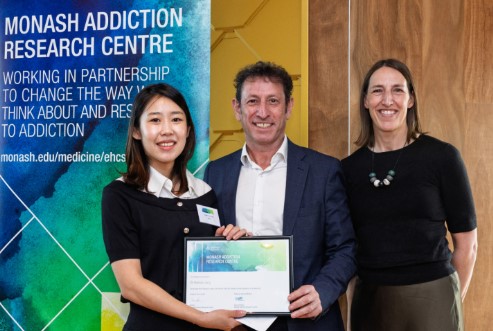
Dr Monica Jung was the recipient of the 2025 MARC Publication prize for her outstanding work on opioid tapering. She recently completed her PhD with the Monash Addiction Research centre and has started the next stage of her career as a researcher within the MARC team. In a recent interview, we asked Monica for an overview of her research so far, what makes her passionate about opioid safety, as well as her advice for current and future PhD students.
Tell us a little about yourself. What was your PhD project, what are your research areas of interests, and the projects you’re currently involved with?
I am a pharmacist and early career researcher passionate about improving the safe use of medicines. My PhD, titled “Using electronic health care data to understand patterns of opioid prescribing and use in primary care settings”, aimed to generate real-world evidence to inform strategies for optimising opioid use and improving outcomes for people living with chronic pain. I analysed electronic health records from a large primary care database to better understand who is prescribed opioids, how opioids are tapered (or deprescribed, defined as the supervised reduction or cessation of medication), and what factors are associated with successful tapering. My research contributes to the growing evidence base that may help guide clinical practice and promote safer use of prescription opioids in Australia.
Currently, I’m continuing this work at MARC, expanding my research on deprescribing beyond opioids to other high-risk psychotropic medicines, including benzodiazepines, gabapentinoids, and medicinal cannabis. I’m also involved in research to strengthen harm reduction services in community pharmacies, including a recent national survey exploring pharmacists’ roles, knowledge and perceptions around delivering these services.
What inspired you to choose your PhD project? What was your experience with research before starting?
As a hospital pharmacist, I saw how medication-related harm can delay discharges, worsen outcomes, and even lead to readmissions. At the time, there was limited guidance around opioid prescribing, particularly at discharge, and very little focus on deprescribing. I saw first-hand how patients can be affected by opioid-related complications, and how little evidence existed to guide safe prescribing or deprescribing practices.
After my pharmacy internship, I was involved in a retrospective audit of hospital discharge data to examine the patterns of opioid prescribing in patients discharged from emergency department. This experience sparked my interest in pursuing research in this space.
You have recently won the MARC publication prize for your work “Opioid characteristics and nonopioid interventions associated with successful opioid taper in patients with chronic noncancer pain”. Can you tell us a little about your findings and the potential impact this has on how we treat people with noncancer pain?
This study, published in PAIN (Impact Factor 7.9), is one of the first in the world to provide a detailed examination of opioid tapering trajectories, offering real-world evidence on opioid types and formulations associated with successful tapering. Despite widespread recommendations to taper opioids to reduce harm, little is known about which opioid characteristics influence taper success. For example, are people that are prescribed morphine more likely to taper successfully compared to those prescribed codeine? Does the use of immediate-release formulations lead to better outcomes than slow-release formulations?
My findings contribute to a more nuanced understanding of opioid prescribing in this context by demonstrating that people who completed opioid tapering were less likely to be prescribed long-acting opioids, oxycodone or tramadol, but more likely to be prescribed codeine during tapering. These insights challenge current expert consensus on best practices, particularly the preference for tapering on long-acting opioids, highlighting the need for a review of current clinical guidelines and offering novel evidence that could inform clinical practice.
The impact of this work is reflected by an Altmetric score of 31 (placing it in in the top 25% of all research outputs) and citation in high-impact journals, including Anaesthesia (impact factor: 10.7).
What are you hoping to do now that you’ve finished your PhD?
I'm fortunate to be continuing my research at MARC, expanding on the work I began during my PhD to drive real-world impact. I hope to continue generating evidence that informs policy and practice to support safe and effective use of not only opioids but also other high-risk psychotropic medicines. I am also excited to broaden my involvement in other areas of research (e.g. analysing other datasets, exploring other pharmacoepidemiological methods, and looking into harm reduction more broadly, beyond just opioids).
On a personal note, I’m looking forward to finding a bit more balance such as spending more time outdoors and getting back to regular Pilates classes!
If you could give MARC PhD students one piece of advice to help them through their PhD, what would it be?
Keep showing up and don’t give up. Take breaks when you need to, be kind to yourself, and remember why you started.
What part of the PhD process did you find most challenging, and how did you handle it?
Starting my PhD during Melbourne’s long lockdowns was incredibly challenging. Transitioning from full-time clinical work in busy hospital wards to working from home was a big adjustment. It felt isolating at times, but over time I found structure and routine, and I was fortunate to have supportive supervisors who provided ongoing guidance and encouragement.
What are you most excited about for post-PhD life?
A proper holiday—and finally reading something not related to research!
OCTOBER 2024 - Recap: A Memorable Experience at the Publishing in Addiction Science Workshop
Mid-year PhD candidate and MARC PhD Network committee member Campbell Ince had the incredible opportunity to attend the Publishing in Addiction Science workshop summer school at the University of Gibraltar. Campbell, a valued member of the PhD Network and its committee, detailed the full story of this informative experience below, highlighting this unique opportunity's professional and personal benefits.
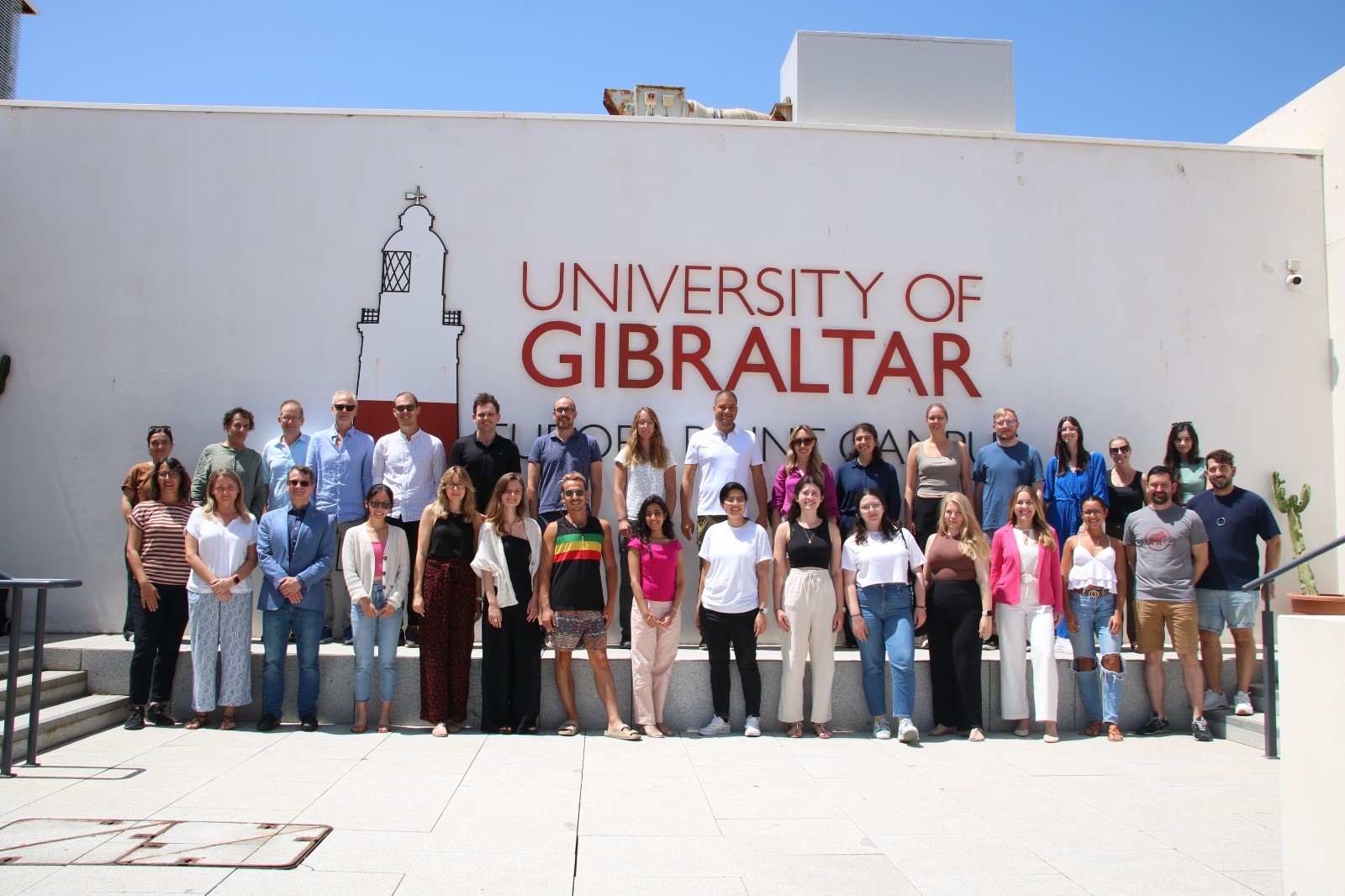
I'd like to share a fantastic experience that I had mid-year in attending the Publishing in Addiction Science workshop summer school, which was held immediately prior to the International Conferences on Behavioural Addictions. Both the workshop and the conference were held at the University of Gibraltar and offered many fantastic learning experiences and networking opportunities.
The workshop itself was a five-day event attended exclusively by PhD students and early career researchers in various fields of addiction research. It was delivered by various editors-in-chief and senior editorial board members of leading journals in the field, specifically designed to help PhD students and ECRs upskill in navigating the complex landscape of publishing in addiction science. We covered many topics across the five-day syllabus, with three sessions held per day, ranging from tailoring a manuscript to certain target journals through to tips for acting as a peer reviewer on behalf of a journal. Needless to say, this experience offered an invaluable learning opportunity to sit on both sides of the peer review fence. The networking opportunities from the summer school were also an invaluable springboard prior to the conference itself, which really did transform the overall experience.
 Professional development aside, the events were hosted in picturesque Gibraltar, situated at the very southern tip of Spain. After each day of the workshop, we attended events such as stand-up paddleboarding, a dolphin-watching tour, and a tour of the famous Rock of Gibraltar, accessed by a short trip up the rock on a cable car.
Keep an eye out for the next instalment of this workshop prior to the 2025 International Conference on Behavioural Addictions. These types of workshops are run by many other societies and research institutions - typically in the Northern Hemisphere summer - and often immediately prior to a conference. I encourage everyone to look out for such events in the future. If you have any questions or would like to chat about the experience, feel free to reach out!
Campbell Ince
August 2024 - MARC PhD Network Webinar: International Drug Policy

On Thursday, 8 August, the MARC PhD Network Committee hosted a webinar on International Drug Policy for its members. The webinar was well attended, with 15 participants, and it was encouraging to see so many members attending the event on Zoom.
The webinar opened with Dylan Mantinieks' general introduction to International Drug Policy, which set the scene for the following three presentations. Lawrence Rivera, a PhD student at MARC, discussed “Coca, Cocaine, and Community: Rethinking International Drug Policy in the Andes”, and it was fascinating to hear about the Coca Yes, Cocaine No policy!
Next, Monica Jung, another PhD student at MARC researching patterns of opioid prescribing and use in primary care, presented on prescription opioid-related policies and regulatory laws in Australia. Her clinical experience as a pharmacist and expertise in the area of opioid-related policies was very informative. The final presentation was by Jenna Yang, who is a PhD student with MARC and the current MARC PhD Network Vice-Chair. Jenna’s background in social work and non-government organizations in China related to alcohol and other drug services provided a unique perspective on the challenges China faces in drug policy and the implementation of various treatment models.
The MARC PhD Network Committee would like to thank all the presenters for their contributions and engaging slides. We hope to see even more members at future events organized by the MARC PhD Network Committee!
August 2024 - Psychology Student Placement
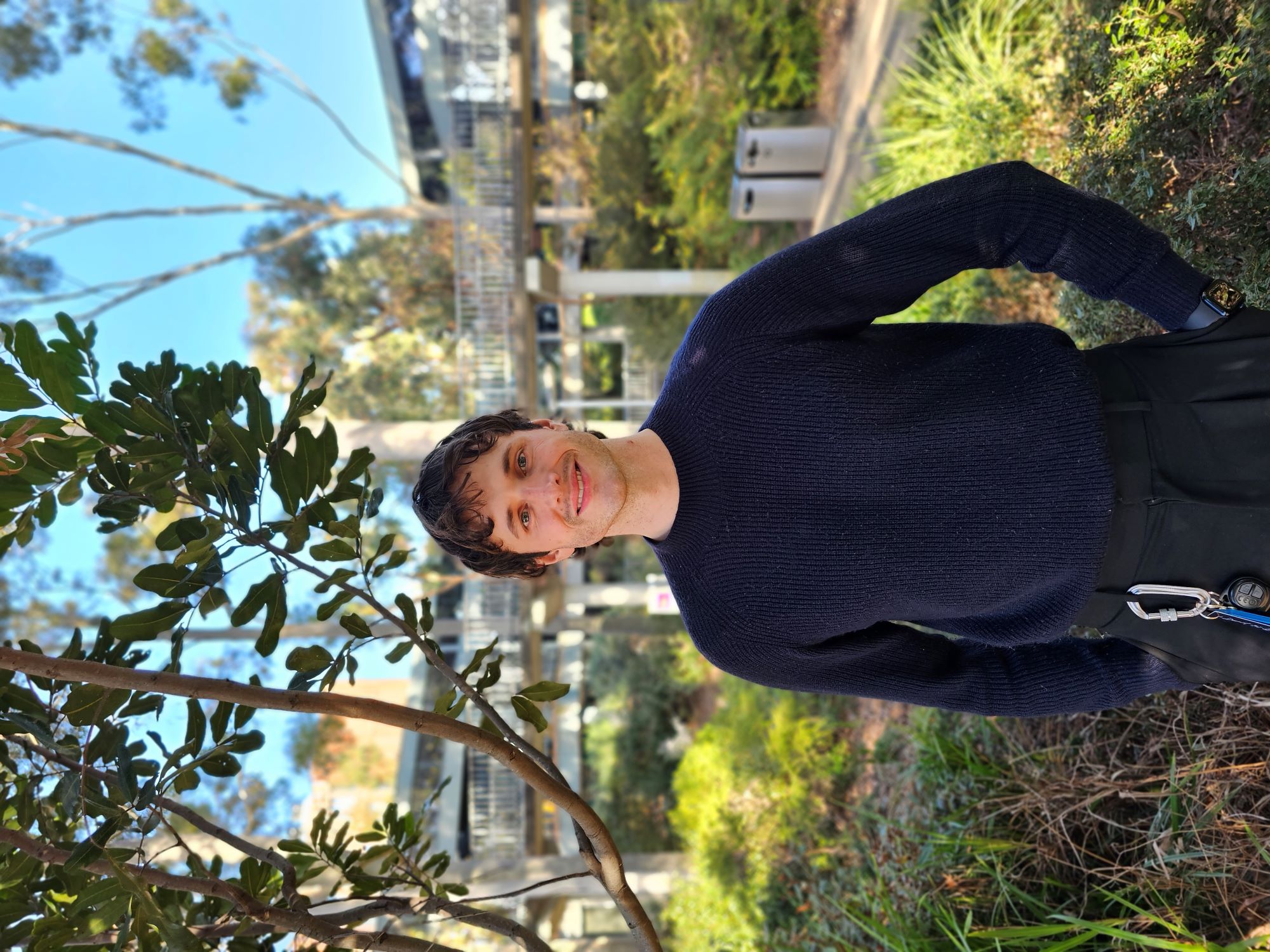
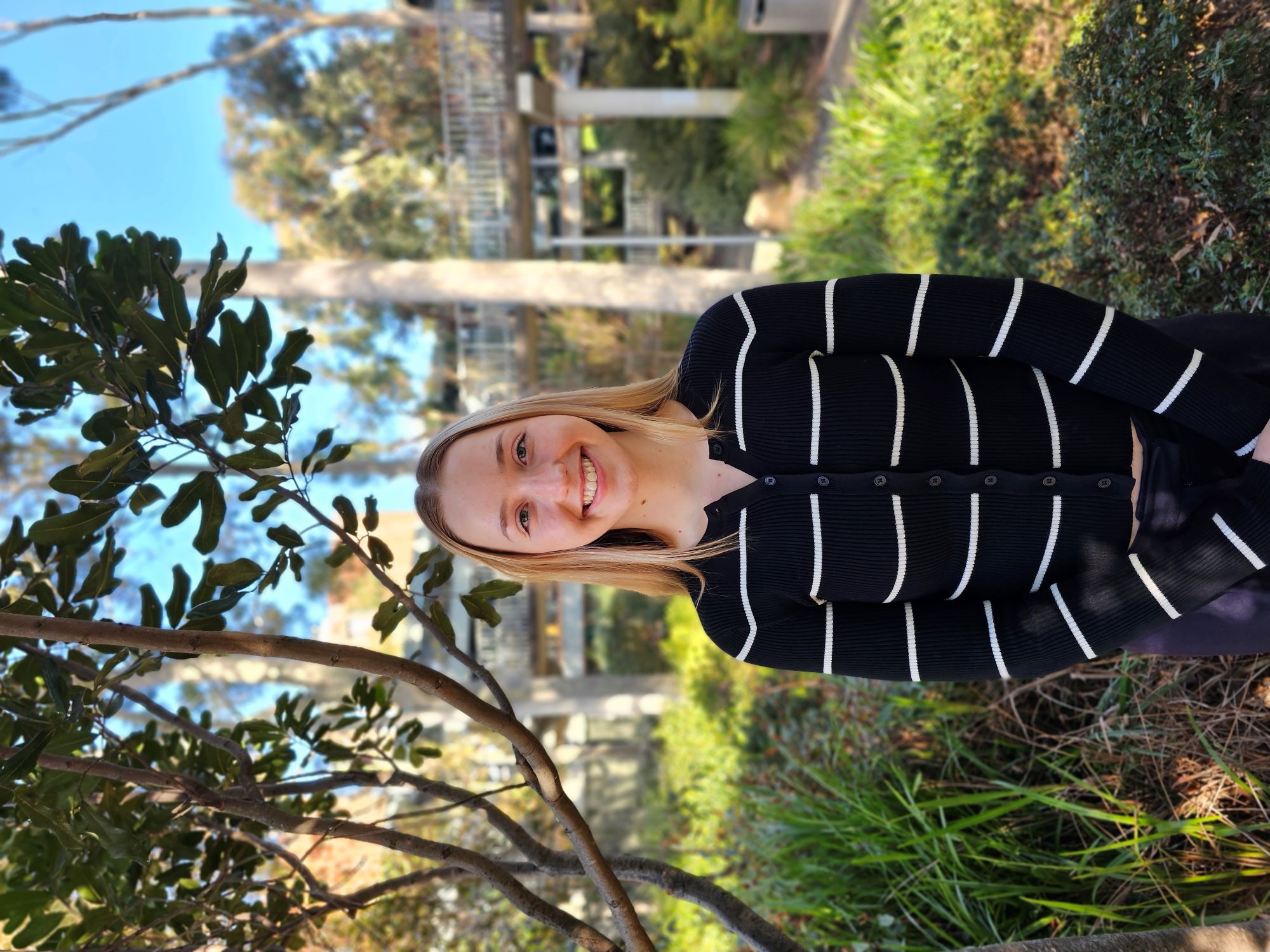
Will McLennan and Zoe Adam-Gedge are Psychology students undertaking a professional placement at Monash Addiction Research Centre (MARC). As part of their placement, they have been working under the supervision of Dr Tina Lam on the ‘Integrating alcohol culture change into positive ageing’ project. This project will share people’s vibrant and multidimensional stories about how changing their relationship with alcohol has led to positive changes in their social lives, the ways they relax, and their preparation for healthier ageing.
Zoe and Will's placement at MARC is part of a new third-year psychology unit, ‘Psychological Science in Practice’. To successfully complete the unit, students must complete 96 hours of supervised placement in a professional setting such as a clinic, research centre, or community-based facility. This experience is a significant step in their journey towards postgraduate studies in clinical and research settings.
July 2024 - EoI for MARC PhD Network Committee members
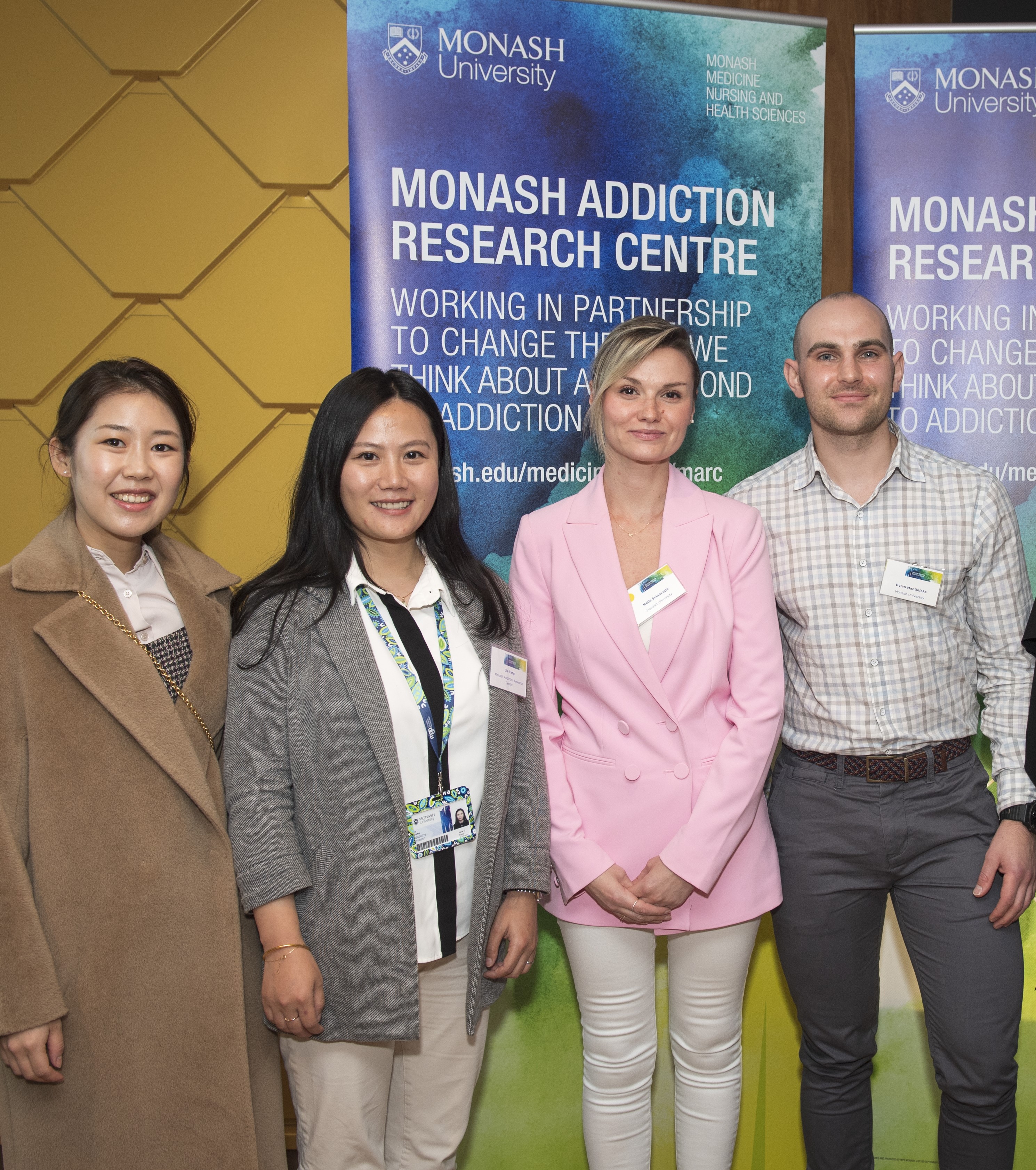
The MARC PhD Network Committee is looking for individuals interested in joining the committee to fill some important roles, including chair and vice-chair.
- Administrative tasks and communications within the network
- Organising a number of events per year (e.g. workshops, student symposiums)
- Chairing quarterly committee meetings.
This is an opportunity to develop your leadership skills, and looks great on a CV!
If you're interested in joining the committee or would like to know more, please contact us at marc-phdnetwork@monash.edu
April 2024 - Scholarly Intensive Placement (SIP) Student at MARC

MARC has welcomed Pei Ying Tan, a final-year medical student from Monash University, who has joined us on a six-week Scholarly Intensive Placement (SIP). Pei Ying is working on a publication, under the supervision of Dr Louisa Picco, exploring pharmacists' experiences regarding the use of real-time prescription monitoring programs (RTPM) across various Australian states. This project will aim to compare any differences in experiences between states where using RTPM is mandatory and voluntary.
Semester 1, 2024 - MARC welcomes three new PhD candidates
MARC is pleased to welcome three new PhD candidates: Rose Laing, Lawrence Rivera and Dereje Zewdu.
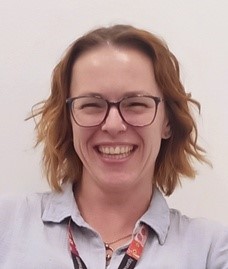
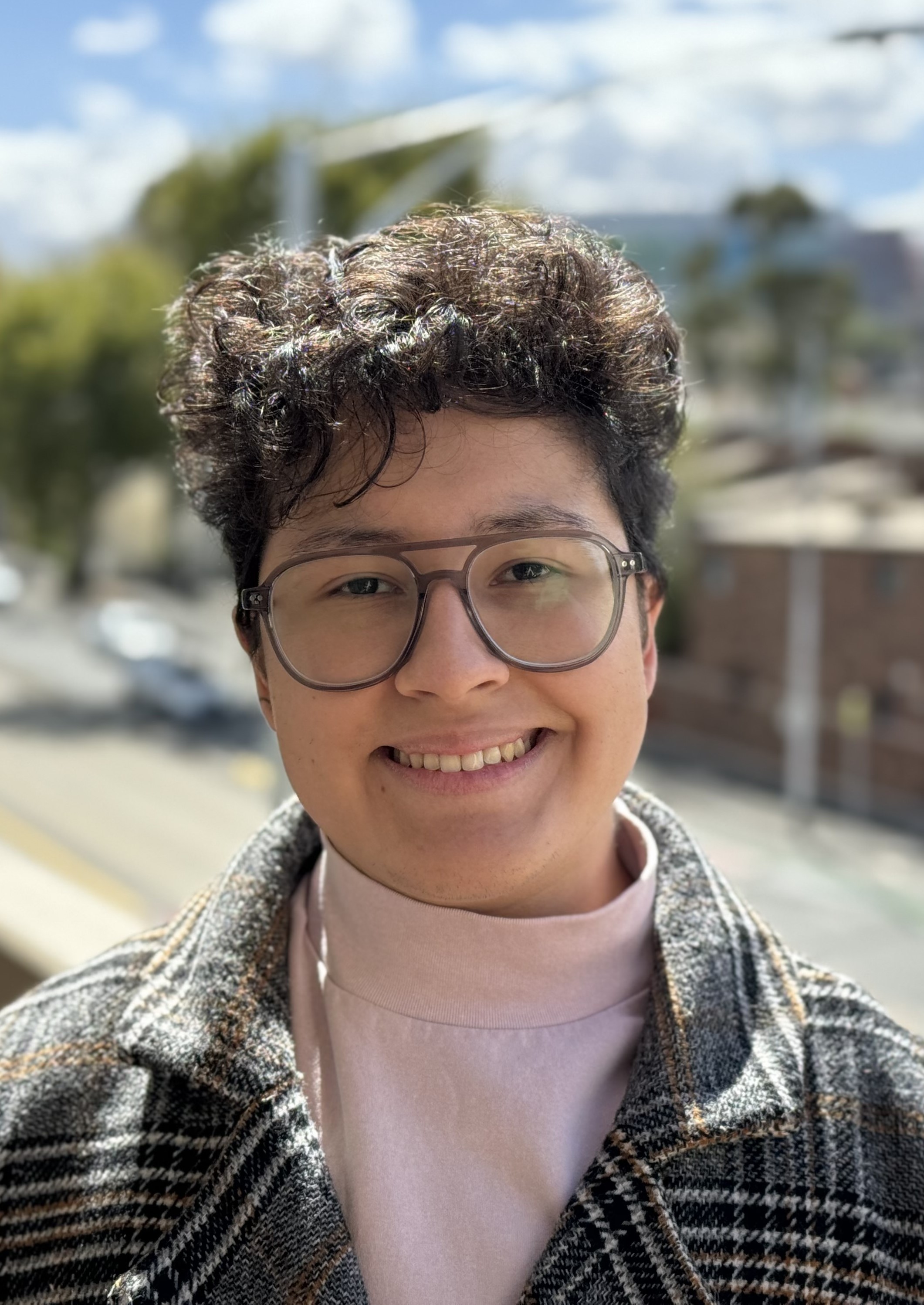
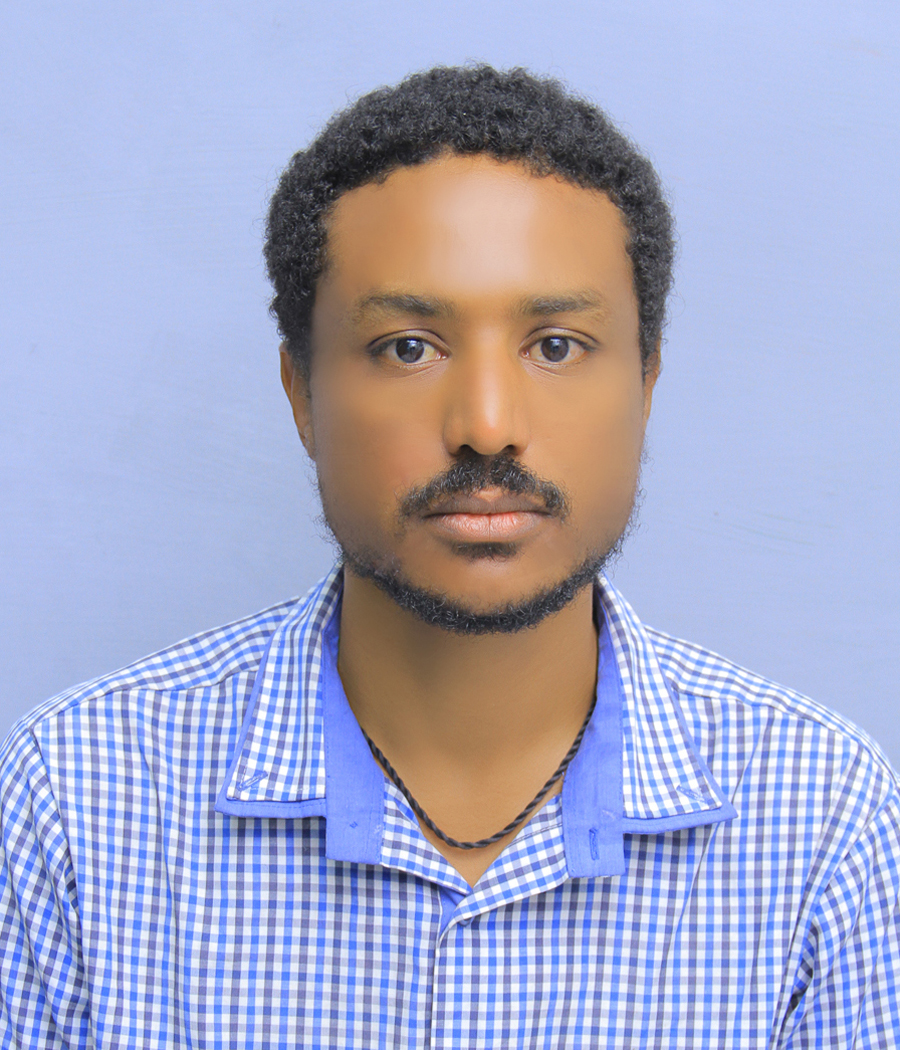
Left to right: Rose Laing, Lawrence Rivera and Dereje Zewdu.
Rose is a recipient of the MARC Scholarship and will be working on the Beyond 50 project. Her PhD project will focus on social factors that influence healthy ageing, such as social isolation and loneliness, under the supervision of Prof Suzanne Nielsen and Dr Louisa Picco.
Lawrence will be using a mixed methods approach to conduct an inductive examination of how LGBTQ+ people who inject drugs (PWID) understand "safety" and safe places and how they navigate their intersectional identities as both PWID and LGBTQ+ under the supervision of Prof Suzanne Nielsen, and A/Prof Melissa Petrakis, A/Prof Carolyn Salom and Prof Rebecca Wickes.
Dereje has been awarded an Eastern Health Clinical Scholarship to look at developing methods for improving clinical practice and reducing opioid-related harms under the supervision of Prof Suzanne Nielsen and Dr Ting Xia.
March 2024 - MARC PhD Network interview with MARC member Dr Annette Peart
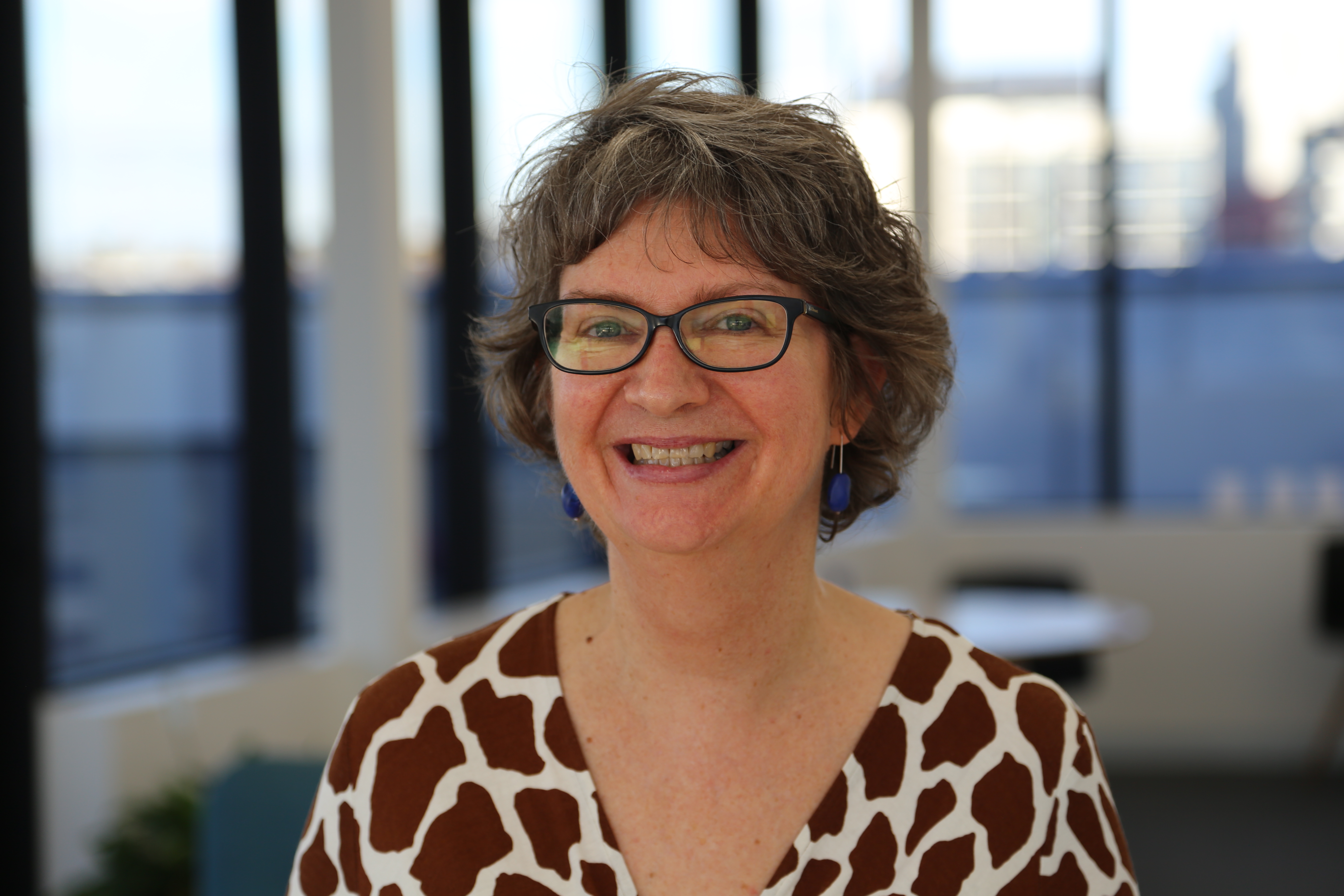
Q1: Tell us a little about yourself. What was your PhD project, what are your research areas of interests, and the projects you’re currently involved with?
I am a registered occupational therapist and a little late to academia! I haven’t followed a traditional path, but my clinical and work experience to date helped with completing my PhD. For my project I looked at the experiences of clients and clinicians in a Hospital Risk Admission Program at Monash Health. This was a qualitative project focused around client-centred practice – to use an occupational therapy term – also known as patient or person-centred care. The relationships that clinicians built with their clients was pivotal to improving health and related outcomes for people who lived with multiple chronic conditions. I am still invested in the concepts of client-centred practice, and use those principles in my current research projects. Through my PhD I also became interested in the concept of access to care; this also drives a lot of the projects I work on for people experiencing addiction to be able to access the treatment and support they are seeking.
Q2: Did you find difficulty transitioning from being a PhD student to working full time at Turning Point? Can you tell us a little bit about your experiences in your working environment?
I didn’t find a lot of difficulty with the transition, as I was working as a lecturer while completing my PhD at the time. But I still have difficulty reading for leisure now, as I gave that up when I was studying, and I haven’t been able to transition back to fiction just yet.
February 2024 - Scholarly Intensive Placement (SIP) Student at MARC

MARC has welcomed Elissa Ong, a final-year medical student from Monash University, who has joined us on a six-week Scholarly Intensive Placement (SIP). Elissa is working on a publication, under the supervision of Dr Louisa Picco, exploring the viability of a community pharmacist-led model of care in the management of Hepatitis C in Australia. Specifically, the paper will use a set of survey data collected throughout Australia to gauge the level of willingness and comfort of community pharmacists in testing and treating Hepatitis C. The study will also investigate the factors influencing community pharmacists’ openness to facilitate testing and treatment of Hepatitis C in Australia.
December 2023 - 2024 NHMRC PhD Scholarship success
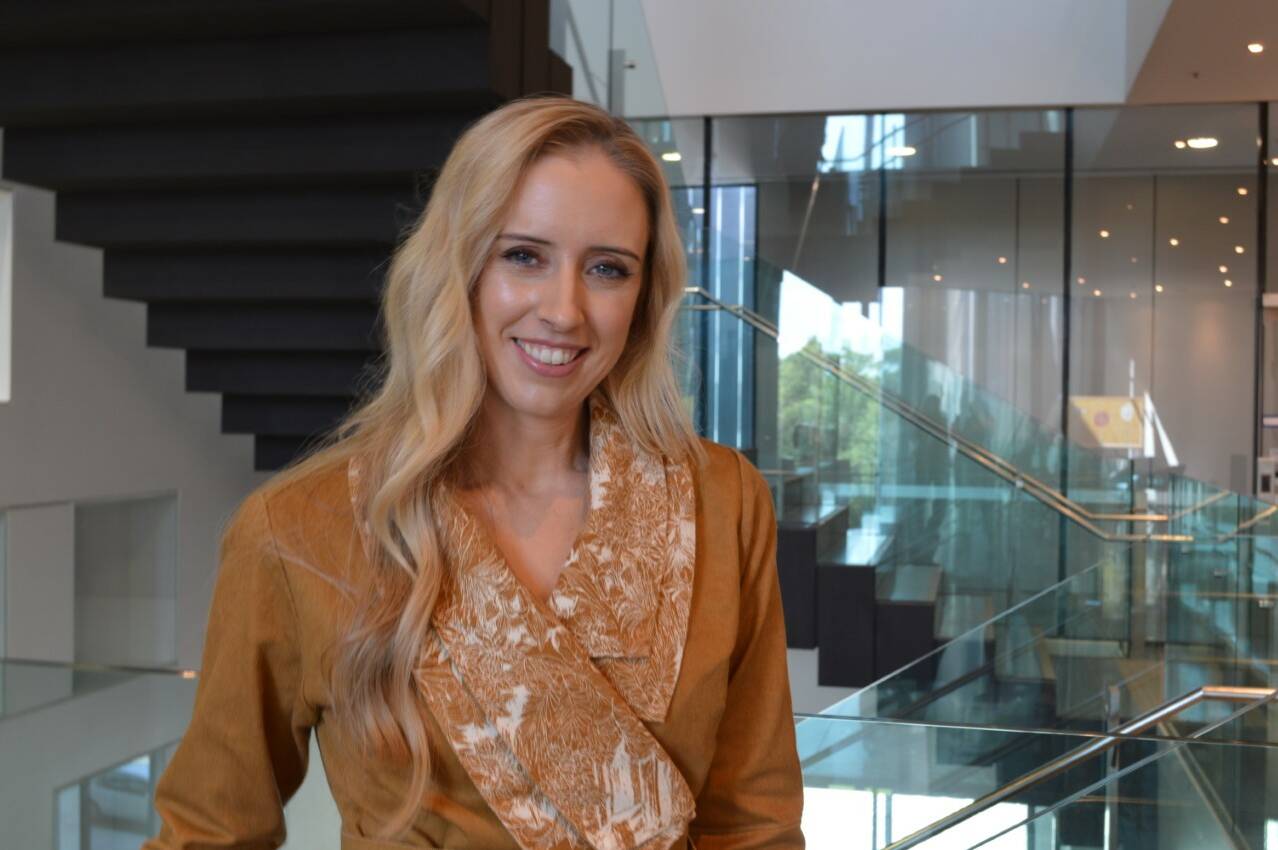
Congratulations to MARC PhD candidate Mfyanway Graham, who has been awarded a prestigious NHMRC PhD Scholarship.
Myfanwy is an NMHRC Postgraduate Scholar and Monash Research Excellence Scholar (Monash Addiction Research Centre, Eastern Health Clinical School), Schaeffer Fellow (Schaeffer Center on Health Policy and Economics, University of Southern California), Fulbright Scholar Alumna in public health policy, and a registered pharmacist. Myfanwy's NHMRC-supported research will examine pharmacovigilance and health outcomes with access to unapproved psychoactive medicines, including medicinal cannabis and psychedelics.
November 2023 - EHCS Summer students at the Monash Addiction Research Centre
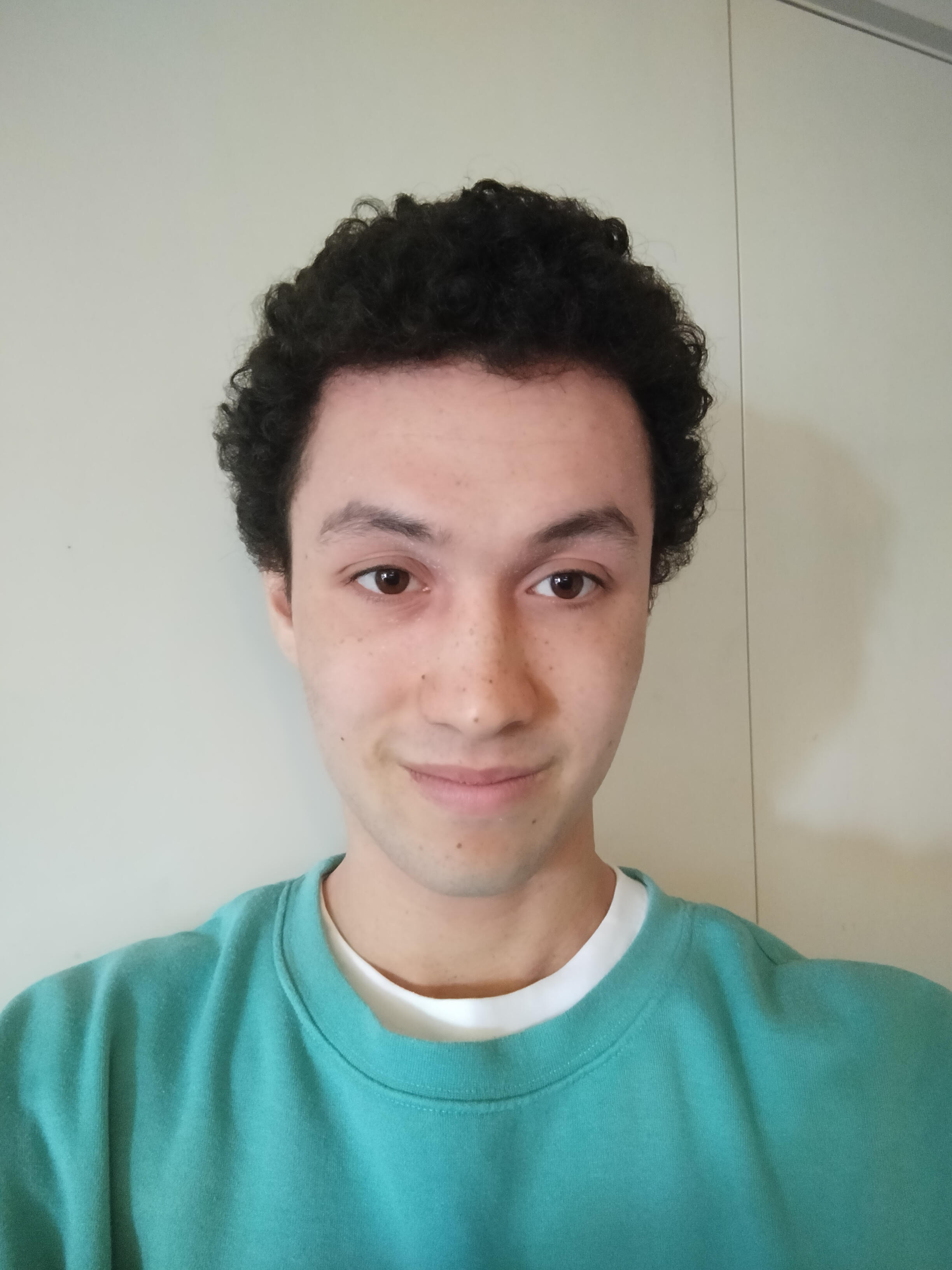

Left to right: Bishaal and Yantong (Meredith)
MARC welcomed two Eastern Health Clinical School (EHCS) summer scholarship students in November. Over the next eight weeks the students will be working on a project 'Comparing Patient Characteristics in ED Visits for Substance Use Pre & Post Policy Interventions”, under the supervision of Dr. Ting Xia. This data linkage study using programming languages R and STATA aims to explore the impact of opioid prescription policy on patients’ ED visits, especially substance-related presentations. Bishaal Gurung is a first-year undergraduate medical student at Monash. And Yantong (Meredith), has just completed her BMedSc (Hons) year.
October 2023 - MARC PhD Network tour of the Medically Supervised Injecting Room (MSIR)
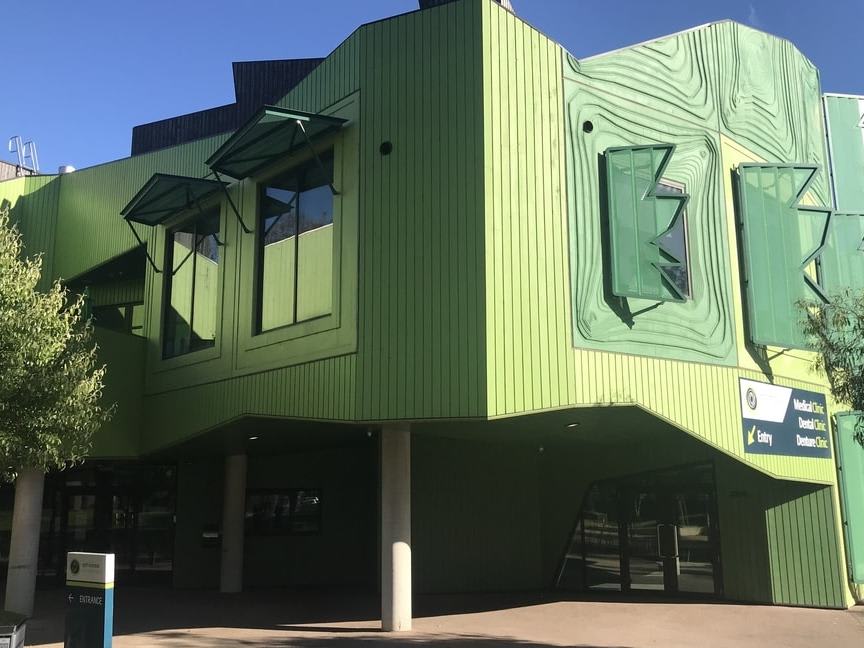
MARC PhD network organised a tour of the Medically Supervised Injecting Room (MSIR) at North Richmond Community Health in October 2023. It was wonderful to meet so many of our members in person throughout the day.
Starting with a comprehensive introduction, Nathan, our tour guide, led us through all the facilities. The tour included in-depth discussions on the operation, capacity, strengths, and weaknesses of the injecting room. As we explored, members got to know the background of establishing the injection room and the stories behind saving lives. It was surprising to discover that this injecting room incorporated a multidisciplinary team and facilities to support individuals with substance use disorder, which were beneficial for our members engaged in addiction research.
The MARC PhD Network extends gratitude to the MSIR staff for providing us with this insightful opportunity. Our members shared overwhelmingly positive feedback after the tour, and we look forward to organising more similar events in the future.
September 2023 - Career advice interview with Dr Louisa Picco
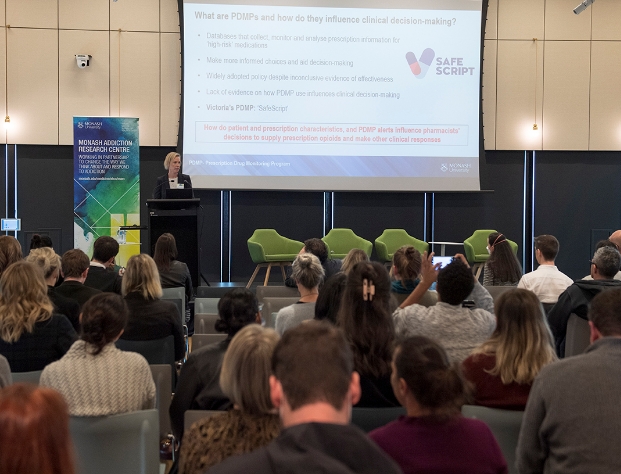
The MARC PhD Network asks Dr Louisa Picco, former MARC PhD Network Chair and recent recipient of the 2022 MARC Best PhD publication prize, questions about her experiences as a PhD student and early researcher career.
Tell us a little about yourself. What was your PhD project, what are your research areas of interest, and the projects you’re currently involved with?
I completed my PhD in 2022, and this related to identifying and responding to prescription opioid related risks, using two well-adopted approaches – prescription drug monitoring programs and clinical screening tools. It explored how pharmacists use these tools to make clinical decisions and compared people that were identified as at risk between these approaches to determine whether there was concordance. The research was quite timely as during my PhD, Victoria implemented its state-based prescription drug monitoring program, and was the first Australian jurisdiction to mandate the use of these programs, so I was really interested to know more about this new program and how its use informed clinical decision making.
Since then, I have been fortunate enough to secure a NHMRC Emerging Leader grant to extend this work and I am currently exploring the impact of prescription drug monitoring programs across other Australian jurisdictions, from both a prescriber and pharmacist perspective. I also plan to identify both patient and population level outcomes of these programs.
What resources were the most helpful to you as a PhD student in addiction-related research?
I did the majority of my PhD during the COVID-19 pandemic, so online resources were essential. The lack of opportunities to interact, network and share experiences with fellow students and other researchers face-to-face was both challenging and isolating at times. This is where the Monash Addiction Research Centre (MARC) PhD network really helped. It was a platform for students, all undertaking addiction-related research across Monash University to be connected. This occurred in many ways including receiving the MARC newsletters, which showcased the breadth of MARC’s work across Monash, including that of PhD students. There were also various opportunities to participate in trainings or webinars, specific to addition-related research, as well online events specifically for PhD students and early career researchers such as grant writing workshops and ‘shut up and write’ sessions.
I also found the range of online courses through myDevelopment at Monash to be a really useful resource- these were quite broad in nature, however, were extremely helpful for specific topics such as introductory courses to analytical software, types of analysis and also courses on effective writing skills for your PhD and peer reviewed manuscripts.
September 2023 - Visualise Your Thesis competition finalist
MARC PhD candidate Monica Jung has been shortlisted as a finalist and is currently ranked second overall in this year's Visualise Your Thesis competition. You can watch the 1-minute video of Monica’s thesis titled ‘Safe and effective opioids’ below.
June 2023 - EHCS winter students at the Monash Addiction Research Centre



Left to right: Nandini Karthikeyan, Ulyana Kondratova and Zeynep Balikci
MARC welcomed three Eastern Health Clinical School (EHCS) winter scholarship students in June. Over the next four weeks, Nandini Karthikeyan is working on the project titled "Exploring the impact of prescription drug monitoring programs and other harm minimisation approaches in Victoria" under the supervision of Dr Louisa Picco. And Ulyana Kondratova and Zeynep Balikci are working together on a project using primary health data to describe the trends in opioid prescribing in Victoria and to investigate changes in the personal characteristics of individuals being initiated opioids under the supervision of Dr Ting Xia.
2023 MARC Symposium recap
I trust you are safe and well as the cold winter starts to bite.
On Thursday, 18 May, the 2023 MARC Symposium was held at The Pavilion, Caulfield campus. The MARC PhD Network had a significant presence at the symposium, and it was wonderful to meet so many of our members face-to-face throughout the day.
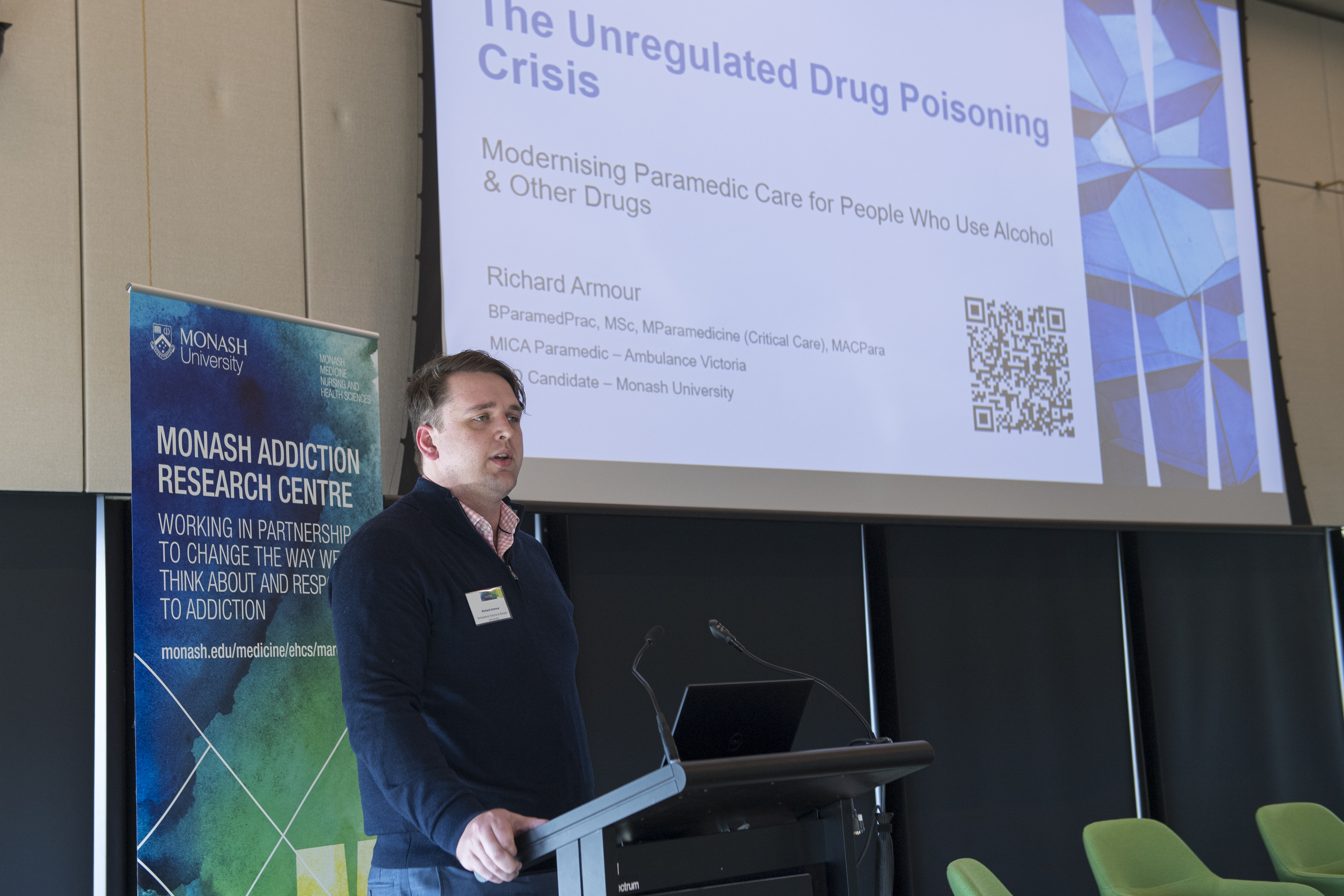
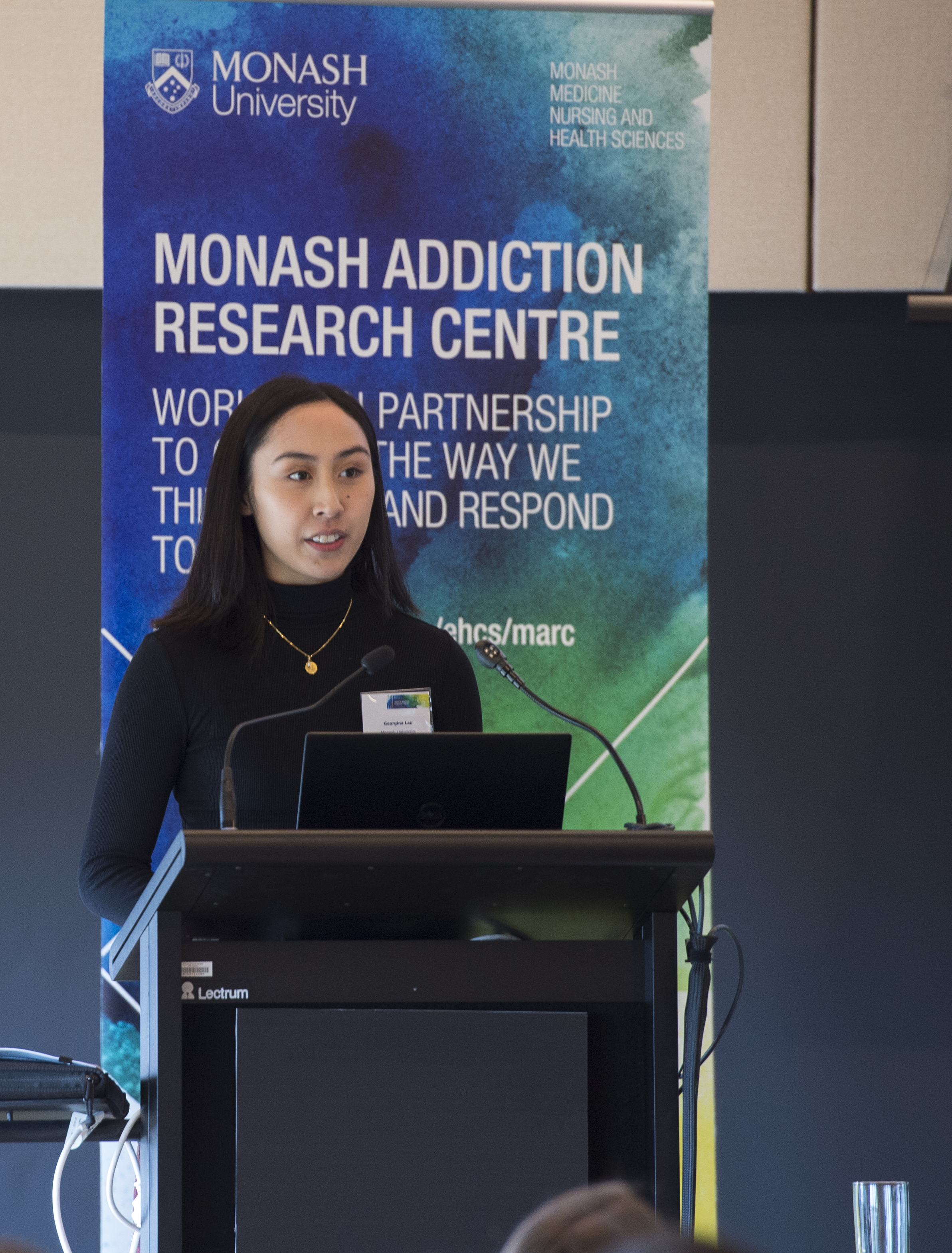
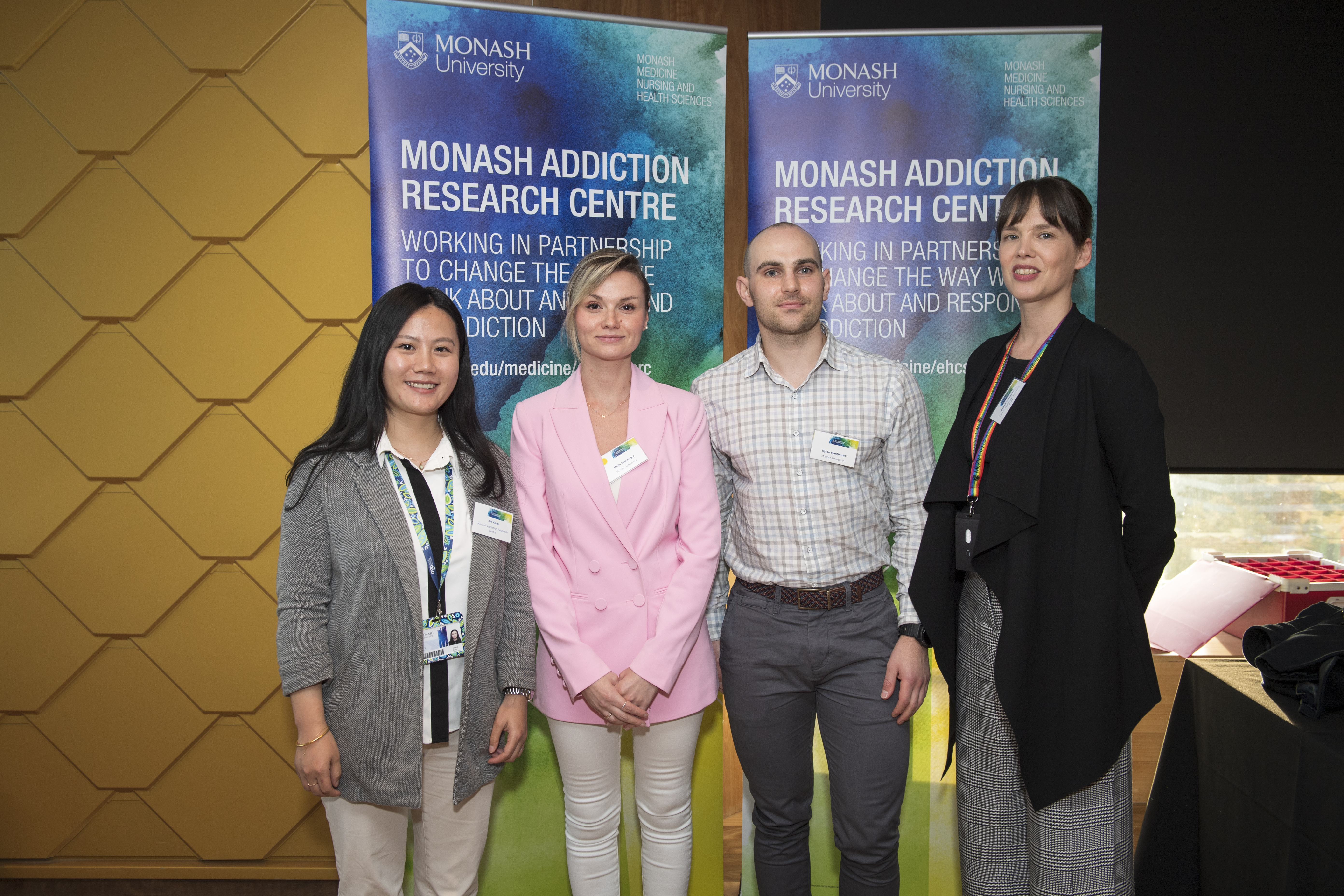
Presentations began with the theme of priority populations where Melis Selamoglu presented her highly topical research on General Practitioners’ perspectives of e-cigarettes. Thomas Plunkett and Maria Wisniewska continued the momentum with presentations related to the Better Access initiative and Telehealth, respectively. Over lunch, we had an opportunity to peruse the many engaging posters, although not before Monica Jung and Jie Yang participated in a 1 min rapid-fire highlights session. Finally, in the afternoon, Dylan Mantinieks, Georgina Lau, and Richard Armour presented their research on drug-related harms. The sessions were interspersed with time to network, discuss others’ research, and refuel with tea and coffee!
The MARC PhD Network would like to thank the MARC for providing its members with the opportunity to attend the 2023 MARC Symposium. Lastly, we would like to congratulate Louisa Picco, former MARC PhD Network Chair, for winning the best PhD publication prize.
We hope to see even more members engage with the MARC symposium next year!
Congratulations to Dr Michael Curtis!
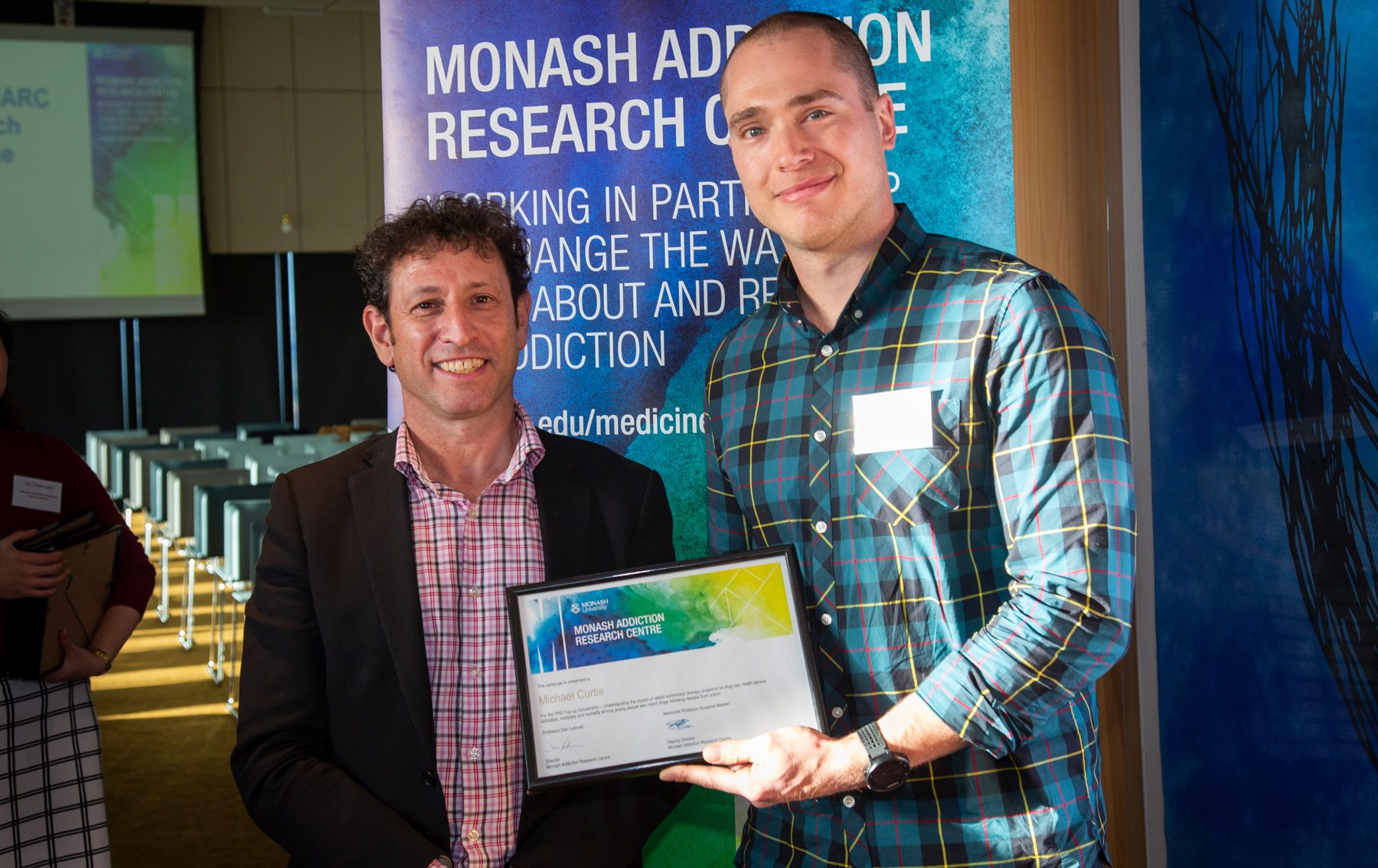
Dr Curtis' PhD was titled ‘Understanding the impact of opioid substitution therapy programs on drug use, health service utilisation, morbidity and mortality among young people who inject drugs following release from prison’.
The primary objective of this research program was to inform policy and practice to optimise opioid substitution therapy (OST) program delivery by determining the role of OST provided in prison and post-prison release in reducing harm associated with injecting drug users (IDU).
Welcome message from 2023 PhD Network Chair – Dylan Mantinieks
 Hi fellow MARC members,
My name is Dylan Mantinieks, and I am excited to accept the position of MARC PhD Network Chair!
First a little about my studies!
My PhD titled Toxicological Investigations of Reportable Deaths Involving Methamphetamine aims to better understand methamphetamine-related harms in coronial death investigations, specifically markers to establish chronic use. I’m two years into my PhD journey at the Department of Forensic Medicine under the supervision of A/Prof Dimitri Gerostamoulos.
If I’m not studying (a notion strange to PhD candidates), you will probably find me at the market enjoying an almond croissant and coffee – my favourite pastime!
I thrive on collaboration and the MARC PhD Networks facilitates engagement among addition-related student researchers. We hope to organise several events throughout the year and encourage our members to present at the upcoming MARC Symposium 2023 in May.
Lastly, I would like to congratulate Jenna Yang on her appointment to Vice-Chair and thank former MARC PhD Network Chairs, Monica Jung and Dr Louisa Picco, for their welcome and support.
Happy researching,
Dylan
2023 PhD Network Vice-Chair – Jie (Jenna) Yang
 Jie (Jenna) Yang is a current MARC PhD student and Monash University - CSC (China Scholarship Council) Joint Scholarship holder. Jenna completed her Master's degree in social work at Durham University, England, and worked in NGOs pertaining to services for people with substance use disorder in China. Her PhD project is looking at the prevalence of chronic pain among people experiencing opioid use disorder in order to provide insights into best practice management. Jenna's project is supervised by MARC members Prof Suzanne Nielsen and Dr Melita Giumarra.
June 2022 - Welcome MARC PhD Student - Jenna Yang
 We are pleased to welcome a new PhD candidate, Jenna Yang, who has been awarded a Monash University-CSC Joint Scholarship. Jenna will be working on a project looking at the prevalence of chronic pain among people experiencing opioid use disorder in order to provide insights into best practice clinical management. Her project will be supervised by MARC members Dr Melita Giumarra (SPHPM) and A/Prof Suzanne Nielsen (MARC).
“Knowing that I have been awarded a Monash University-CSC Joint Scholarship which covers international tuition fee and living stipend, I can better focus on my future research.” - Jenna Yang
May 2022 - 'Best PhD Poster Award' at the 2022 MARC Symposium
 Congratulations to Sarah Haines for winning the 2022 MARC Symposium 'Best PhD Poster Award' for her poster titled: 'Consumer experience of Prescription Drug Monitoring Programs (PDMP) in Victoria: Perspectives from people who use opioids to manage chronic pain.'
Sarah is a third-year PhD candidate from the School of Psychology who is interested in the ethical, social and clinical implications of real-time prescription monitoring systems.
Happy holidays from the MARC PhD Network

The MARC PhD Network committee would like to take this opportunity to wish all PhD students a wonderful holiday season and a happy 2022. We look forward to a number of events planned for next year and hope we can continue to bring together students across all faculties at Monash. If you, or someone you know, is yet to join the PhD network, or if you would like more information about the network, email marc-phdnetwork@monash.edu
March 2021 - ‘Implementation of prescription drug monitoring programs: Measuring the intended and unintended outcomes of identifying high-risk opioid use’
 Louisa Picco is a current NHMRC Postgraduate and MARC PhD Top Up Scholarship holder. She is also a Research Assistant at MARC and is based at the Monash Peninsula Campus. Her mixed methods PhD is exploring the impact of prescription drug monitoring programs and their influence on clinical care for high-risk opioid use. One aspect of this research involves observations and a series of interviews with local pharmacists practicing in the Frankston-Mornington Peninsula to better understand their experiences of implementing and utilising Victoria’s prescription drug monitoring program, ‘SafeScript’. Louisa is currently analysing these results and intends to share these findings with pharmacists and local stakeholders in the Frankston-Mornington Peninsula.
November 2020 - EHCS Summer students at the Monash Addiction Research Centre

 Last week MARC welcomed two EHCS Summer Scholarship students; Surina Butler and Lucas Neumaier. Over the next eight weeks, Lucas and Surina will be working on a systematic review project titled ‘Do we need tailored opioid prevention strategies for women?’. The project will investigate whether the prevalence and characteristics of fatal and non-fatal opioid overdoses differ for women, and look to identify subpopulations with an increased risk or unique needs.Dr Tina Lam, A/Prof Suzanne Nielsen and Dr Anna Olsen will be supervising the project along with a peer mentor and past MARC EHCS scholarship recipient Mr Wai Chung Tse.
September 2020 - Monica Jung and Helena Cangadis-Douglass awarded MARC-CMUS PhD Scholarships to address the global priority of opioid misuse
 Monash Health pharmacist Monica Jung and Austin Health pharmacist Helena Cangadis-Douglass have been awarded the inaugural Monash Addiction Research Centre (MARC) - Centre for Medicine Use and Safety (CMUS) Scholarships for PhD research into safe and effective opioid use.
Both Monica and Helena completed Monash’s Graduate Entry Pharmacy program. Prior to studying pharmacy, Monica completed a degree in biochemistry at the University of Rochester, New York, and worked in adverse drug event monitoring at Seoul St Mary’s Hospital, Korea. Helena completed her Biomedical Science (Hons.) program at Monash Health researching lung aeration at birth. Most recently, Helena worked as a Research Officer at CMUS investigating trajectories of benzodiazepine use.
 Monica and Helena will analyse linked health data from Victoria and New South Wales through Outcome Health’s Population Level Analysis and Reporting (POLAR) Tool. The PhD program will involve training in health data analytics and advanced epidemiological methods, and collaborating with leading national and international clinical and policy partners.
Centre for Medicine Use and Safety Director Professor Simon Bell said, “As outstanding pharmacists, Monica and Helena are well-positioned to take advantage of the rapid advances in the availability of electronic medical record data to generate new evidence for medication safety.”
Monica and Helena’s PhD research will be supervised by a team that includes Associate Professor Nielsen, Dr Jenni Ilomaki and Professor Bell.
August 2019 - MARC Interdisciplinary Research Support Funding Scheme: 2019
PhD Top-up Scholarships Awardees
 | Dr Pallavi Prathivadi ‘Improving opioid prescribing in Australian general practice’ This study aims to determine the self-reported opioid prescribing practices and concerns of Australian GPs and GP registrars. |

| Michael Curtis ‘Understanding the impact of opioid substitution therapy programs on drug use, health service utilisation, morbidity and mortality among young people who inject drugs following release from prison’
The primary objective of this research program is to inform policy and practice to optimise opioid substitution therapy (OST) program delivery by determining the role of OST provided in prison and post-prison release in reducing harm associated with injecting drug users (IDU). |

| Louisa Picco ‘Implementation of prescription drug monitoring programs: Measuring the intended and unintended outcomes of identifying high-risk opioid use’
The proposed objectives of this mixed-methods PhD are to gain an in-depth understanding of the impact of prescription drug monitoring program implementation has on the identification and treatment of prescription opioid use disorders. To generate insights into the clinical processes and pathways for, and identify a range of intended and unintended outcomes of prescription drug monitoring program implementation. |
May 2019 - EHCS 2019 Winter Research Scholarship Program student – Wai Chung Tse
 Over the last month, we have had the pleasure of hosting our first Winter Research Scholarship student Wai Chung Tse. Wai Chung has been working on his project “Changes in Australian Naloxone Supply and Dispensing Following Naloxone Rescheduling”.
The scholarship program was a five-week-long research-intensive with Professor Suzanne Nielsen to investigate the effects of naloxone rescheduling from prescription-only to over the counter medication. This project analysed whether there were any changes in supply following this rescheduling and describe supply trends in relation to Australia's naloxone policies.