
Strategic Performance
Our 2023-2027 Strategic Plan outlines our School’s future vision in rural health and education, and sets our priorities for the next five years. Our plan provides the catalyst for innovative and collaborative engagement within Monash Rural Health, Monash University, our communities and our industry partners to address these current and future problems.
We are actively implementing this plan, and the information below provides an overview of some of our key achievements in each of the seven key goals outlined in the plan. We are making strong progress working together with our stakeholders and communities to achieve these priorities, and enable increased access to health professionals to advance appropriate models of care that create safe and inclusive rural health outcomes for rural Australia.

Build the future rural workforce through student recruitment, retention and engaging rural experiences
As part of our students’ education, we provide engaging experiences to help them become fully immersed in the communities they are based in, and hands-on clinical tutorials to build their skills. These include cultural immersion and road trips, showing medical students the local sites and health services they will be working with.
During the year, End-to-End Rural Cohort students in Bendigo and Mildura were welcomed to these communities with welcome ceremonies and cultural orientation from local Traditional Owners, and were given orientation to local health service providers and attractions. In Mildura, students went canoeing on the Murray River, trained with the Mildura State Emergency Service Unit and worked in local businesses. These students are supported by a dedicated community engagement staff, to ensure they are connected with the community.
Through engagement with secondary schools with programs such as the Med-Toring program, we are actively building the potential for future students from rural areas. Recognising that medical students who come from rural areas are most likely to stay and practice in rural areas, this engagement with students from a young age builds their awareness of future careers in medicine and rural health professions.
Engaging primary schools with the Teddy Bear Hospital program, not only gives children an understanding of possible future health careers, but also makes the prospect of going to the doctor a less scary experience.
To retain medical students, we provide support to engage them in the community with information on local activities and groups they can join. We encourage our students to not simply study, but become active members of the community. In this way, our students develop a stronger affinity for life in regional communities and are more likely to return to practice there in the future.
In a practical sense, Monash Rural Health is building the future rural health workforce by creating medical graduates who are practising across rural Victoria. We supported the intern programs of health services within our footprint through the production of six videos highlighting the advantages of internships in health services within our footprint.
These videos helped support attracting potential applicants, including a notable doubling at some health services. At Bendigo Health, 50% of the 40 internship applications for the coming year are graduates from Monash Rural Health.

Increase access of Aboriginal and Torres Strait Islanders to health professions education, and success and employment in their chosen field
Monash Rural Health is committed to creating and maintaining culturally safe environments for students and staff while studying or at work, and have developed the Monash Rural Health Aboriginal and Torres Strait Islander Framework 2021-2030 to steer our progress in this area. As a School, we are committed to this framework and focused on its four framing pillars:
- Upholding Aboriginal and Torres Strait Islander knowledge and respecting students, staff and community.
- Increasing the participation and supporting success of Aboriginal and Torres Strait Islander students.
- Embedding Aboriginal and Torres Strait Islander perspectives and content into curriculum.
- Growing research contributions to address and serve the needs of Aboriginal and Torres Strait Islander people and communities.
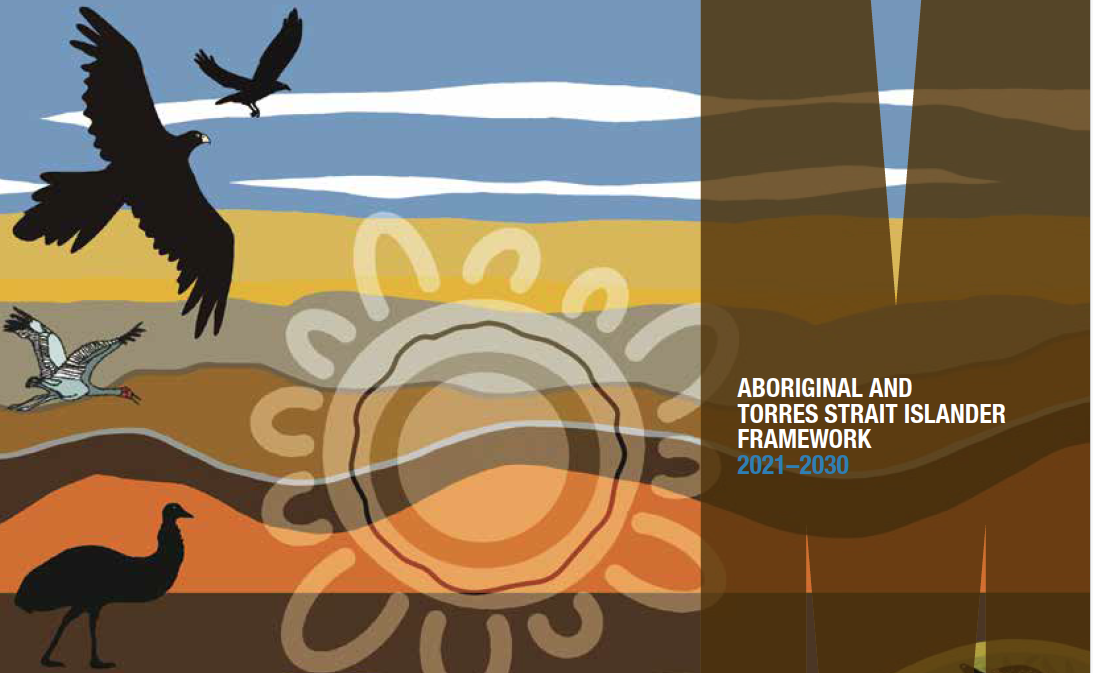
Monash Rural Health Aboriginal and Torres Strait Islander Framework 2021-2030
Download the framework
By engaging with Aboriginal and Torres Strait Islanders from secondary schools through visiting sessions with Clontarf students and participating in the Centre of Excellence for Aboriginal Health in East Gippsland (CEAHAG) camp, we have been able to inspire young people to consider careers in rural health.
The CEAHAG camp Marook camp at Coolamatong for Aboriginal and Torres Strait Islander youth aged between 9-12 was attended by some of our medical students and staff and provided an opportunity to share information about heart health, as well as talk about future career pathways in rural health.
In Mildura, Aboriginal and Torres Strait Islander students from Mildura Senior College spent a morning at Monash Rural Health to explore potential careers in health and medicine. Clontarf Academy students took part in a practical skills session in the Monash Rural Health Mildura clinical simulation centre and tried their hands at applying plaster casts, guided by four current medical students.
We have also enhanced the cultural competency of our students to make studying with us a safe place for Aboriginal and Torres Strait Islander students. Through participation in NAIDOC week activities and providing Welcome to Country ceremonies and cultural immersion programs, we are building future doctors who will be better equipped to provide culturally sensitive care in the future.

Improve diversity and inclusion for staff and students
Throughout the year, our students and staff participated in a number of activities celebrating diversity and building inclusion of different cultures, social groups, LGBTQIA+ community and Aboriginal and Torres Strait Islander people. Some of these activities are highlighted below: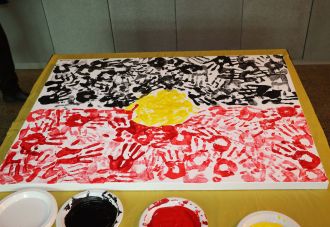
NAIDOC Week
During NAIDOC week, Monash Rural Health Bendigo staff organised a NAIDOC Virtual Run/Walk event, involving staff and students, who walked 3.5km to Lake Weeroona and back from our Bendigo site. Monash Staff and students, along with staff from Bendigo Health, contributed their handprints to create an Aboriginal and Torres Strait Islander flag, symbolising their commitment to standing in solidarity with Indigenous communities.
In Warragul, staff and students celebrated NAIDOC week with lunch in the park and planting 50 native trees, shrubs and grasses to connect with country.
RUOK Day
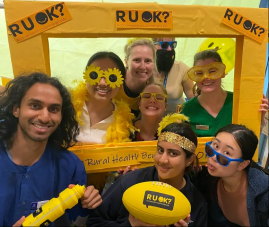
Across our sites, staff and students took time out for morning teas to mark RUOK day, a time to check in on the well-being of our community and promote mental health awareness. In Bendigo, students and staff came together with the University of Melbourne, Monash University Medical Students' Society (MUMUS), and local businesses, to provide snacks and exciting prizes for the best RUOK photos.
Sale students walked around Lake Guthridge, Traralgon students enjoyed a pizza night, and Churchill students enjoyed a morning tea. Students in Gippsland were also given a copy of the book: "Beyond the Stethoscope: Doctors' Stories of Reclaiming Hope, Heart and Healing in Medicine" by Lucy Mayes. This book describes the things that make practice challenging, and the things that make it work: the kindness and compassion that drives the successful therapeutic relationship.
Cultural immersion trip
Our Monash University Malaysia (MUM) students were taken on a Cultural Immersion trip across regional towns in the Loddon Mallee, taking in smaller medical services, the Jirrahlinga dingo conservation and wildlife sanctuary, and sampling local produce along the way. Students also had an Aussie food immersion, sampling Tim Tams, Caramello Koalas, Anzac Biscuits and the surprise hit: Vegemite. Students also visited Lanjanuc, a traditional Dja Dja Wurrung ceremonial ground, and had the opportunity to reflect on the rich culture and history of Djarra people while taking in the breathtaking views of Dja Dja Wurrung land.
One of the key outcomes of making these students feel welcome is reflected in the fact that the majority of the MUM students who travelled to Monash Rural Health in Medical school have selected to be placed across Regional Australia for their Internship.
Future Focus Week
Year 3B medical students were taken on a Future Focus experiencing, visiting health services and towns across the Loddon Mallee region, including Echuca Moama Family Medical Practice, Elmore Medical Practice, Njernda Aboriginal Medical Service and the Rochester Flood Recovery Centre.
Students reflected on their experiences of the day and the valuable lessons they drew from the day.
On the visit to Njernda Aboriginal Medical Service:
"...we had a really insightful conversation about the history of the treatment of Aboriginal and Torres Strait islander peoples and how these events have impacted the health of these communities."
On Elmore Medical Practice:
“It was very educational to see how much the residents of Elmore are dependent on the clinic with its combination of GP, urgent care, and allied health services.”
On visiting the Rochester Flood Recovery Centre and seeing the impact of the 2023 floods:
"I am still thinking about Karen's discussions about the implications, challenges and deficits in healthcare during and post the floods in Rochester. It was a really valuable example of how Medicine intersects the environment and also put into perspective the various considerations as health practitioners."
The Future Focus Week provided an invaluable experience for students to engage with local community health services and understand how these services provide vital services to the communities they serve in many ways.

Build and strengthen links and partnerships in education and research across the School, the University and wider community
Throughout the year, Monash Rural Health built on extending our partnerships with organisations, education providers and community health services. Some key highlights include:
- Partnering with Emerging Minds to adapt a model of support for children of parents with a mental illness, developed through extensive research contributed to by Dr Melinda Goodyear in communities in the Austrian Alps.
- Published a study from lead researcher Dr Anton Isaacs exploring how the introduction of tele-mental health services by Victorian Primary Health Networks (PHNs), including Gippsland PHN in Gippsland during the pandemic and associated lockdowns in particular helped young adults, First Nations people and those with ongoing anxiety requiring ongoing support. This in turn led to the development of an app to support personal recovery of people with lived experience of enduring mental illness, which received $50,000 in seed funding from the Monash Institute of Medical Engineering (MIME).
- Bendigo Health received funding to establish a new telehealth Young Adult Diabetes clinic, thanks in part to data prepared by Michaela Ryan, a medical student on a Scholarly Intensive Placement (SIP) through Monash Rural Health.
- Have provided Clinical Teaching and Education Pathway training to doctors in the Loddon Mallee ang Gippsland, to strengthen teaching and supervisory capacities among doctors within regional health services. This will support the development of a stronger rural health workforce and ensure medical students and junior doctors receive high-quality teaching and supervision.
- Supporting Aboriginal and Torres Strait Islander students from Clontarf Academy in Mildura and Warragul Regional College with site visits to provide inspiration and advice about careers in rural health.
- Partnering with Federation University, Latrobe City Council and the Monash Medical Orchestra to present their highly anticipated annual concert, “Music for the Valley” at Federation University, combined with smaller chamber concerts throughout Gippsland. This invite was a great success, providing a cultural highlight for the region.
- Equal Hearts study collaborated with Northern Health, Grampians Health, Colac Area Health and the Victorian Heart Hospital to explore how accessible cardiac services are for disadvantaged groups, highlighting the need for better service integration and culturally safe care.
- Extending and expanding research with the Burnet Institute through the Methamphetamine and Injecting Drug Use Cohort Study (MIXMAX) project, exploring the extent of illicit drug-related harms and associated healthcare costs in Australia, and the effectiveness of interventions to address them. Launched expansion of research into Mildura with discussions with Mildura Base Public Hospital and Mallee District Aboriginal Services.
- Current medical students worked with Teddy Bear Hospital to run sessions at local primary schools and pre-schools in Sale, Traralgon, Bendigo and Mildura to demystify going to the doctor.

Increase the access and success of groups experiencing disadvantage with respect to health professions education
We are actively working with disadvantaged students through our engagement with schools in isolated rural areas to make them aware of future career options in rural health. This includes working with Aboriginal and Torres Strait Islander students in Warragul and Mildura, and primary school students across our footprint through the Teddy Bear Hospital program.
To make studying with us more accessible, we provide subsidised accommodation and reasonable rates for students on placements, and also provide scholarships and bursaries such as the Monash Rural Health Financial Assistance Fund.
Recognising the educational disadvantages often experienced by rural and regional schools we also offer an alternative pathway to studying medicine through the Deans Rural List, to boost boost their chances of entry into our medicine or biomedical science programs

Grow funding for rural education and research initiatives
During the year, we have seen the announcement of some major research funding, including the expansion of research with the Burnet Institute through the Methamphetamine and Injecting Drug Use Cohort Study (MIXMAX) project, exploring the extent of illicit drug-related harms and associated healthcare costs in Australia, and the effectiveness of interventions to address them. Other research wins include funding of an app to support personal recovery of people with lived experience of enduring mental illness, which received $50,000 in seed funding from the Monash Institute of Medical Engineering (MIME).

Undertake research that addresses the health needs of rural Australians
Monash Rural Health continues its research into issues directly affecting rural Australians, driven by community needs and concerns. Below is a sample of some of the research projects undertaken to support greater understanding of the health needs of rural communities.
- Research exploring how the relationship between increased physical activity and lower body mass index correlates with significantly better quality of life among those receiving cancer care in rural Australia.
- Research highlighting the association of panic attacks with methamphetamine use.
- A study of rural maternal and child health nurses has found that pregnant women and new mums are significantly impacted by disasters and need to be considered in disaster planning.
- Interim findings from the Equal Hearts study, exploring how accessible cardiac services are for disadvantaged groups, highlight the need for better service integration and culturally safe care.
- The first study of rural female general surgeons reveals insights into the workforce and calls for a review of workforce recruitment to increase participation of women, receiving extensive coverage on the ABC.