
Chloe Tran
Chloe Tran
Bachelor of Biomedical Science (Honours) and Commerce double degree; graduated 2022
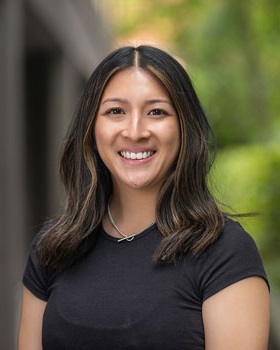
 The more awareness, education and conversation that we create around different health issues, the more likely we are to improve the outcomes globally.
Chloe Tran brought an unusually diverse and tailored skill set to her Honours project with our School, having completed a double degree in biomedicine and commerce, the latter with a major in marketing.
"Communication is so important to health literacy, and I'm also passionate about high-quality education, especially around health and in particular eating disorders. So the two undergraduate degrees and this Honours year really made sense to me."
It was during her final year of biomedical study that she grew particularly interested in research, and realized undertaking an Honours project was a valuable first step down that pathway. Having identified an available project that suited her interests, she investigated eating disorder prevention and support within the Australian high school setting.
"Eating disorders involve a persistent and unhealthy pursuit of thinness, fear of weight gain, disordered eating, and compensatory behaviours, like self-induced vomiting, laxative or diuretic misuse, and excessive exercise and fasting. It's important to identify these patterns and intervene as soon as possible, to protect both immediate and long-term health and wellbeing."
Under the supervision of Dr Claire Bristow and Prof Basia Diug, Chloe undertook a literature review of relevant prevention programs in Australian secondary Schools, to identify the types of programs used, and their effectiveness. Based on what they found, she and her supervisors created a qualitative project to explore the perspectives and experiences of wellbeing counsellors and coordinators around identification of, and support for students with a disorder.
She conducted five semi-structured interviews, identifying themes showing general feelings of being unequipped to support students, especially those undergoing treatment or in recovery. There was also a general consensus that a lack of training for both teachers and students prevents students from seeking help.
Chloe's marketing and communications nous has helped her understand the need not only to undertake the research, but to share the findings widely using clear and engaging outputs via numerous channels. She invested significant effort in a poster presentation, has drafted an abstract, has presented two seminars on her findings, and plans to write a full scientific manuscript for publication.
"The more awareness, education and conversation that we create around different health issues, the more likely we are to improve the outcomes globally. And in doing that, we need to be mindful of cultural and language differences. Providing we understand the population we are targeting, public health has the power to make a real difference around the world."
Fast forward to 2025, and Chloe is in her third year of a PhD investigating weight stigma experienced by preconception women in healthcare settings. She's doing this under a supervisory team led from our Health and Social Care Unit.
"The preconception period is an important opportunity to favourably influence maternal and infant outcomes before, during and after pregnancy," she says. "But despite the benefits of preconception care, the uptake of this service remains low. I'm trying to understand how weight stigma impacts the quality of care during that life stage."
Her research will see her undertake systematic reviews, and studies using both qualitative and quantitative research techniques to identify structural weight stigma, and to understand how it is perpetuated in the primary care setting.