
Jordan Akritidis
Jordan Akritidis
Bachelor of Health Sciences (Honours)
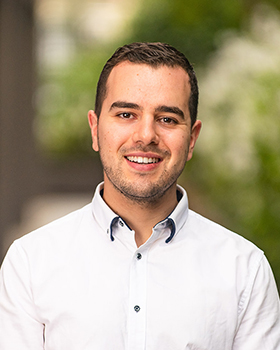
 Despite dealing with multiple lockdowns, it was a really enjoyable year for me. It was fantastic to learn how to write academically, and to witness the lifecycle of a scientific study.
Upon nearing the end of his Bachelor of Science, Jordan Akritidis knew he wanted to take a deeper dive into the world of infectious diseases epidemiology. Embarking on an Honours project under Professor Karin Leder and Dr Sarah McGuinness was the perfect opportunity.
He says, “I had already been working in pandemic surveillance at the Victorian Department of Health since March 2020, so Honours in epidemiology aligned with both my interests and my work experience. Working and studying gave me a fantastic opportunity to round out my education theoretically and practically.”
Jordan’s project itself was a response to the pandemic. The TRIPPER (Travel-Related Illness: Prevention and Perceptions of Risk) Study explored changed risk perceptions towards travel in the context of the pandemic, and changes to health behaviours around travel such as seeking medical advice before travelling or modification of travel plans.
Jordan designed and distributed a 32-question online survey which eventually secured 664 responses from unique participants. He used the statistical analysis skills learnt in lessons to help analyse the responses.
“We found that people who showed a greater willingness to travel during the pandemic were the same people who reported a general willingness to take risks. Three quarters of our participants were worried about getting ill during their travel, and their level of concern was tied to the strength of their belief that they would be infected.”
“Interestingly, over half our respondents said they were more likely to seek professional medical pre-travel advice now than before the pandemic. If this trend continues beyond the pandemic, it could make travel clinics an emerging opportunity to educate prospective travellers about health risks.”
They also found some demographic differences. Women tended to perceive greater travel risks than men, younger people tended to be more willing to take risks than older people, and Australian-born travellers tended to be more willing to take risks than foreign-born participants. These traits could be used by travel medicine professionals to better target people with higher risk profiles for travel health education.
Jordan is currently working as a Data Manager at the Victorian Department of Health. Reflecting back on his Honours experience, he says, “Despite dealing with multiple lockdowns, it was a really enjoyable year for me. It was fantastic to learn how to write academically, and to witness the lifecycle of a scientific study. The statistical analysis and interpretative skills I picked up are already proving invaluable in my career.
“The team was so supportive and welcoming of me, I would definitely recommend Honours to anyone thinking about doing it.”
Jordan's work has resulted in this publication in the journal Travel Medicine and Infectious Disease, and another paper is planned.