
Nura Yaacob
Nura Yaacob
Bachelor of Biomedical Science (Honours)
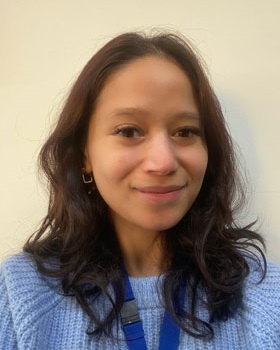
 My advice to future students is to fit as much into your Honours year as possible, and take every chance to learn. It’s an intellectually challenging year, and you’ll inevitably learn how to deal with obstacles and setbacks, but that’s so incredibly enriching for any career.
Nura Yaacob undertook her Honours year in 2021, exploring associations of brain ageing and cognitive function among healthy older adults. She’d previously completed an undergraduate degree in Biomedical Science at Deakin University, but wanted to hone her analytical and writing skills further.
"I was curious about the world of academic and research, and thought the project that was available working with subject matter experts in dementia was something that would stand me in good stead. As part of my decision-making process around my supervisors, I did some of my own research into what they’d previously published, and found it intriguing."
Under the supervision of A/Prof Joanne Ryan and Jo Wrigglesworth, Nura interrogated the unique dataset created by the ASPirin in Preventing Events in the Elderly (ASPREE) study. This renowned clinical trial investigated the effectiveness of daily low-dose aspirin in maintaining good health in otherwise healthy, community-dwelling older people. The database is a treasure trove of health data for researchers investigating healthy ageing.
Nura's project involved comparing participants' 'brain age' – a widely used index for quantifying individuals' brain health as deviation from a normative brain aging trajectory – with their biological age. The gap between the two values may infer risk of cognitive decline and dementia in at-risk individuals.
"I found some associations with the decline of cognitive function and brain ageing, however, this was ultimately inconclusive and further research should be conducted. The good news is that research on this topic is rapidly evolving, as there is a drive to identify reliable, accurate, non-invasive diagnostic tools for dementia and cognitive decline in the ageing population."
"My experience was fantastic, it really gave me a good look at the world of research, and my supervisors not only supported me throughout the year, I’m fortunate that they’ve gone on to offer encouragement and assistance beyond my project. Apart from the research skills you learn, the year left me more resilient, confident in my own abilities, a better collaborator, and gave me the ability to think critically about all aspects of my life and career."
Since graduating, Nura's carved out a career as an Analyst at the Victorian Department of Transport and Planning. Working within the Investment Strategy branch, she's mapping performance metrics from government agency services against State funding they receive, and her work contributes to major triennial budget reports.
"I've found that employers appreciate analytical skills, and the ability to wrangle large datasets, which were both skills I picked up during my Honours years. I think those skills are highly transferrable, beyond health and into most job areas."
"My advice to future students is to fit as much into your Honours year as possible, and take every chance to learn. It's an intellectually challenging year, and you'll inevitably learn how to deal with obstacles and setbacks, but that's so incredibly enriching for any career."