
New safety rule requiring sound alerts on electric vehicles takes effect, informed by MUARC research
MUARC welcomes the introduction of a new Australian Design Rule (ADR 113), which from 1 November 2025 mandates Acoustic Vehicle Alerting Systems (AVAS) on all new-model electric, hybrid and plug-in hybrid vehicles sold in Australia. The requirement will extend to all electric, hybrid and plug-in hybrid vehicles sold in Australia from 1 November 2026.
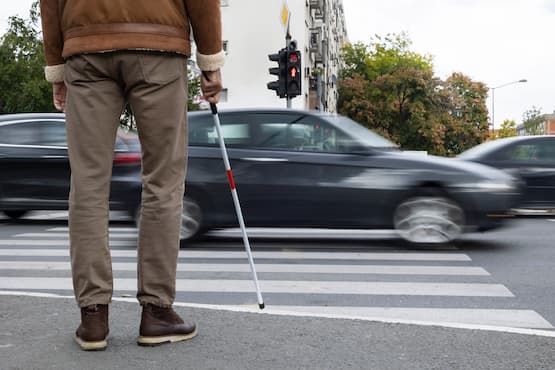
This milestone represents a significant advancement in pedestrian safety, particularly for people who are blind or have low vision, addressing risks created by an increasingly quiet vehicle fleet. The change also demonstrates the Australian Government’s foresight in proactively managing an emerging road safety risk as electric and hybrid vehicles continue to grow in popularity.
MUARC’s submission and research were cited multiple times in the consultation report and we’re proud to have worked closely with Vision Australia, whose tireless advocacy has been instrumental in bringing this rule to fruition.
The introduction of ADR 113 follows the MUARC 2018 study, The impact of electric/hybrid vehicles and bicycles on pedestrians who are blind or have low vision, led by Dr Sara Liu in partnership with Vision Australia. The research found that 35% of interactions between quiet vehicles and pedestrians who are blind or have low vision posed a collision risk, a key piece of evidence supporting the need for mandatory AVAS.
The study recommended that Australia adopt UN Regulation No. 138-01 on the approval of Quiet Road Transport Vehicles, ensuring all low-noise vehicles are equipped with AVAS technology when travelling at low speeds.
A supplementary submission titled MUARC Submission in response to the Consultation Impact Analysis for Improving Pedestrian Safety—Acoustic Vehicle Alerting Systems for Electric Vehicles, led by Associate Professor Michael Fitzharris was foundational to the changes to ADR 113.
A complementary MUARC observational study, Pedestrian distraction from smartphones, identified further risk factors, where 20% of pedestrians observed crossing roads were distracted by smart phones and 31% of those displayed high-risk behaviour, such as failing to look before crossing the road. These findings highlight an even broader need for AVAS to support pedestrian safety.
Supporting the policy change, MUARC researcher Dr Brendan Lawrence led the study, Quiet Road Transport Vehicles: Crash reduction benefits of the fitment of Acoustic Vehicle Alerting Systems in Australia, commissioned by the Department of Infrastructure, Transport, Cities and Regional Development. The research estimated the potential pedestrian-involved crash reduction benefits of fitting AVAS to hybrid and electric vehicles in Australia. The research shows that the new ADR will result in the avoidance of around 68 fatalities, 2,675 serious injuries and 2,962 minor injuries by 2060, and estimates it will save the Australian community $208 million.