
Women's Healthy Ageing Program
Our aim is to improve women’s health and wellbeing across the lifespan.
We are working to identify new treatments and management across women’s lifespan (including reproductive health) to improve women’s health & wellbeing.
More information and resources about the Women's Healthy Ageing Program is on the MCHRI consumer website.
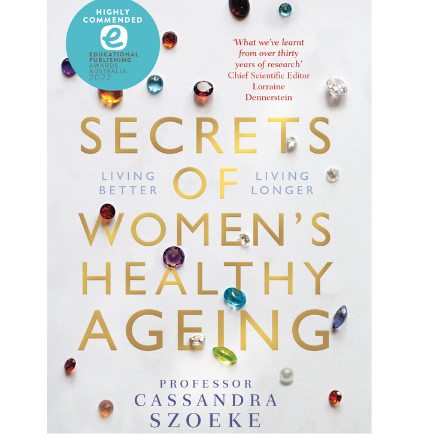
Professor Cassandra Szoeke, Consultant Physician, Neurologist
Lead, Women's Healthy Ageing Program
Monash Centre for Health Research and Implementation (MCHRI)
Faculty of Medicine, Nursing & Health Sciences, Monash University
cassandra.szoeke@monash.edu
Expert areas
- Healthy Ageing
- Prevention of Chronic Diseases
- Sex Differences in Health
- Public Health
- Dementia/Cognition
- Vascular and Heart Health
- Mental Health and Violence
We are working towards obtaining crucial datasets across the three decades when chronic diseases develop before they are diagnosed to:
- Identify sex-specific risk factors and therapeutic targets and validate these in larger populations
- Examine sex differences to refine sex-specific early identification, prevention and management.
Sex specific medicine education of health professionals and community
We have developed a sex-specific medicine course for continuing medical education and integration into medical school current programs. We plan to upscale this course to other specialist training colleges in addition to other health professionals and together with community partners create a community education course with these highest levels of evidence.
There is a well known absence of research on women. Most studies were conducted in men, until the 2000 NIH mandate to include women in all registered clinical trials. It was only in 2015 that the NIH mandated that females be included in animal studies also. That’s less than a decade of information on female specific information. Yet in this short time we have already found that medications have different impact in women compared to men and that the signs, symptoms, treatment and prevention strategies for heart disease are entirely different in women compared to men. Today ABS shows that women over age 50 are 3.7 times more likely to suffer “severe disability limiting activities of daily living” than men of the same age. So whilst women live 3-4 years longer, these are not happy years. Our program targets improving health for all women.
Mean age of menopause is 51 years of age, most studies of the transition stop when women reached postmenopause. Healthy Ageing and Cognitive Studies commence with cohorts older than 65 years of age due to the low prevalence of disease under 70. Therefore, there is almost no information about postmenopause. However, women now live almost half their lives in postmenopausal!
Gaps we target
We target the leading causes of death and disease burden in women published by AIHW & ABS
- Limited data on women where the biological basis of disease is different
- Absence of long-term studies when chronic disease is known to develop over 20 to 30 years
- Lack of data on midlife hormonal profiles and later life
- Lack of sex–specific early detection and management tools, education or guidelines.
An important part of our discovery work is from the longest ongoing study of Women’s health in Australia (The Women’s Healthy Ageing Project, est 1990).
In addition to being the longest, it is also unique in its high retention over three decades and detailed information, with all women completing detailed menstrual diaries across their transition in addition to fasting biomarkers including vascular risk markers and hormonal assays alongside clinically validated cognitive and psychological testing as well as imaging and genetic data.
Current projects
- Women’s Healthy Ageing – time to shift from bikini to a holistic model of women’s health.
- Physical Activity from midlife to late life and its impact on neurodegeneration
- The relationship between female-specific vascular Risk Factors and cerebral white matter damage in women across 25 years.
- Workplace health issues reported by women to their health insurers
- Sex-Specific Differences in Health
- CME program on sex-specific differences in health (RACP)
- Medical School implementation of sex-specific teaching.
- Healthy Hearts & Minds
- Mental Health & Cognition. Top disease burden in women include dementia and mental health which are strongly related, as per our recent work showing depression relates to dementia pathology. With absence of longitudinal prospective studies with parallel follow-up of mood and cognition, its unclear if mental health is a risk or an early dementia symptom, limiting clinical management.
- Physical Health after Violence
- Impact of Violence on women’s later life health (Comorbidity and HealthCare Utilisation) The long-term effects of intimate partner violence (IPV) on physical health outcomes and health-related behaviours are under-researched in comparison to the effects on mental health and pregnancy. Our recent review highlights significant gaps in this field of research, particularly in relation to cardiovascular disease, endocrine dysfunction, and neurological symptoms and conditions. It demonstrates a need for additional long-term studies in this field to better inform the health care of women who have experienced IPV and to establish the physiological mediators of these outcomes.
More information and resources about the Women's Healthy Ageing Program is on the MCHRI consumer website.