
Dr StellaMay Gwini, PhD
Dr StellaMay Gwini, PhD
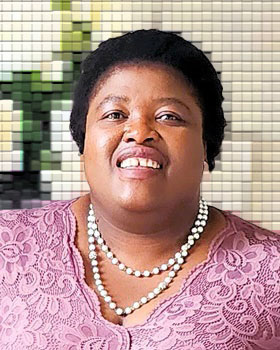
 To me, data is wonderful as it cuts through the opinions that everyone has, and delivers concrete proof. The PhD has really allowed me to pursue that and follow my own interests.
The Monash Centre for Occupational and Environmental Health (MonCOEH) has a long history of investigating the links between work, health, and illness, in an attempt to improve the overall health and wellbeing of Australia’s workforce. Their research focuses on groups of workers that are considered at high-risk of experiencing work-related ill health – often groups exposed to toxins or other hazards through their work, or those who must engage in physically or mentally demanding activities in the course of their work.
It was this group that StellaMay Gwini – now Dr Gwini – joined as a biostatistician, when she emigrated from the United Kingdom in 2009, at the time swearing she’d never do her PhD.
“I was quite certain that the PhD pathway was not for me!” she laughs now. “I completed an honours degree in statistics in my native Zimbabwe, and I knew that I wanted to apply that within health or medicine in some way. After I graduated I found a job in a research institute in Harare, but I very quickly realised that to really feel like I was doing something important, I’d need some practical research skills. So I undertook a Masters that focussed on research methodology at The University of Sheffield, in the United Kingdom.”
Upon completion of her Masters, StellaMay moved to Australia and found a Research Assistant job providing biostatistical support to a number of worker cohort studies run by MonCOEH.
“I did really enjoy it, but I still wanted to move away from the theory a bit, and had some discussions about my career with Prof Malcolm Sim, who was the Director of MonCOEH at the time. He encouraged me to consider doing a PhD with him, and I started to see how doing one could carve out a more defined career path for me, and give me more control over what I was investigating.”
Not too long after the idea began incubating in her mind, the MonCOEH team received funding to undertake a follow-up study, investigating the ongoing health of Australian Gulf War veterans who had previously participated in a first study between the years 2000 – 2003. StellaMay found herself jumping at the chance.
The First Gulf War was a seven-month war between Iraqi forces and a US-led coalition that included Australia, in 1990. The theatre was Kuwait and Iraq. In the months and years after the campaign, anecdotal evidence arose of poorer health outcomes among Coalition veterans, which was confirmed through research studies arising from the UK and USA. Speculation began that some of the exposures and experiences unique to the Gulf War, such as the possible exposure to depleted uranium, chemical or biological weapons, or smoke and oil from burning oil wells, may have something to do with it. In addition, there had been reports among Australian Gulf War veterans of a wide range of medical problems with no clear explanation.
MonCOEH had been integral to Australia’s investigation into the matter, that had been commissioned by the Department of Veteran’s Affairs in 2000. That first study recruited a control group of armed forces personnel who were eligible to fight in the war, but had not been called up. The study found significantly higher rates of poor psychological health, and greater overall frequency and severity of a number of physical health markers, particularly neurophysiological and musculoskeletal symptoms. But no specific disease or known syndrome was apparent.
StellaMay’s project was to try and understand how the symptom reporting from the veterans had shifted over time, 20 years after their initial deployment. 4,793 participants were recruited, again including a control group. They were presented with a check list of 63 symptoms and asked whether they experienced any of them.
The results were very similar to those captured in the earlier study, although some symptoms did increase over time. Chronic disease was one, and alcohol consumption was closely linked to that. Interestingly, the veterans with no chronic disease except high symptomatology used health services just as much as those who had doctor diagnosed chronic medical conditions.
“I learnt so much through the course of my PhD. I was able to apply my previous theoretical statistical knowledge to the data analysis, but what I really took away from it was the ability to engage in activities across the full spectrum of research methodology – literature reviews for example, questionnaire design, engagement with veterans and the Department of Veterans’ Affairs, and in particular, manuscript writing.
“Writing academically is so important, it was something that didn’t come naturally to me and it took me many attempts to learn it, but learn it I did. It was very helpful that Malcolm was a journal editor at the time, and his expertise was invaluable.
“I also took away important soft skills that I can apply to any job role – project management, time management, the ability to assess and prioritise tasks. Communicating hardcore statistical findings to lay audiences was also incredibly important in this study, and my co-Supervisor Professor Andrew Forbes was so helpful in teaching me how to do that.”
After completion in 2016, Dr Gwini continued working with Monash University as a biostatistical consultant, undertaking data analysis and helping novice and experienced clinicians interpret and write up findings from their own research studies.
She then moved to Barwon Health as a Senior Research Support Coordinator/Biostatistician, and more recently has been involved in projects that provided evidence as to the optimal scheduling of COVID-19 vaccines and boosters. After a few years away, Stella is back with MonCOEH as a Senior Research Fellow.
“I really haven’t regretted my study and career choices. To me, data is wonderful as it cuts through the opinions that everyone has, and delivers concrete proof. The PhD has really allowed me to pursue that and follow my own interests.”