
Dr Ashleigh Stewart, PhD
Dr Ashleigh Stewart, PhD
Mental illness and mental health service contact among men leaving prison who have histories of injecting drug use in Victoria, Australia
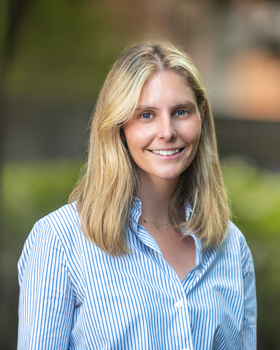
 Undertaking a PhD provides a depth and breadth of skill and knowledge that enables you to formulate a valid research question, then do what needs to be done in order to answer it, and share your findings with stakeholders.
Newly minted PhD graduate Dr Ashleigh Stewart has hit the ground running, with a post-doctoral Fellowship with the renowned Victorian Institute of Forensic Medicine. Her work contributes to a global research initiative to prevent and improve accountability for unlawful deaths, including deaths in custody and femicide, by providing effective evidence-based guidance.
“Deaths in custody and murder of women have received increasing media and social scrutiny over the last decade. It’s exciting to be contributing to something that clearly matters to a huge number of people, and can avoid needless loss of life.”
Dr Stewart came to her PhD studies from a nursing background, which had led her to clinical work in the psychiatric field. A Master in Public Health soon followed, with a project exploring local availability and impacts of alcohol and drug use in Melbourne, and a stint working with a Primary Health Network to improve access to pharmacotherapy treatment for people with opioid dependence.
What drew you to a PhD and this topic?
Enrolling through Monash University’s School of Public Health and Preventive Medicine gave her access to the experts at one of their prestigious partner organisations, the Burnet Institute. Under supervision from Professor Mark Stoove and others there, she took a deep dive into mental illness and health service engagement among men leaving Victorian prisons, with personal histories of injecting drug use.
She undertook six discrete studies to better understand the issues, drawing from a range of techniques and study designs incorporating behavioural epidemiology, longitudinal cohort data analysis, and administrative linked data analysis. Her primary dataset was the unique Prison and Transition Health Cohort Study, a longitudinal cohort study of the post-release lives of men who inject drugs, and who were recruited whilst serving time in prison.
“In a nutshell my PhD shone a light on the significantly poor mental and physical health of these men after release, underscoring the need for effective, integrated systems for sharing health information,” she says. “These men have very complex needs and are at high risk of poor health outcomes down track. Those support systems need to be further developed to support their transition back to life in communities, and improve those outcomes.”
Her research has already supported parliamentary submissions, including one to the Inquiry into Drug Law Reform and the Inquiry into Cannabis Use in Victoria that called for policy changes that would prevent over-incarceration of people who use drugs. “Filling jails with people who use drugs doesn’t necessarily fix problems in the long term; it strains our prison system, and it can actually just prolong and complicate outcomes for the individuals, with knock-on effects on society.”
Dr Stewart enjoys being surrounded by researchers with the broad range of skills and interests offered by forensic medicine, which complements those in public health epidemiology. “I’m learning so much, and I love the rich opportunities for translation and impact from this type of work, which often feeds directly back into policy and practice improvements,” she says.
“Undertaking a PhD provides a depth and breadth of skill and knowledge that enables you to formulate a valid research question, then do what needs to be done in order to answer it, and share your findings with stakeholders. I actually think some of the soft skills I improved along the way are some of the most vital to success: teamwork, communication, problem solving, critical thinking and time management. And learning to ask questions about things you don’t understand; if you don’t get something, chances are others won’t either.”
Find out more about our PhD program.
Find out more about the Department of Forensic Medicine's education program.