
A successful 2026 Road Safety Management Leadership Program
 Creating safer roads is not simply a matter of having the right evidence. It requires leaders who can turn evidence into action, build support for change and navigate the complexity that comes with transforming road transport systems.
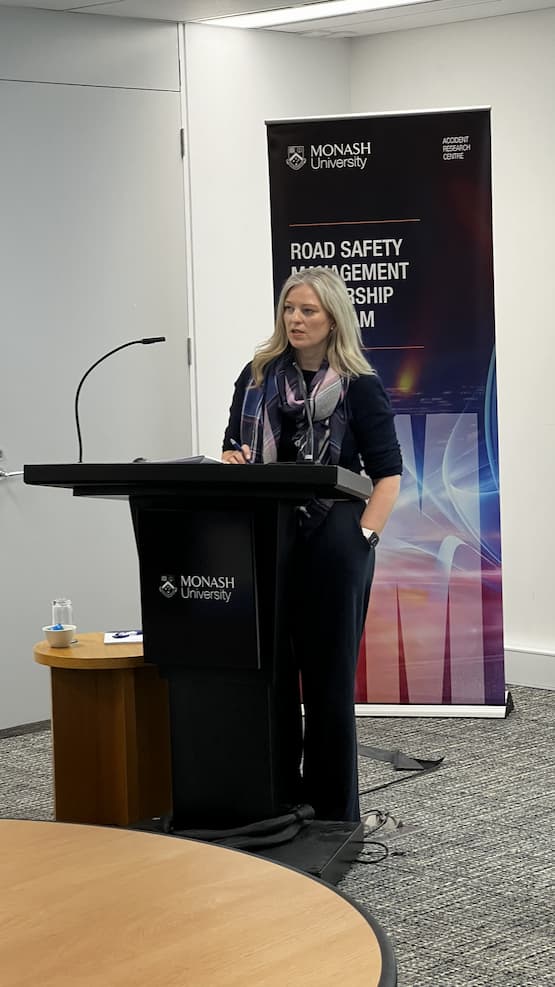
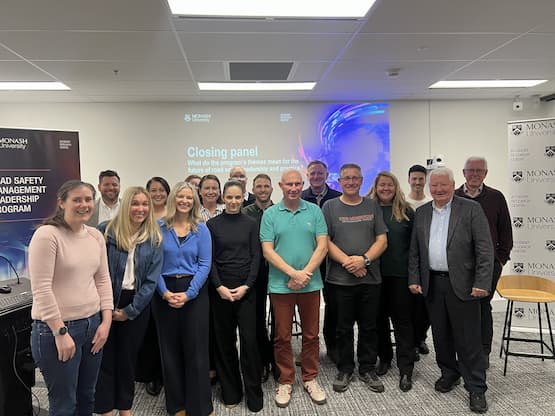
These skills were at the heart of the 2026 MUARC Road Safety Management Leadership Program, which brought together a cohort of road safety leaders for four intensive days of learning, reflection, practical activities and connection.
Across the program, participants explored what effective road safety leadership looks like in practice – from making evidence-based decisions and understanding the road trauma challenge, to influencing others, communicating compellingly and overcoming the barriers that can stand in the way of change.
From evidence to action
Facilitated by MUARC’s Associate Professor Carlyn Muir and strategy consultant Claire Campbell, the program began by grounding participants in the evidence that underpins effective road safety decision-making. But understanding the evidence is only part of the challenge - leaders must also be able to translate that knowledge into decisions, policies and actions that can make a difference.
That challenge was brought to life through a visit to Road to Zero: Road Safety Experience at Melbourne Museum, developed by the Transport Accident Commission (TAC) in collaboration with road safety and education experts. The immersive experience provided participants with an opportunity to explore the science behind road trauma and consider what is required to create a safer road system.
The experience also provided a valuable starting point for participants to share perspectives from their own jurisdictions and reflect on the challenges and opportunities they face in their road safety work.
Leadership is more than a position
A key theme throughout the program was that leadership is not simply about having authority or holding a particular position. In complex environments like road safety, meaningful change often depends on a leader's ability to influence, adapt and bring others with them.
Co-facilitated by Executive Coach, Cameron Houston, the second day challenged participants to think differently about their own leadership practice. Through interactive workshops, peer consulting and facilitated discussions, they explored adaptive leadership, the 'inner and outer work' of leadership, common mind traps and how to cultivate influence.
The emphasis was firmly on practical application, giving participants space to reflect on their own experiences and consider how they could use these approaches when confronting complex challenges in their organisations and jurisdictions.
The power of a good story
Evidence may tell us what needs to change, but how that evidence is communicated can determine whether people are willing to act on it.
This was the focus of the third day. Participants explored the role of narrative and storytelling in building support for road safety, and how road safety issues are framed in the media and how evidence can be communicated in ways that build understanding and motivate change.
The conversation then moved from communicating change to navigating the inevitable barriers that come with it. Participants considered how to anticipate opposition, plan for challenges and identify the people, structures and circumstances that may enable or prevent progress.
The practical realities of leading change were further explored through an expert panel featuring Antonietta Cavallo PSM FACRS - Director, Road Safety Planning, Research, Insights and Technology at the Transport Accident Commission (TAC), Liz Waller - Head of Rad Safety with Transurban, and Trent Rhodes - Director of Road Safety at the Department of Justice and Community Safety (DJCS), who shared their experiences of implementing change and navigating the challenges that come with it.
 Turning learning into change
By the final day, the focus had shifted from understanding and reflection to action.
Participants worked on practical activities focused on navigating complexity, influencing change and applying the lessons from across the program to their own work.
They also heard from Jerome Carslake - Director of the National Road Safety Partnership Program, Keith Govias - Workplace Safety & Risk Principal at EML Group, and Rahman Shafi - Team Leader, Transport Operations, and Senior Traffic Engineer at the City of Casey, who shared insights into system-wide road safety gains and the opportunities for collaboration and change.
Detective Senior Sergeant Christopher Hayes and Acting Inspector Tim Cumming from Victoria Police provided a practical case study examining how change can be influenced within a complex organisation.
The culmination of the program was the development and discussion of participants' own action plans – turning four days of learning into tangible next steps they could take within their organisations and jurisdictions.
The program concluded with a networking dinner at RACV City Club, featuring an inspiring talk from guest speaker Glenn Weir - former Assistant Commissioner, Road Policing Command, Victoria Police.
Building a community of road safety leaders
While the program provided participants with new knowledge, tools and approaches, one of its most valuable outcomes was the opportunity to connect with other people working to address road safety challenges.
The week brought together different experiences, perspectives and areas of expertise, creating space for participants to learn not only from facilitators and guest speakers, but from one another.
Ultimately, the 2026 MUARC Road Safety Management Leadership Program reinforced that meaningful road safety change requires more than technical expertise. It requires leaders who can work across systems, communicate with influence, navigate complexity and build the partnerships needed to turn evidence into action.
For the 2026 cohort, the program provided an opportunity to step back from the day-to-day demands of road safety work, challenge their thinking and return to their organisations with new ideas, practical tools and a stronger network of peers to help drive safer road systems forward.
Register your interest in the next Road Safety Management Leadership Program here.
MUARC works with industry and government to develop bespoke courses. Drawing on current offerings, our courses can be customised to suit your organisation, offering learning programs that bring practical, tangible benefits to workplaces. Find out more.