
The structure and language of digital stories
Any story, digital or otherwise, needs to encompass certain elements to make it compelling or ‘worth’ being heard or watched.
Writing with clarity
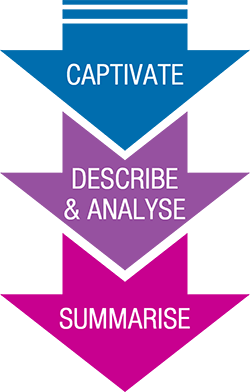 A clearly written story with a powerful narrative has a beginning, a middle and an end which work together to present a cohesive message.
- Captivate your audience at the beginning by framing it with a question, issue, or controversial topic. Compel them to continue reading, listening or watching, and make them want to see how the problem is solved.
- Describe and analyse the course of events in the middle: What happened? Why does it matter? And why should we care?
- Summarise your conclusions at the end of the story: How was the situation resolved? What effect has that or could that cause? What is likely to or should happen next? The end of your story should also reveal or reiterate your viewpoint and give your audience a take-home message that gives them something to act on and/or think about.
To effectively communicate your story within this structure, it is essential to write clear sentences and paragraphs, with a defined message and logical signposting to guide your audience.
Writing creatively
A creatively written story communicates new ideas. Not all the information needs to be new, but there must be something unique about what is being presented, and/or the way it is presented. Even historical stories about well-known events communicate a new understanding of the event, its details, and its significance. Ask yourself what is unique about your story, and plan how you will draw attention to that in your writing.
Another outlet for creativity in digital storytelling is the media that you choose, the specific tools you will use to create your media, as well as how you will use them narratively. Once you have drafted the basic structure and content of your story, you can begin to plan how to tell it by selecting your media and tools. See the media and tools selection checklist below for a list of criteria to help you choose your media and tools.
Conveying importance and interest
A digital story may address a contentious topic of discussion, something newsworthy, such as a current phenomenon, a historical event, or a question that will be answered by the end of the story. The common point shared between these kinds of topics is that they are all worthwhile issues, which capture audience interest and maintain audience attention. In other words, they have intrinsic value which makes the writer want to tell the story, and the audience want to follow the story (when it is told well).
Follow these steps to craft and communicate the value of your chosen issue: