
Dr Rongbin Xu, PhD
Dr Rongbin Xu, PhD
The health and epigenetic effects of air pollution, temperature and greenery
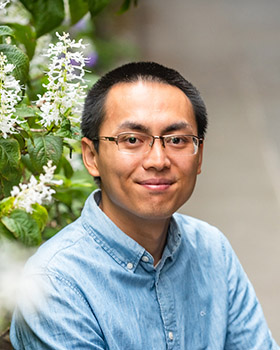
 Conducting my PhD in this School was a great experience. The large student cohort made me feel part of something larger, and the support staff were always there to remind me about pending milestones, and to celebrate them as they passed.
For seven winters, Rongbin Xu witnessed the thick palls of smog enveloping Beijing. Having recently completed his PhD in environmental health with us, he now has the skills, knowledge and networks to contribute to our medical knowledge around air pollution, climate change and health.
Rongbin was always interested in preventive health; that was the subject of his undergraduate studies at Peking University, and during his Master’s degree, he helped build a tool to identify the most important health indicators for Chinese adolescents. A social media post from a visiting scholar, advertising a PhD position with Professor Yuming Guo, piqued his interest and in 2018 he moved to Melbourne to take up the post.
He says, “Professor Guo’s climate change and air pollution research greatly intrigued me. My project explored the relationship between environmental exposures across air pollution, temperature and level of surrounding greenery, and epigenetic modifications in humans. So rather than looking at how variations in these three things change our actual genes, I looked at how they influence the way our genes are expressed without changing the DNA sequence, known as epigenetic modifications.”
Under supervision from Prof Guo, Prof Michael Abramson and Prof Shuai Li, Rongbin learnt highly technical data linkage and analysis techniques that allowed him to incorporate disparate datasets across climate and genomics, as well as processing satellite imagery and GIS data. His participant data was sourced from a pre-existing dataset: 479 Australian female twins who had participated in a breast cancer study a number of years prior, and had biobanked blood samples that could be used for epigenetic testing.
“I think the most exciting discovery I made was around how the level of surrounding greenery – so, parks, reserves, bushland – can influence your biological ageing process. It was the first time in the world anyone had used these techniques to explore this question, and the short answer is, it does affect it – we estimated that every 0.1-unit increase in the Normalised Difference Vegetation Index within 500 metres of home was associated with a 0.31-year younger biological age, which is equivalent to a 3% reduction in all-cause mortality.”
Since completing, Rongbin has continued to thrive and make his own statement within Professor Guo’s group. A big focus has been understanding the health impacts of smoke arising from landscape fires (bushfires/wildfires), phenomena that will increase in frequency and severity with climate change. Smoke contains very fine particles, and the smaller the particle, the easier it is for it to penetrate the lungs and enter our blood streams, wreaking havoc on multiple organ systems over time. Landscape fires therefore represent a significant future burden on health services, and Rongbin's research not only helps sound the alarm on the individual health impacts, but points to the need to rethink investment in health systems.
In September 2023, he was first author on a paper that not only garnered huge international media coverage, it graced the front cover of the prestigious journal Nature.
“Conducting my PhD in this School was a great experience. The large student cohort made me feel part of something larger, and the support staff were always there to remind me about pending milestones, and to celebrate them as they passed. And my supervisors were really supportive and flexible."
Read more on Rongbin’s findings around greenery and the ageing process.
Read Rongbin’s researcher profile and publication output.