
Dr Aung Zaw Zaw Phyo, PhD
Dr Aung Zaw Zaw Phyo, PhD
Degree completed: PhD in Epidemiology
Year completed: 2022
Joint main supervisors: Dr Rosanne Freak-Poli and A/Prof Joanne Ryan
Key findings: Patient perceptions of their health status and its impact on their quality of life can provide objectively prognostic information about their physical and mental health trajectories, and should be incorporated into preventive health strategies regarding cardiovascular health.
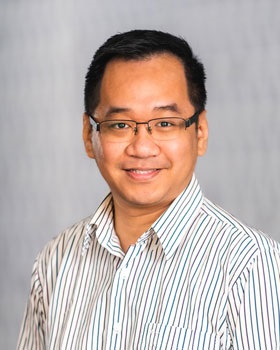
 I’m really proud of what I’ve accomplished, and I couldn’t have done it without my supervisors, the supportive team at the School’s graduate research office, and the amazing wealth of data made available to me through ASPREE. The School has really raised me up beyond what I thought I could be!
Dr Aung Zaw Zaw Phyo travelled a long and winding career path to reach the culmination of his studies this year – graduating with a PhD. It’s a path that’s taken him from working as a dentist in his homeland of Myanmar to undertaking research with our Biological Neuropsychiatry and Dementia team here in Melbourne.
After undergraduate training in dentistry in Yangon, Aung worked for a couple of years before relocating to neighbouring Bangkok to undertake his Master of Public Health at the prestigious Mahidol University.
Victoria’s burgeoning reputation as a hub of public health excellence then led him make an even bigger move, relocating to Melbourne, where he undertook a Master of Science (Epidemiology) at the University of Melbourne. Following graduation, he coordinated and managed several research projects for NGOs.
“Working in public health became an aspiration for me after I started learning about the power of preventive health during my postgraduate studies – prevention can save so much pain, heartache and cost. But it’s so hard to enable, for many reasons,” he reflects. “I really wanted to apply the biostatistical and epidemiological knowledge I’d acquired, so I applied to do a PhD investigating how we can prolong good health in older people.”
Aung’s studies focussed on predictors, trajectories and outcomes around health-related quality of life in older age. The patient-centric focus of exploring quality of life appealed to him.
Health-related Quality of Life (HRQoL) is a metric capturing individual perceptions of the impact of health on physical, psychological and social experiences. It’s been acknowledged as a novel prognostic tool to anticipate rehospitalisation and survival among numerous patient cohorts, including cardiovascular patients.
Aung used data from the renowned ASPirin in Reducing Events in the Elderly (ASPREE) dataset to better understand whether HRQoL could predict incident health outcomes in non-clinical settings. This unique dataset comprises detailed standardised health information from 19,114 relatively healthy community-dwelling individuals aged ≥65 years.
Interrogation of the baseline HRQoL scores and final health outcomes revealed that those with better physical HRQoL at the beginning of the study were more likely to survive longer and less likely to develop cardiovascular disease (CVD) or cognitive decline over an average five years period, while those with better mental HRQoL at study enrolment were less likely to develop dementia or cognitive decline over the same period.
The strong correlation between low physical HRQoL at the first assessment and CVD and death prompted him to dive deeper, tracking participants’ HRQoL scores over across five years. This created new evidence showing that better physical HRQoL trajectories were protective against developing incident CVD, and that poorer trajectories were more common among people experiencing financial hardship, loneliness, or recent stressful life events.
Aung says, “My findings recognise the value in incorporating older individuals’ perceptions of their own health status into predictions of adverse health outcomes in later life. We need to be shifting away from approaches that rely solely on clinician-reported assessments, and embracing measures like HRQoL to help prolong good health.
“Being embedded at the Monash School of Public Health and Preventive Medicine for three years was an inspirational experience. I was surrounded by brilliant and passionate researchers, including my own supervisors, and that really motivated me, even when things felt tough.”
Aung’s work has already generated eight peer-reviewed journal articles, has been applauded in high-profile editorials, and saw him announced as the runner-up in the Royal Society of Victoria’s Young Scientist Research Prize for 2022.
“I’m really proud of what I’ve accomplished, and I couldn’t have done it without my supervisors, the supportive team at the School’s graduate research office, and the amazing wealth of data made available to me through ASPREE. The School has really raised me up beyond what I thought I could be!”
And his tips for those considering undertaking their own PhD studies? “A PhD teaches you so much – not just research skills, but problem-solving, time-management, and rich communication skills. Choose a topic you are personally passionate about, and never forget you need to forge a work-life balance to get through!”