
Meet our students


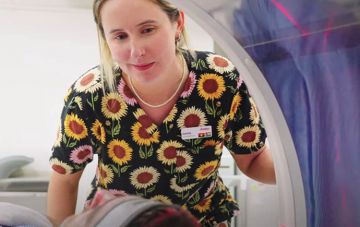
Keshav
Bachelor of Radiography and Medical Imaging (Honours)
 Since graduating from Monash University in 2021, Keshav Dhingra has embarked on an enriching journey as a Medical Imaging Technologist at Capital Radiology in Melbourne's north-west region. Recently, he’s taken on the responsibility of mentoring and supporting the next generation of radiography and medical imaging students as a sessional Teaching Associate at Monash University.
Keshav has also delved into research, presenting at national conferences in Melbourne and Sydney and co-authoring an article slated for publication in a prestigious national journal in 2024.
Keshav chose to study a Bachelor of Radiography and Medical Imaging (Honours) at Monash University to follow a genuine interest in healthcare and technology. “It was the perfect mix between the two,” he explained.
As a Medical Imaging Technologist (MIT) at Capital Radiology, Keshav’s day revolves around providing essential imaging services to patients using a range of imaging modalities such as general X-ray, Computed Tomography (CT), Orthopantomogram (OPG), and Dual Energy X-ray Absorptiometry (DEXA). He performs these duties working with diverse healthcare teams across different settings such as theatre/surgery, emergency and intensive care, which he was proud of upon reflection. “Being part of a collaborative team is one of the best parts of my role as a MIT.”
For Keshav, the opportunity to provide the best care possible to his patients is the highlight of his role. “Each interaction presents an opportunity to not only apply my technical skills but also to interact with individuals, understanding their concerns and providing reassurance. Whether it's explaining procedures, ensuring their comfort during imaging scans, or answering their questions, I strive to create a positive and supportive experience.”
Keeping up with the ever-changing advancements in medical imaging is the biggest challenge in Keshav’s career. As technology and techniques evolve, it's crucial for him to constantly update his skills to ensure he can provide the best care to patients. This ongoing learning process is essential for delivering high-quality healthcare. Keshav makes sure to keep attending webinars/seminars and conferences to develop his professional skills.
Keshav also has a strong interest in research, which he has been able to pursue through presenting at national conferences and co-authoring his first journal article. A lifelong learner, Keshav’s career goals include exploring other imaging modalities such as Magnetic Resonance Imaging (MRI) and/or Ultrasound (US) which require further training and study. He also hopes to continue his research and academic interests.
An interest in science and technology, and passion for connecting with people, are the key traits Keshav recommends for those considering a career in radiography. “As a radiographer, you'll interact closely with patients, requiring strong interpersonal skills to provide comfort and support during procedures. Embracing a mindset of lifelong learning is crucial as the field evolves rapidly with new advancements. By staying updated, you ensure you can deliver the best possible care to your patients. Overall, the Bachelor of Radiography and Medical Imaging offers a rewarding career path for those who are people-oriented and committed to continuous professional growth.”
Tehnan
Bachelor of Radiography and Medical Imaging (Honours)

I’ve always felt drawn to healthcare; the human connection, the science, and the ability to help someone through what can be the most vulnerable moments of their life. In high school, I loved biology and anatomy, but I wasn’t exactly sure which healthcare path suited me best. Radiography wasn’t my original plan; it came up as part of my VTAC preferences. But after giving it a semester, I found myself genuinely enjoying the content and the people around me.
Monash stood out to me for its Honours program. I had completed a research project in Year 12 and loved the experience. The chance to be part of a university that valued both practical learning and academic exploration made the decision feel right.
Placement has been a highlight of the course. We complete 48 weeks of placement over the course of the degree. I’ve rotated through six clinical sites: public, private, and rural. Each site I attended had a unique atmosphere, and taught me something different about the profession and about myself. Seeing how central medical imaging is to patient care, often being the first step in a patient’s diagnosis, has been a powerful reminder of why I chose this field.
Monash has a strong culture of research and student engagement, and I’d really encourage students to take advantage of it. The Honours pathway has been incredibly valuable for my journey as a student. Watching a random question turn into a year-long endeavour, and perpetuating its growth, it’s something everyone should try out in their career. Studying radiography at Monash has been more than just a degree. It’s been a space to grow, challenge myself, find the most amazing friendships, and be part of something meaningful.
Rachel
Master of Radiation Therapy
 I’ve always had an interest in the functionality of the body and wanted to work with technology and patients. This led me to study the Master of Radiation Therapy, as I felt it combined all my interests.
The placements in this course were a huge highlight for me. Being able to apply what I had learnt at university directly into a clinical setting to help patients was and continues to be very gratifying. Placements really allow you to be part of the team and experience what it’s like to work as a qualified radiation therapist on a daily basis. It really solidified my passion for this profession.
Everything you learn is directly transferable into the real world. It’s a dynamic and informative course that really leads to a rewarding career, and you have the opportunity to work within an industry that’s always evolving and making an impact in the lives of patients and their families.
-
Rin
Bachelor of Radiography and Medical Imaging (Honours)

My favourite part about the course was the clinical placements. I had the opportunity to learn from a range of clinical sites, from major trauma hospitals to private clinics, from suburban to rural public hospitals.The best part was meeting and interacting with a variety of patients and learning from highly experienced radiographers and other medical professionals. I even got a chance to be involved in several major trauma cases and surgeries.”
My favourite part about the course was the clinical placements. I had the opportunity to learn from a range of clinical sites, from major trauma hospitals to private clinics, from suburban to rural public hospitals.
The best part was meeting and interacting with a variety of patients and learning from highly experienced radiographers and other medical professionals. I even got a chance to be involved in several major trauma cases and surgeries.”
-
Aliesha
Bachelor of Radiation Sciences
 When it came to choosing the best course for her, Aliesha narrowed her focus to radiation science and the possibilities this industry could offer her. “Cancer research is a huge industry and growing, and something I was very interested in. I felt that radiation had more options open to me, not just limited to being a radiation therapist, but to further study in MRI or CT, or go into research.”
Now in her second year of the course, Aliesha has enjoyed building a solid foundation in health science and engaging with other health students, which will benefit her future career – regardless of the direction she takes. Looking to gain some additional radiation experience outside the classroom, Aliesha successfully applied for a Peter Mac research internship, where she had the opportunity to work alongside researchers and clinicians. As part of this, she also completed her own research project on radiation therapy graduate education and had the opportunity to present her research to the Peter Mac graduate program team.
“I learnt an incredible amount on the internship, in my understanding of cancer itself, as well as the roles of each profession involved in cancer treatment. It was incredible to see how much everyone is working together to get to that end goal of intrinsically understanding cancer and how to treat it.”
This internship also gave Aliesha a unique insight to life as a radiation therapist, when she shadowed staff at Peter Mac. “It very much changed my understanding of the profession and I have a much greater understanding and respect for what they do. There’s a lot of problem solving involved and it requires the utmost precision and care.” Looking beyond her degree, Aliesha hopes to explore a career in cancer treatment research.
Amanda
Bachelor of Radiography and Medical Imaging (Honours)
 Having the lives of patients placed in your hands, as well as having the passion to help those who need it the most, makes a radiographer’s job a noble one. I’ve never doubted my decision to study this course.
Monash prepares graduates to be innovative global thinkers, and my degree equips me with skills that I’ll keep for life. I’m confident that no matter where I start my career, I will be able to adapt and contribute professionally as part of a multidisciplinary healthcare team. I have really enjoyed clinical placements, where I get to apply my theoretical knowledge in a proper clinical setting. In a case where a two-minute chest x-ray could be a life changing event, being the “eyes of the doctors” becomes an important job.
Being able to speak to radiographers with decades of experience is eye-opening. I get to hear their inspirational radiography journey through the advancement of medical imaging technology, and sense the passion and dedication in their voices.
-
Sean
Bachelor of Radiations Sciences
 Sean was drawn to the Bachelor of Radiation Sciences degree as it would allow him to combine his interests in science and healthcare and have a rewarding career after graduation. The opportunities to do placement was also “a huge positive”.Learning alongside students from other health science streams and having guest lecturers from different parts of the healthcare system has allowed Sean to gain diverse perspectives on health challenges and issues.“Having lecturers or tutors who try to keep the material interesting really helps my learning, and makes me enjoy going to classes and lectures”.
Having started to explore the latest research and treatments in radiation therapy in his studies, Sean looks forward to putting this into practice with placement and gaining hands on experience in the field. “This course has plenty of opportunities to network and gain extra insights if you want to.”After completing the course, Sean plans on applying to the Master of Radiation Therapy course, which will qualify him as a radiation therapist and hopes to go on to “work inside a radiotherapy center in a major hospital or treatment center and help people in their fight against cancer.”
Rebecca
Bachelor of Radiography and Medical Imaging (Honours)
 After fifteen years as a small-animal veterinarian, Rebecca was keen for a change so started the journey to her second career studying the Bachelor of Radiography and Medical Imaging Honours). Rebecca has relished the opportunity of being a student again.
“I love the camaraderie in my year level” she explains, “we always help each other out when needed.” She’s also appreciated that the radiography students are set-up to think of themselves as future professionals. “We have daily reminders of what will be expected of us in the real world.
”With clinical placements starting from the first semester of her course, Rebecca has already had the opportunity to experience life as a radiographer in different settings. After her first placement in a small rural hospital, Bec continued in a private hospital in Melbourne’s inner city. “The pace there was intense, but the staff amazingly supportive and I gained a heap of experience.
One thing that has been a surprise is the terrific patients I have had the privilege to work with - they have been fascinating.” Working hard the second time around is already paying off for Rebecca, who was recently recognised with two prizes for her academic excellence. Excited by the ongoing advances in medical imaging, she hopes to take her radiography career to Hobart after graduating, and later specialise in one imaging area.
Jessica
Bachelor of Radiography and Medical Imaging (Honours)
 I have always been interested in the medical field, and for me Radiography is the perfect balance of science and medicine, as it gives you the opportunity to be hands on and have contact with patients on a daily basis. In the course, students undertake clinical placements each semester - starting in semester one of the first year. So far, I’ve completed eight placement blocks - all at different clinical sites.
Not only does this provide a genuine insight into what life will be like when qualified, it also allows us to work alongside industry partners and form professional relationships. I recently finished a six-month paid clinical rotation as part of my final year, and thoroughly enjoyed the challenges and opportunities that go hand-in-hand with being an employee of a large public hospital.
I was also fortunate enough to represent Monash at an international competition held in Taichung, Taiwan. This incredible experience enabled me to put the knowledge I gained at university into practice, all whilst meeting radiography students from all over the world and getting the opportunity to explore a new country.
Ian
Master of Medical Ultrasound
 Ian initially qualified and worked as a medical imaging technologist before moving to a professional role as Business Manager for Ultrasound (Australia-New Zealand) – a role that opened up a rare opportunity to be involved in the Commonwealth Games.
“I was responsible for negotiating and managing the exclusive use of medical imaging equipment at the 2006 Melbourne Commonwealth Games. The role required engaging with a range of stakeholders and was great opportunity to work with key imaging professionals, as well as contribute to the Games.” With an opportunity to return to a clinical role, Ian undertook the Master of Medical Ultrasound in 2013 to build on his ultrasound knowledge and nurture new skills not developed in other university programs but “useful and desirable within healthcare”.
The decision proved to be the right one, and tapped into his growing interest in research. Ian’s research project won the Australian Sonographers Association (ASA) Award for best Monash University project, as well as Best Research Presentation at the 2016 ASA National Conference. Since graduating Ian has expanded his clinical ultrasound skills as a senior sonographer at Monash Health Diagnostic Imaging and MIA Victoria, and is also involved in clinical teaching. He says patient interaction is what brings him the most satisfaction.
“In very short window of time we are able to question and learn about a patient’s injury or condition. This time gives an opportunity for empathy, understanding or even an explanation about the ultrasound outcomes.” Having completed the Master of Medical Ultrasound will help bring Ian closer to his goal, having boosted his research capacities. “The skills I gained give me confidence in reading and evaluating relevant research papers in the workplace. I now look for other prospective research projects or ongoing researchers to partner with.”
Sabrina
Bachelor of Radiography and Medical Imaging (Honours) Graduate
 While working as a grade 2 medical imaging technologist at Northeast Health in Wangaratta, Sabrina balances quality clinical care for her patients, with contributing to the education and professional development of the radiology department.
Sabrina initially starting a science degree at Monash University, but an interest in working in healthcare led her to transfer over to a Bachelor of Radiography and Medical Imaging (Honours). After an intern year with a major metropolitan health service during the height of COVID, she felt the strong pull to return to a regional community.
Having completed two rural placements and an international radiography placement in Scotland as a student at Monash, Sabrina says these experiences prepared her to be independent and made the transition to a new working environment easier.
Pursuing a career in radiography with a regional health service means each day is different for Sabrina. Northeast Health has a wide catchment area including Beechworth, Bright and Myrtleford, providing diagnostic x-ray imaging to service members of the community who can’t travel as far. While Sabrina works mostly in general X-ray, she is also computer tomography (CT trained) and is currently completing her mammography training to be able to offer her patients access to even more imaging services.
“Despite being a smaller hospital, we offer a lot of services and have a 24-hour imaging department with a rotating roster. In a typical week, I’ll work a little bit everywhere. We also have a good flexible work environment. You could be up going for a hike in the morning and starting work in the afternoon - it’s a nice work-lifestyle balance with shift work in a regional setting.”
For Sabrina, what sets working rurally apart, is the continuity of care she can provide for patients. Rural radiographers are often required to provide a wide range of imaging services, which would usually be specialised in metropolitan settings and patients may go to different services or clinics for different aspects of their treatment and care.
“We’ll see our patients from their first presentation to the emergency department and are involved in their imaging experience - whether it’s diagnostic x-ray or CT. We might do their follow-up once they're in the wards, for example after an operation for their post-operative management and care. We’ll then watch them in follow-up imaging, being the only site in the area. You get to be part of that patient journey and really get to know your patient demographics. You might see people from the same family or region. In Melbourne, people might be discharged and go elsewhere. Here, you’re with the patient the whole way through.”
While only in the early stages of her radiography career, Sabrina’s next professional goal is to take on a clinical educator role within her health service, supporting radiography students on their clinical placements. For now, she sees her career remaining rural and continuing to serve her local community.
“I love what I do and I love where I work, I love the people and the location. I think we’re a service that's constantly expanding, so I’m excited to see what’s in store in the next few years.”
Vishal
Master of Radiation Therapy Graduate
 Placements had to be the most enjoyable and beneficial aspect of studying the Master of Radiation Therapy at Monash. The various clinical centres I was placed in had me working quite hands-on, whilst providing excellent supervision and critical feedback. Not only did this give me a sense of what I could expect from this career but it also helped me reflect, consolidate and apply all aspects of my learning from university lessons and material.
I currently work at the Peter MacCallum Cancer Centre within their Bendigo Campus as a Grade 1 Radiation Therapist (RT). I am currently on a treatment rotation, which involves setting the patient up onto our specialised treatment couch along with various stabilisation equipment, aligning their body contour using surface-guided techniques, capturing KV x-ray or cone beam CT images and matching anatomy against their Planning CT scan and then beaming on the linear accelerator (LINAC) which treats the patients. The work also involves a number of quality assurance checks.
Each LINAC is typically operated by 2 radiation therapists (RTs) for each patient, with 4 RTs working together on an average day swapping between treating and out time. As a new graduate, I will be rotated between departments every 6-8 months regularly in order to gain experience across all aspects of the job.
My advice for someone considering a career as a radiation therapist is that ultimately you have to be a people person. RTs meet new patients and see new faces on the job on a daily basis. It is our duty to be there for them and to look after them, and this all starts with building trust and rapport. There are a lot of technical and clinical aspects to this job which can all be learnt and trained for, but the way you deal with people and showing consideration is something only experience can grant.
The happiness and joy patients experience at the end of their course of treatment is truly remarkable. Many come to us to give thanks and gift us cards, chocolates and even handmade presents, which is not only very generous but also makes the job feel so fulfilling and rewarding.
Tim
Master of Medical Ultrasound
 I grew up in Alexandra in regional North East Victoria with a strong interest in sports and fitness. I was interested in a career in sports medicine but didn’t have ambitions of being a doctor, and enjoyed completing work experience in ultrasound and physiotherapy.
After high school, I commenced studying radiography at Monash University in Clayton. Monash provided a recognised and well-respected undergraduate degree in medical imaging and a clear pathway into the post graduate medical ultrasound (sonography) degree. We had a great cohort of students in radiography - the relatively small intake size meant that we all got to know each other well, it was a social group where we all found ourselves surrounded by like-minded people with similar interests. Great friendships were made, many of which will last for life, including meeting my wife Claire!
Part of my final year of radiography involved a 3-month rotation through Goulburn Valley Health in Shepparton. As a result, when we graduated, Claire and I moved to Shepparton with the aim of securing ultrasound trainee positions. Claire was the successful applicant for the first ultrasound trainee position and I was lucky enough to undergo MRI training, whilst waiting for my turn.
After Claire qualified as a sonographer, we relocated to Bendigo. We both joined Bendigo Radiology, Claire as a sonographer and myself as an ultrasound trainee, and I qualified at the end of 2012.
When children came along, Claire and I were fortunate enough to job-share a single sonography position for a period, which allowed us both to enjoy spending time with the kids while they were young and keeping up our clinical skills and professional lives. Sonography is a great career in that regard, providing flexibility and opportunities.
Now as Chief Sonographer, I manage the ultrasound department for Bendigo Radiology - which has 7 ultrasound rooms here in Bendigo, along with regional sites including Kerang, Castlemaine and Hamilton. My role involves overseeing staffing, working alongside the radiologists in developing ultrasound policies and protocols, and most importantly overseeing the training of our ultrasound students (who are currently completing the Monash course). Watching the trainees learn, qualify and then start their own careers as qualified sonographers is exceptionally satisfying, knowing they have a rewarding career ahead.
Working regionally, every day is different and you never quite know what's going to come through the door. A typical day could involve running a list of my own patients - we have a good mix of musculoskeletal, obstetric, general and vascular patients, working with radiologists on ultrasound-guided interventional procedures, hands-on training with our ultrasound trainees, or administration days working on policies and protocols and rostering requirements.
My advice to aspiring sonographers would be to persevere and don't be afraid to go rural. Rural sites often provide an exceptionally well-rounded training experience, rather than being pigeon-holed into a single facet of sonography, such as obstetrics or vascular which some metropolitan sites may specialize in.
So go rural, spend some time consolidating the basic skills and work out what aspect of ultrasound you enjoy the most.
Overseas student experiences
| London, UK |
|---|
I was provided with the opportunity to complete a placement overseas at the University College London Hospital. The placement gave me a unique experience and improved my understanding of how radiotherapy practice differs between the UK and Australia. I was able to see first-hand the different roles
radiation therapists play in the Multidisciplinary Team in other countries. I was then able to bring these experiences into my clinical practice in Australia to further improve the care I am able to deliver to my patients. The placement gave me a more holistic approach to my practice, drawing on unique
knowledge to ensure the care I provide is of the highest quality. This experience provided me with a unique individual clinical portfolio of knowledge I have been able to draw on as both a student and now as a qualified Radiation Therapist. Georgina Cheale |
| Scotland |
Undertaking an overseas clinical placement in 2018 was one of the most valuable and memorable learning opportunities I have had so far throughout my studies. I gained an abundance of new anatomical and radiographic knowledge from my time spent at the Aberdeen Royal Infirmary and was able to put all the clinical skills I have learnt here in Australia into place. I had the opportunity to learn new skills, step out of my comfort zone and achieve personal goals I set for myself before departing. Completing an overseas placement was a truly enriching experience and I would recommend it to all radiography students to consider embarking on.
Sabrina Lewicki We were fortunate to travel to Scotland in 2017 for clinical placement, where we were able to experience first-hand all that the NHS has to offer. From working in paediatric wards and theatre, and even watching a post-mortem examination throughout the week, to visiting the Scottish Highlands and Royal Mile on the weekend - we were provided with so many opportunities to grow and learn as students. It was an unforgettable experience that has been the highlight of our time at Monash University.
Georgia Parry & Gabrielle Ramsay |
| Warrington, UK |
Completing an overseas placement was an experience that I will never forget, being able to connect with likeminded radiographers and students was something that both improved my skills and gave me great connections internationally. The experience not only taught me about my radiography skills, but helped me to grow as a person, and really solidified that I had chosen the right career for me.
Bonnie Adams |


