
Jokubaitis Group
Neuroimmunology, Genomics and Prognostics
Get in touch | Our people | Our work | Our Achievements | Publication Highlights
The Jokubaitis group is dedicated to improving the lives of those living with Multiple Sclerosis (MS) and related disorders. Our goal is to find better ways to manage these conditions, to personalize treatment strategies for individuals, and to identify new treatment targets.
Under the leadership of Professor Vilija Jokubaitis, our multidisciplinary team uses epidemiological, biostatistical, bioinformatic, and lab-based research methods to uncover important insights into what drives disability outcomes, and therefore leads to better care for people with MS and related disorders.

Get in touch
Whether you want to actively participate in our research, pursue higher degree studies with us, explore collaboration opportunities, or contribute to our work through donations, we would be delighted to hear from you.
- Email us - vilija.jokubaitis@monash.edu for inquiries or to express your interest
- Follow us on Twitter/X
- Follow us on BlueSky
- Available student research projects
We look forward to connecting with you and appreciate your interest in our work!
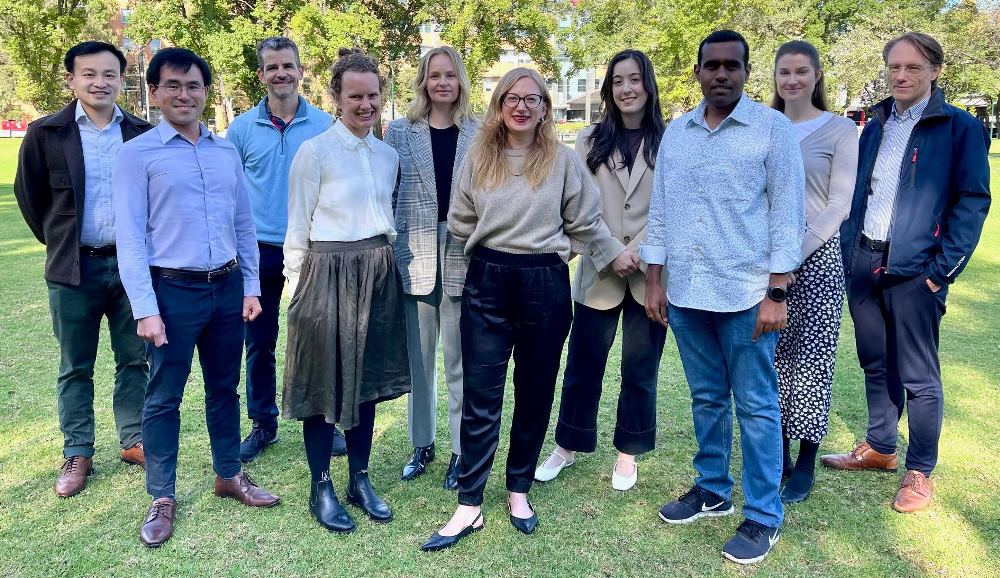
Our people
Group Leader
Our work
Multiple sclerosis (MS) affects over 37,500 individuals and incurs an annual cost exceeding $3 billion in Australia. Women are more likely to be diagnosed than men (representing three in four individuals who are affected) and are typically diagnosed during their reproductive years (20-40 years old). Despite the availability of highly effective immunotherapies for treatment, none currently provide a cure or neuroprotection. We explore innovative approaches to address the pressing need to halt or prevent neurological disability.
Our work is focused within three broad categories:
- Women’s Health, Pregnancy and Neonatal Outcomes
- Identification of molecular and genomic signals associated with disease outcomes and treatment response
- Integration of biological (biomarker, genetic) and environmental data with clinical outcomes data to inform prognostic modelling
We employ cutting-edge tools (genomics, transcriptomics, proteomics, spectral immunophenotyping, MRI automated AI analysis pipelines and more) to uncover biological drivers influencing:
- Australian midlife women living with multiple sclerosis (currently recruiting)
- Pregnancy-induced MS remission (clinical study - recruiting)
- The impact of pregnancy on the MS brain
- Drivers of MS disease severity
- Response to disease-modifying therapies (pharmacogenomics)
These studies help to derive new insights and pinpoint targets for future therapeutic intervention, paving the way for innovative immunotherapies or neuroprotective strategies and improved long-term outcomes in MS.
We are active collaborators with the online international MSBase Registry and the MSBase Women’s Health Registry (led by Professor Jokubaitis). Our team leverage this collaboration to enhance patient care and develop evidence-based management strategies to optimise:
- treatment choice (and inform treatment switch decisions)
- maternal and foetal health
- health of gender-diverse people with MS
- care of cancer survivors with MS
- understanding of Neuromyelitis Optica Spectrum Disorder (NMOSD).
Our Achievements
Grants
Professor Vilija Jokubaitis
- NHMRC L1 Investigator Grant (GNT2025360), "What’s pregnancy got to do with it? Prevention of disability in people with Multiple Sclerosis", 2024 - 2028
- International Progressive MS Alliance (PA-2303-40840), "A multi-omics approach to tackling progression in multiple sclerosis", 2024—2026
- F. Hoffmann-La Roche Ltd. Pregnancy-related molecular changes and their impact on multiple sclerosis outcomes: a prospective, longitudinal study (PREGMOL), 2023 - 2026
- MS Research Australia Project Grant 21-069. Determining the risk of cervical precancer and cancer in women with MS, 2022 - 2024
Publication Highlights
See below some highlighted publications from the Jokubaitis group, for a comprehensive list of publications visit here
- Exploring the role of sex hormones and gender diversity in multiple sclerosis. Nat Rev Neurol. January 2025; Nesbitt C, Van Der Walt A, Butzkueven H, Cheung AS, Jokubaitis VG.
- Disease Activity in Pregnant and Postpartum Women With Multiple Sclerosis Receiving Ocrelizumab or Other Disease-Modifying Therapies. Neurol Neuroimmunol Neuroinflamm. November 2024; Yeh WZ, Van Der Walt A, Skibina OG, Kalincik T, Alroughani R, Kermode AG, Fabis-Pedrini MJ, Carroll WM, Lechner-Scott J, Boz C, Ozakbas S, Buzzard K, Habek M, John NA, Prat A, Girard M, Duquette P, Baghbanian SM, Hodgkinson S, Van Pesch V, Laureys G, Willekens B, Prevost J, Foschi M, De Gans K, Horakova D, Havrdova EK, Karabudak R, Patti F, Mccombe PA, Maimone D, Altintas A, Ampapa R, Spitaleri D, Gerlach OHH, Sa MJ, Hughes S, Gouider R, Mrabet S, Macdonell RA, Turkoglu R, Cartechini E, Al-Asmi A, Soysal A, Oh J, Muros-Le Rouzic E, Guye S, Pasquarelli N, Butzkueven H, Jokubaitis VG
- Increased risk of cervical abnormalities in women with MS exposed to high-efficacy disease-modifying therapies. Neurol., February 2024; Bridge F, Brotherton JML, Stankovich J et al., Jokubaitis VG [co-senior author] van der Walt A.
- The impact of menopause on multiple sclerosis. Autoimmun. Rev., August 2023; Bridge F, Butzkueven H, Van Der Walt A, Jokubaitis VG.
- Not all roads lead to the immune system: the genetic basis of multiple sclerosis severity. Brain, June 2023; Jokubaitis VG, Campagna MP, Ibrahim O, Stankovich J, Kleinova P, Matesanz F, Hui D, Eichau S, Slee M, Lechner-Scott J, Lea R, et al.
- Family planning considerations in people with multiple sclerosis. Lancet Neurol., April 2023; Krysko KM, Dobson R, Alroughani R, Amato MP, Bove R, Ciplea AI, Fragoso Y, Houtchens M, Jokubaitis VG, Magyari M, Abdelnasser A, Padma V, Thiel S, Tintore M, Vukusic S, Hellwig K.
- Parity is associate with long-term differences in DNA methylation at genes related to neural plasticity in multiple sclerosis. Clin. Epigenetics, February 2023; Campagna MP, Xavier A, Stankovich J, Maltby VE, Slee M, Yeh WZ, Kilpatrick T, Scott RJ, Butzkueven H, Lechner-Scott J, Lea RA, Jokubaitis VG.
- Whole blood DNA methylation patterns are associated with disease severity in females with relapse-onset multiple sclerosis. Clin. Epigenetics, December 2022; Campagna MP, Lea R, Xavier A, et al., Jokubaitis VG [senior author].
- Natalizumab, Fingolimod, and Dimethyl Fumarate use and pregnancy-related relapse and disability in women with multiple sclerosis. Neurol., June 2021; Yeh W, Widyastuti AP, van der Walt A, et al., Jokubaitis VG [senior author].
- The MSBase pregnancy, neonatal outcomes, and women’s health registry. Ther. Adv. Neurol. Disord., April 2021; Jokubaitis VG, Skibina O, Alroughani R, Altintas A, Butzkueven H, Eichau S, Fragoso Y, Hellwig K, Hughes SE, Rath L, Van Der Walt A, Gray O.