
Stem Cell theme
Stem Cells for Drug Discovery and Regenerative Therapy
Our research uses patient-derived induced pluripotent stem cells (iPSCs) to develop human models of epilepsy for drug discovery and regenerative medicine. By generating neurons from individuals with epilepsy, we investigate disease mechanisms, understand treatment resistance, and evaluate potential therapeutic strategies.
Our goal is to translate laboratory discoveries into safer and more effective treatments for people living with epilepsy.
Drug Discovery & Precision Medicine
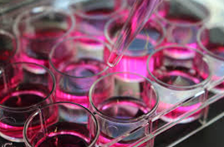
We develop patient-derived induced pluripotent stem cell (iPSC) models to investigate the mechanisms underlying epilepsy, identify therapeutic targets, and discover new anti-seizure treatments. We screen compounds for anti-seizure activity and evaluate cellular and neuronal network responses to identify promising therapeutic candidates and support the development of new anti-seizure medications (ASMs).
A central feature of our platform is the ability to model and quantify seizure-like activity in human neuronal networks. This enables us to measure network activity, assess responses to therapeutic compounds and investigate disease-associated changes in neuronal network function.
- Understanding mechanisms of drug-resistant epilepsy
- Identify and validate novel therapeutic targets for seizure control
- Screen compounds with anti-seizure properties
- Measure neuronal network activity and responses to therapeutic compounds
- Support precision medicine approaches
Regenerative & Cell-Based Therapy
We are investigating stem cell-based and biological therapies designed to modify disease mechanisms and restore neural function in epilepsy. These approaches aim to modulate dysfunctional neural circuits, reduce seizure burden, and advance future therapeutic strategies for epilepsy.
- Stem cell-based therapeutic delivery
- Neuropeptide-mediated seizure suppression
- Extracellular vesicle-based therapies
- Translation of regenerative therapies toward clinical application
-
Research Platforms
Our research is supported by integrated experimental platforms for modelling human neurological disease and advancing therapeutic discovery.
- Patient-derived iPSC models
- Human iPSC-derived neuronal network models and multi-electrode array (MEA) platform
- Human brain organoids
- Stem cell tracking and imaging technologies (MPI/CT)
Meet the team
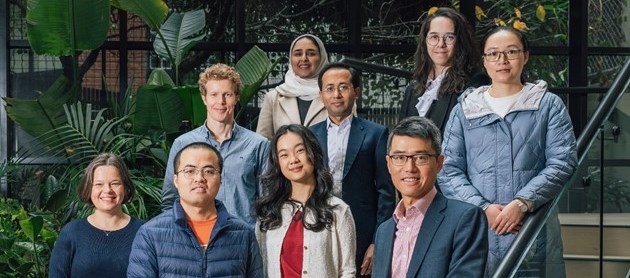
Stem Cell theme group. (L - R ) Front row - Dr Ana Antonic-Baker, Mr Hailin Zhu, Miss Elena Vianca, Professor Patrick Kwan, Middle row – Dr Hugh Simpson, Dr Muhammad Shahid Javaid, Miss Xiaojie Song, Back row – Miss Afaf Altalhi, Mr Daniel Sandvik (Absent – Dr Ben Rollo, Dr Jinchao Gu, Miss Eliza Moore, Mr Joshua Nicholls)
Principal Investigators
-
Current projects
Drug Discovery & Precision Medicine
- Developing a new class of medications for epilepsy
- Pre-clinical evaluation of selective adenosine A1 receptor positive allosteric modulators for the treatment of drug-resistant epilepsy
- Extracellular vesicles from epilepsy patient-derived neurons promote epileptogenesis and drug resistance: uncovering new drug targets
- Precision gene silencing of Homer1 R297W transcripts by antisense
Regenerative & Cell-Based Therapy
Get in touch: Research and Study Opportunities
To learn more about our research or opportunities to study with us, please contact Dr Ana Antonic-Baker ana.antonic-baker@monash.edu or Dr Ben Rollo ben.rollo@monash.edu
Publication highlights
Forward programming of human pluripotent stem cells to generate glutamatergic and GABAergic neurons in a tri-culture model with astrocytes Stem Cell Research & Therapy, 2026 Gu J, Rollo B, Liu Z, O’Brien TJ, Kwan P*, Cromer B*, Sumer H*.
Distinct functional networks derived from human induced pluripotent stem cell neuronal activity Scientific Reports, 2026 Mehrkanoon S, Rollo B, Gu J, Javaid MS, Antonic-Baker A, O’Brien TJ, Kwan P.
Electrical stimulation of stem cell–derived human neural networks for evaluating anti-seizure medications Epilepsia Jul 2025. J Nicholls, J Gu, Z Chen, Z Liu, A Antonic-Baker, M S Javaid, E Moore, H Zhu, A Altalhi, D K Wright, H Sumer, T J O'Brien, P Kwan, B Rollo
Generation of a stably transfected mouse embryonic stem cell line for inducible differentiation to excitatory neurons Experimental Cell Research, February 2024 J Gu, B Rollo, G Berecki, S Petrou, P Kwan, H Sumer, B Cromer
An integrated in vitro human iPSCs-derived neuron and in vivo animal approach for preclinical screening of anti-seizure compounds Epilepsy Research, 2024 Zhao C, Rollo B, Javaid MS, Huang Z, He W, Xu H, Kwan P, Zhang C.
Human In Vitro Models of Epilepsy Using Embryonic and Induced Pluripotent Stem Cells Cells, December 2022 Javaid MS, Tan T, Dvir N, Anderson A, J O'Brien T, Kwan P, Antonic-Baker A.
Effects of cell therapy on seizures in animal models of epilepsy: Systematic review and meta-analysis Epilepsia, January 2026 Altalhi AS, Javaid MS, Jones NC, Powell KL, Kwan P, O’Brien TJ, Antonic-Baker A.
In vitro models of valproic acid to assess neurodevelopmental toxicity: A scoping review Epilepsia, July 2025 Sandvik D, Vianca E, Anderson A, Javaid MS, O’Brien TJ, Antonic-Baker A.
Alpha-lipoic acid analogues in the regulation of redox balance in epilepsy: A molecular docking and simulation study Journal of Molecular Graphics and Modelling, May 2022 Javaid, M. S., Antonic-Baker, A., Pitsillou, E., Liang, J., French, C., Hung, A., O'Brien, T. J., Kwan, P., Karagiannis, T. C. & Anderson, A.