
Chimeric Antigen Receptor T-cell (CAR T-cell) therapy
Our group is interested in studying the neurological outcomes of patients who have received CAR T-cell therapy. We aim to -
- Understand the type and frequency of various neurological symptoms of CAR T-cell therapy
- Improve the clinical and non-clinical factors associated with neurological symptoms of CAR T-cell therapy
- Improve the link between blood and cerebrospinal fluid biomarkers with neurological and blood changes following CAR T-cell therapy, and
- Understand the impacts CAR T-cell therapy has on patients and their caregivers.

Our group is also particularly interested in identifying biomarkers for the early diagnosis and management of neurotoxicity following CAR T-cell therapy.
Neuropsychologists in our team use multiple cognitive tests to assess neurotoxicity, including -
- Immune effector cell-associated encephalopathy (ICE) assessment - with the development and use of flashcards to undertake assessments in different languages for patients to understand
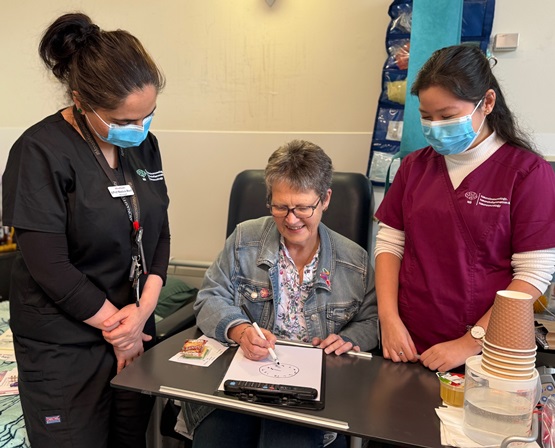
- Clock Drawings
- Online assessment
This is to ensure that the practice is safe, sound, and that clinicians can identify and manage neurological complications early. Finding ways of improving treatment, and the battery of tests and assessments helps to make the process efficient for everyone involved.
CAR T-cell therapy is a new, revolutionary, and promising treatment for certain types of blood cancers. A person’s own immune cells (T-cells) are reprogrammed genetically in the laboratory so they can more effectively recognise and destroy cancer cells in the body. After patients are given the therapy, they typically stay for two weeks in the hospital for monitoring. Monitoring makes sure that the therapy has worked effectively, and in case a person experiences any adverse effects, for example, fevers or low blood pressure (also known as Cytokine Release Syndrome).
Another adverse effect that occurs in some cases is when the brain becomes inflamed. The inflammation can cause symptoms such as confusion, difficulties with speaking and writing, and seizures. This is known as immune effector cell associated neurotoxicity syndrome (ICANS). Other neurological toxicities can result but are yet to be characterised.
The work brings together a multidisciplinary team (including neurologists, haematologists, neuropsychologists, biostatisticians, nursing and other clinical staff) from Alfred Health and Monash University to collaborate to improve patient care. For more information on the therapy program available through Alfred Health visit: https://www.alfredhealth.org.au/services/car-t-cell-therapy
Communication to Community / Researcher
Plain language summaries
- 10-Minute Computer Test Predicts Brain Toxicity by up to 12 Hours (PDF, 1.74 MB)
- Drawing Clocks Helps to Detect Brain Toxicity After Chimeric Antigen Receptor T-Cell Therapy (PDF, 3.17 MB)
- Thinking Abilities in the First 2 Months After Brain Toxicity From Chimeric Antigen Receptor T-Cell Therapy (PDF, 4.2 MB)
Translating ICE scores to other languages
We have developed flashcards to help clinical staff accurately assess and monitor for immune effector cell-associated neurotoxicity syndrome (ICANS) using a modified immune effector cell-associated encephalopathy (ICE) score. These flashcards are appropriate for patients who can read in their native language.
Recommended reading: Kazzi, C., Simpson, T., Abbott, C., Wronski, M., Seery, N., Tan, T. H. L., ... & Monif, M. (2025). Monitoring the neurological complications of chimeric antigen receptor (CAR) T-cell therapy in patients with sensory and physical impairments and non-native-speaking backgrounds using modified immune effector cell-associated encephalopathy (ICE) scores: a case series. BMJ Neurology Open, 7(1), e000927. doi: 10.1136/bmjno-2024-000927.
Awards
- 2024 - Christina Kazzi - PhD student, winner of the Alfred Research Alliance Best Abstract For Cancer Research focusing on cognitive biomarkers of CAR T cell therapy neurotoxicity.
Publication highlights
Cognition following chimeric antigen receptor T-cell therapy: A systematic review. Journal of Autoimmunity, November 2023, 140, Article 103126. Kazzi, C., Kuznetsova, V., Siriratnam, P., Griffith, S., Wong, S., Tam, C. S., Alpitsis, R., Spencer, A., O'Brien, T. J., Malpas, C. B., & Monif, M.
Contact us
Department of Neuroscience,
Monash University
Level 6, 99 Commercial Road
Melbourne 3004
Email: NeuroimmunologyResearch@monash.edu