
Brain Recovery and Rehabilitation Group - Lannin
Lannin Group
Brain recovery and rehabilitation
Get in touch | Our work | Our people | Our achievements | Publications
The Brain Recovery and Rehabilitation Research Group conducts translational research from bench to bedside and beyond seeking to improve long-term outcomes for adults after neurological damage, in particular from stroke and traumatic brain injuries. We are interested in the structural (e.g. molecular, cellular and tissue) and functional (e.g. excitability, cortical maps and networks) targets of brain recovery, compensation versus repair, and non-pharmacological, rehabilitative and neurotechnological studies.
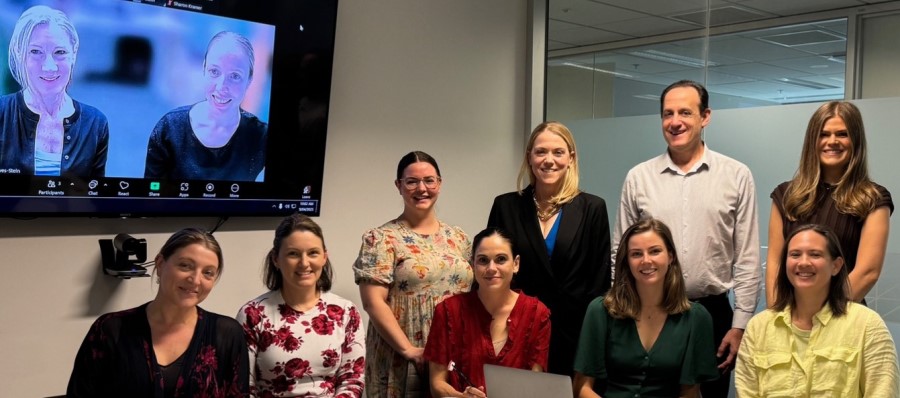
2025 group: L-R: Back row - Emma Dorward, Serena Alves-Stein, Lauren Giesler, Natasha Lannin, Philip Cohen, Madeleine Smith, Front - Vibeke Wagner (visiting researcher), Kate Scrivener, Katherine Sewell, Rebecca Cousins, Sharon Kramer
Get in touch
Whether you want to be involved in our research, study with us, collaborate with us or donate to our work, we would be delighted to hear from you.
- Email us: natasha.lannin@monash.edu
- Follow us for the latest updates – @RecoveryBrain | @NatashaLannin @natashalannin.bsky.social | @SharonFKramer
Our work
Our research improves the lives of people with brain damage and disorders, including stroke and traumatic brain injury, through:
- Discovery research
- Clinical trials
- Implementation of research into clinical care
Our discovery research is focused on understanding the rehabilitation of preclinical reach and the potential for adjuvants to change outcomes, increasing knowledge about cognitive fatigue in neurological populations and its relationship with cortical excitability, and determining biomarkers of motor and cognitive domains across the recovery timeline.
Our team conduct complex intervention trials from Phase II to Phase IV, developing and then testing the efficacy of rehabilitation interventions. Funded by NHMRC, MRFF and NIHR we currently focus on motor recovery trials after stroke, monitoring quality of care in rehabilitation, fall prevention programs in community-living stroke survivors, and cognitive rehabilitation interventions to improve functional outcomes. Our team is internationally respected for our implementation research, and we conduct trials and knowledge translation research to support rapid uptake of our trials into healthcare.
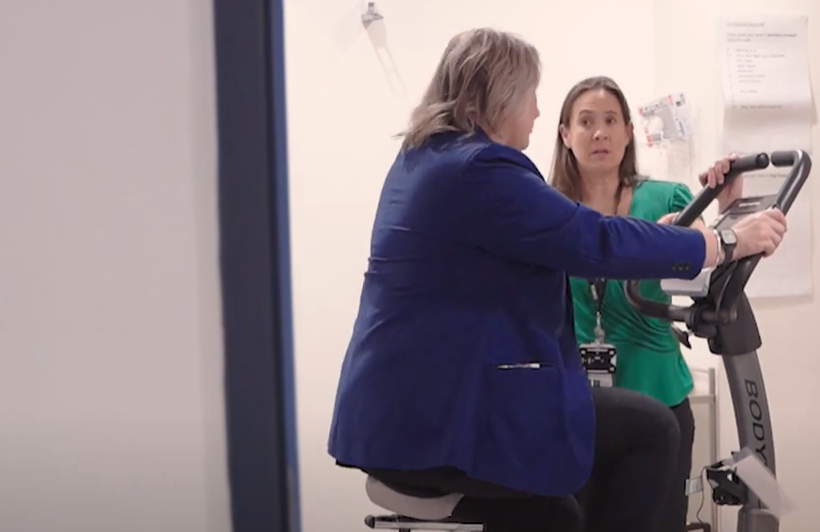
At the heart of our research is a strong commitment to understand and address unmet needs of people living with neurological disease and trauma. We believe in the seamless engagement of people with lived experience of brain recovery - that’s why we work closely with the Brain Recovery and Rehabilitation Research Consumer Advisory Group whose collaborations, reviews and insights guide our research.
Our strong clinical partnerships provide valuable opportunities to conduct important research and support research translation into clinical practice within:
- Alfred Stroke Service
- The Alfred Health Acquired Brain Injury Rehabilitation Service
- Occupational Therapy Department at Alfred Health
- Australian rehabilitation hospitals across Victoria, Queensland, New South Wales, Western Australia and South Australia through key partnerships and strong collaborations.
Our people
Group Leader
Our achievements
Our strength in implementation science and health service engagement has led to key service evaluations of brain injury rehabilitation, development of behaviour change interventions to increase evidence-based medicine in rehabilitation, and testing of models of health care delivery, such as telehealth and bed substitution.
Selected publications
Below is a selection of some of published studies reflecting our high-impact work. For a full list of our publications, please visit PubMed.
- Investigating the role of the brain-derived neurotrophic factor Val66Met polymorphism in repetitive mild traumatic brain injury outcomes in rats. Behav Brain Funct March 2025. Giesler, L.P., O’Brien, W.T., Bain, J. et al.
- Determining Maximal Tolerable Aerobic Training Intensity in the Acute Phase after Stroke: a Novel Dose Ranging Trial Protocol. J Stroke Cerebrovasc Dis. December 2020. Kramer SF, Cumming T, Johnson L, Churilov L, Bernhardt J.
- Cost efficiency of inpatient rehabilitation following acquired brain injury: the first international adaptation of the UK approach. BMJ Open. December 2024. Lannin NA, Crotty M, Cameron ID, Chen Z, Ratcliffe J, Morarty J, Turner-Stokes L; Outcome ABI Group.
- Patients’ perceptions of participating in self-directed activities outside supervised occupational and physiotherapy within inpatient and home-based rehabilitation settings: a qualitative study. Disability and Rehabilitation, April 2024. Dorward, E., Devlin, A., Brusco, N. K., Dulfer, F., Whittaker, S. L., Reeder, S., & Ekegren, C. L.
- Implementation of offering choice of pulmonary rehabilitation location to people with COPD: a protocol for the process evaluation of a cluster randomised controlled trial. Trials. March 2023. Cox NS, Holland AE, Jones AW, McDonald CF, O'Halloran P, Mahal A, Hepworth G, Lannin NA.
- Long-term effect of additional rehabilitation following botulinum toxin-A on upper limb activity in chronic stroke: the InTENSE randomised trial. BMC Neurol. April 2022 Lannin NA, Ada L, English C, Ratcliffe J, Faux S, Palit M, Gonzalez S, Olver J, Schneider E, Crotty M, Cameron ID.
- Stroke in Australia: long term survivors have fallen into a black hole.The Medical Journal of Australia, September 2022, Scrivener, K., Dean, C., Cameron, I. D., & Ada, L.
- A high-dose mobility booster program versus usual care for people after stroke: protocol for a pilot randomized trial. Pilot Feasibility Stud. March 2025. Scrivener K, Ball E, Dean C, Glinsky J, Ada L, Graham P, Young N, Felton K, Lannin NA.
- Trajectory of depressive symptoms in a longitudinal stroke cohort. J Stroke Cerebrovasc Dis. March 2025 Sewell K, Tse T, Churilov L, Linden T, Crewther S, Ma H, Davis SM, Donnan GA, Carey LM.
- Improving physical movement during stroke rehabilitation: investigating associations between sleep measured by wearable actigraphy technology, fatigue, and key biomarkers. J Neuroeng Rehabil. May 2024. Smith MJ, Pellegrini M, Major B, Graco M, Porter S, Kramer S, Sewell K, Salberg S, Chen Z, Mychasiuk R, Lannin NA.
- The Influence of Substance Use on Traumatic Brain Injury Recovery and Rehabilitation Outcomes: The Outcome-ABI Study. Arch Phys Med Rehabil. July 2023. Xie E, Pellegrini M, Chen Z, Jolliff L, Crotty M, Ratcliffe J, Morarty J, O'Brien TJ, Lannin NA.