


22 November 2024
To the outside world, Ros and Diana Coffey’s daughter is just like any other 15-year-old. They talk of her strong sense of justice, her environmental awareness, her care for all living things, as well as her self-motivation, diligence, intelligence and sportiness.
They could just be two typical parents celebrating their daughter’s considerable achievements. Except Ros and Diana know how much harder their daughter has to work to achieve those things.
Their daughter has a neurological condition known as Visual Snow Syndrome. Some describe it as tiny dots flickering persistently across the entire visual field – whether your eyes are open or closed and whether you’re awake or asleep.
Symptoms explained
The cause is unknown. Those with the condition sometimes link its onset to an event such as a head injury, illness or infection, and it’s also associated with an increased risk of migraine.
“She told us when she was three,” says Ros. “After a fall and a bump on the head, she suddenly said: ‘I can see buzzy things. What are those buzzy things?’” They took her to hospital, to doctors, to ophthalmologists, but every test came back normal.
It wasn’t until a video on TikTok caught their daughter’s attention just a couple of years ago that they finally found a clinical name for those strange, unexplained symptoms: Visual Snow Syndrome.
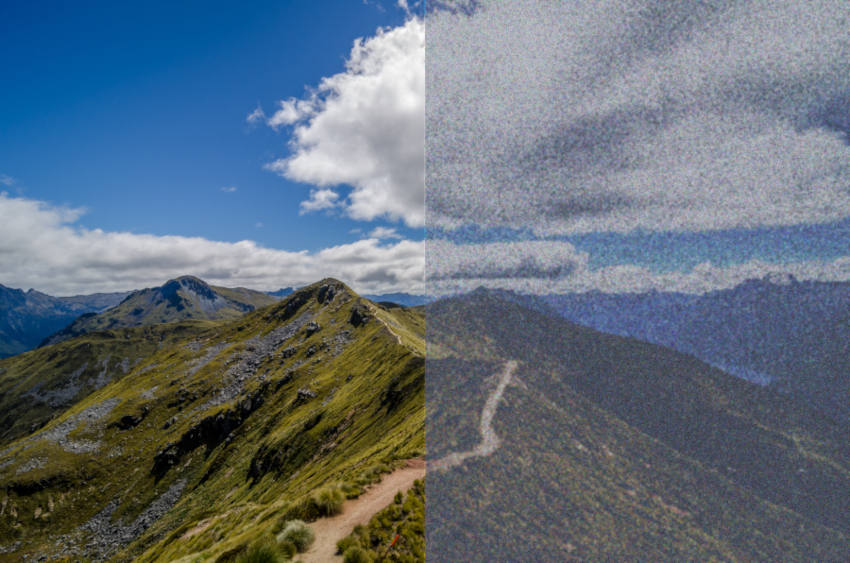 Example of Visual snow syndrome
“That’s when Ros started to do the research into what it was – were there any cures, who was doing research on it – and that’s when she discovered Associate Professor Joanne Fielding, and her team at Monash,” Diana says.
Developing a cure
Joanne Fielding is a neuroscientist at Monash, with a particular interest in the ocular motor networks – the systems that control the movements of all the elements of the eye. Her work suggests that Visual Snow Syndrome might be related to changes in these ocular motor networks in the brain, which are associated with changes in the speed with which the brain processes visual information. People with Visual Snow Syndrome actually seem to process visual information faster than people without the syndrome.
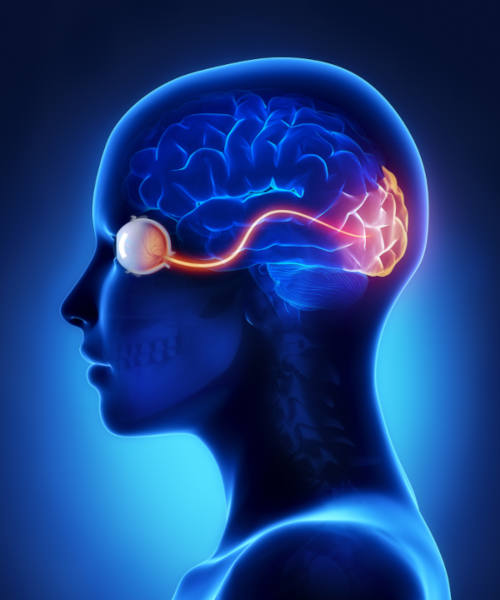
Read more in Lens about Visual snow: understanding the neurological condition
This is why the Coffeys decided to support the research. “We were impressed by the approach that Monash was taking,” Ros says, “not just treating symptoms or supporting the behavioural therapy and those sorts of things – although they obviously have a place as well – but identifying the root cause and working towards a cure.”Because while the Coffeys’ daughter is, to outside appearances, a well-rounded and high-achieving individual, Visual Snow symptoms take their toll. The visual disturbance never goes away, so the brain never fully switches off, leading to a higher risk of fatigue, depression, anxiety and depersonalisation.
“Sufferers are having to work extra hard to filter through the ‘buzzy things’ to operate in the world,” Ros says. “So we are aware that life could be much, much easier for them if there were a cure.”
Wider support
They also hope that discovering the cause, and hopefully even a cure, could shed light on some other neurological conditions, such as migraines, ADHD, obsessive-compulsive disorder, Multiple Sclerosis, Parkinson’s Disease, Fragile X syndrome and even chronic fatigue. “If this research can answer many different questions or solve many different problems, the motivation can be broader than just funding for one syndrome,” Ros says.
Another incentive for the Coffeys to donate to Fielding’s work was the realisation of how vital their donation could be to secure that work in the longer term. “Our eyes have been opened to the fact that a lot of researchers have to go out and find their own funding,” Diana says. They were shocked to realise how much time researchers have to spend writing grant proposals and looking for funding. This is even more of a challenge for researchers like Fielding, who are working with rare conditions that otherwise struggle to get government funding.
As Diana says:
If more Australians understood the process that has to happen in order for these brilliant scientists to be able to conduct the research they do, I think maybe more people would be more open to giving.
Join us to Change it. For Future Generations
The generous philanthropic support from Ros and Diana Coffey contributes to the university’s Change It. For Future Generations campaign - the largest public fundraising initiative in Monash’s history.
For further information on how you can create transformational impact through philanthropy, please contact Marita O'Callaghan at marita.ocallaghan@monash.edu