
Giving Wings to the Future
Supported by his mentors and a scholarship, Dr Wayne Goodey travelled from Canada to study the iconic Willie Wagtail. Today, he is extending that opportunity to the next generation of scientists, anchoring a legacy in Australian animal behaviour research at Monash.
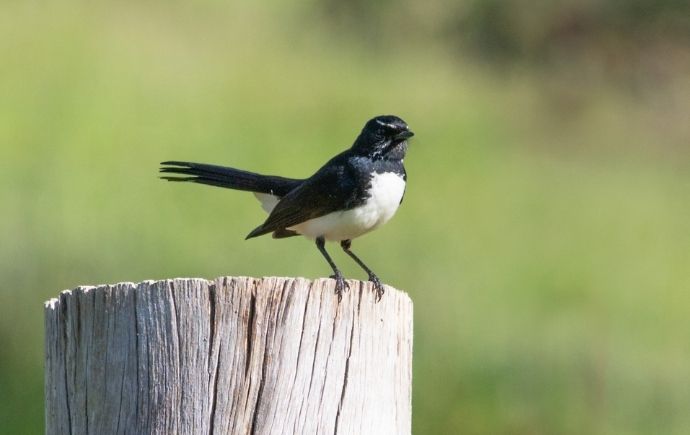
If you’ve spent time in Australia, you’ve likely encountered this bird: small, bold, and instantly recognisable by the constant wag of its fanned tail. The Willie Wagtail (Rhipidura leucophrys) is abundant in all Australian habitats except extreme desert and rainforest, and thrives even in heavily human-disturbed environments.
Renowned for its fearless nature, the Willie Wagtail is a fitting symbol of resilience and persistence. These qualities are shared by Dr Wayne Goodey, Monash alumnus and lecturer in ecology and a range of other biology topics, whose PhD centred on this iconic native Australian bird.
Supported by his mentors and a scholarship, Wayne travelled from Canada to study the Willie Wagtail. As a strong advocate for giving back, Wayne has established a postgraduate research scholarship in the field he loves, alongside a gift in Will to support future researchers far beyond his lifetime.
My hope is to be able to add to the support currently offered by the University, by creating new revenues to assist more postgraduates.
A journey nearly lost to the mail
Born and raised in Canada, Wayne’s Monash story began in Vancouver, where he found his calling in animal behaviour under the mentorship of Professor N.R. Liley. Following Liley’s encouragement to pursue a doctorate overseas, Wayne toured English-speaking universities across the globe before ultimately choosing Monash at the end of 1985.
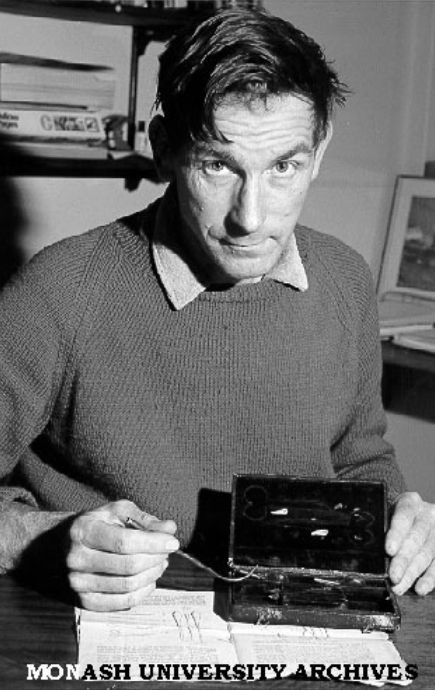
However, a clerical error nearly ended the journey before it began. A letter of offer, sent via sea mail instead of air, arrived too late, and Wayne was notified that the scholarship had already been awarded to another recipient. Professor John Michael Cullen – most endearingly known as Mike Cullen – who was the Head of the Department of Zoology at Monash at the time, refused to accept this outcome. Making a personal appeal to the scholarship awards office, Cullen offered to fund Wayne’s first year through his own department if the office would promise to support the rest of his studies. They reached an agreement, and the University followed through on that promise, supporting Wayne for the duration of his research after that first vital year.
When Wayne reached Melbourne in March 1986, he was met by Professor Cullen, who personally drove him from the airport to his new home. This act of kindness was a hallmark of Cullen’s character. As a devoted mentor, Cullen inspired countless students throughout his lifetime, and the School of Biological Sciences continues to acknowledge his impact through the Mike Cullen Research Fellow Award, which grants outstanding postdoctoral researchers a monetary prize to travel and share their research.
Reaching the finish line
A pivotal milestone in Wayne’s academic journey arrived in 1990, when Monash provided the funding for him to present his findings at the 20th International Ornithological Congress in Christchurch, New Zealand. This experience marked the beginning of an exciting new phase: the finish line of his PhD was close, and he was beginning to share his discoveries with the world.
Following the conference, Wayne returned to Canada to begin compiling his final thesis. In an era before digital convenience, he and Dr Lill continued their collaboration across the ocean through a remarkably patient process: “Dr. Lill and I sent manuscripts and comments back and forth by mail for more than two years,” Wayne recalls.
This dedicated persistence reached its rewarding conclusion in May 1994, when Wayne was officially granted his PhD. It was a proud milestone for both student and mentor, especially with a key paper from the thesis already published in the prestigious journal, The Emu, the previous year.
While this marked the end of his formal studies at Monash, the impact of the support he received remained with him. Decades later, that same sense of gratitude is what led Wayne back to the University – this time, to ensure other students can reach their own finish lines.
A legacy for the next generation
Despite having studied and worked at other prestigious institutions, Wayne’s heart remained with our University. “The concept of alma mater is now for me infinitely better met by Monash,” Wayne explains. “I had always intended to donate to Monash, but I see now that for my academic legacy there is no alternative to which I would donate.”
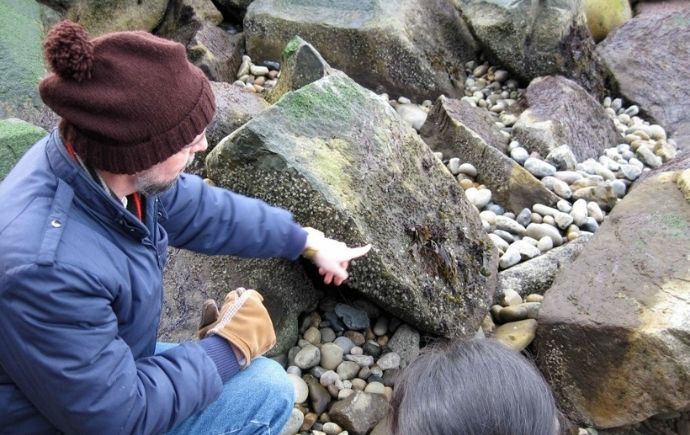
Wayne’s scholarship support will be directed to PhD candidates studying animal behaviour and evolutionary ecology – the very fields he dedicated his life to. Having relied on a scholarship himself decades ago, Wayne’s lived experience is his primary motivator:
“My aim is to reward students who need “a leg up” as I did, and at the same time permit the University more flexibility when resources may be tight.”
Wayne’s story is a testament to the enduring impact of a scholarship and the vital role mentors like Professors Liley, Cullen, and Lill play in a student's journey. Our philanthropic community is essential in supporting the future leaders of research and education, and we are profoundly grateful to alumni like Wayne, whose decision to give back ensures that financial barriers never stand in the way of a scientific breakthrough. By paying forward the support he once received through a scholarship and gift in Will, Wayne is ensuring that the spirit of discovery, much like the resilient Willie Wagtail, continues to thrive for generations to come.
