

Anorexia nervosa is a severe psychiatric disorder characterised by the restriction of food intake, low body weight, distorted self perception of body mass and body image and an intense fear of gaining weight.
Of all mental health disorders it has the highest rate of mortality. People living with anorexia nervosa have been reported to be at more than 10 times greater risk of death compared with their peers and 60 times more likely to die by suicide compared with their peers.
Despite its high morbidity and mortality, few effective treatments exist for anorexia nervosa. The mainstay treatments available are psychotherapies such as cognitive behavioural therapy that try to challenge and break the habit of negative thinking, but don’t address the potential underlying biological causes.
Professor Jayashri Kulkarni AM, Director of the Monash Alfred Psychiatry Research Centre (MAPrc) and HER Centre Australia, is investigating the science behind this debilitating disease and changing the story for people with eating disorders through the The Li Transformative Hub for Research in Eating Disorders (THRED).
“The recent rise in eating disorders, especially in women, has made it imperative to develop new, effective treatments. Anorexia nervosa is associated with severe morbidity and our new research hub - THRED will provide important and much-needed innovations,” says Professor Kulkarni AM.
Thanks to a generous donation from David Li AM and Angela Li, the Li THRED is now part of Monash’s HER Centre Australia, and is at the forefront of new research and biological treatments into eating disorders.
A world-first approach
Experts in this field of anorexia research and clinical practice have called for the need to analyse the mechanisms underpinning anorexia nervosa, and target these using novel and precision interventions.
Senior Research Fellow Dr Leo Chen is involved in the Hub and will be part of the team exploring the biological mechanisms underpinning anorexia nervosa; recognising that if we can understand the causes of the disease, we can treat these using interventions such as antipsychotic drugs, brain stimulation and hormones.
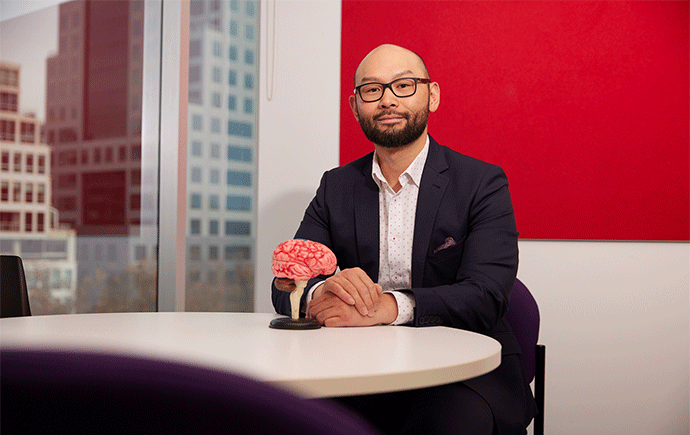
Using a causal mapping approach from brain lesions that cause anorexia behaviours, Chen’s team, composed of international experts, have identified the brain regions and circuits that are specific for anorexia nervosa.
“We can then use individual patients’ brain scans to work out what brain region(s) are connected to this circuit,” says Chen. “From there we can activate these regions using non-invasive brain stimulation to restore healthy signal transmission and connectivity within the anorexia circuit. In other words, this is a unique approach that directly and non-invasively intervenes at the brain circuit that is specific to and known to cause anorexia behaviours.
“In doing so, our aim is to improve the low body mass and the highly debilitating psychological symptoms in this distressing and difficult to treat condition, which can be fatal for some.”
This approach has been effective in treating depression and neurological disorders, such as Parkinson’s tremor, but is a world-first for treating eating disorders.
Philanthropy funds innovative treatments
The work of Professor Kulkarni, Dr Chen and the wider research team wouldn’t be possible without the visionary support of Campaign Council Member, David Li AM, and his wife, Angela Li. They provided seed funding, and will work with Monash University to find other supporters.
“Clinicians and scientists working in the health sciences chose this field because they want to have a positive effect on other people, whether these be individuals or the larger populace. Donors supporting medical research directly and impactfully enable this work. Without them, new discoveries and treatments are severely stymied.”
“Without the generous and impactful donations we receive, our team would not exist and these treatments for major mental illnesses would never have been realised.” - Dr Leo Chen
On behalf of the patients and their families who continue to inspire him, his team, and their research collaborators, Chen would like to extend a sincere thank you to all the donors who support his work.
“I thank you with all my heart for enabling us to instil hope in those experiencing poor health, knowing that effective innovations are just around the corner. In partnership with our international collaborators, philanthropic funding helps us to do more good and improve the lives of more people around the world.”
Join us to Change it. For Future Generations
You too have the power to support the next generation of change-makers. Join us as we work together to address the current mental health crisis. We invite you to have a conversation with our team to find out how your support impactful projects like those of Dr Chen’s, and transform our world for the better.