
Amitangshu Acharya
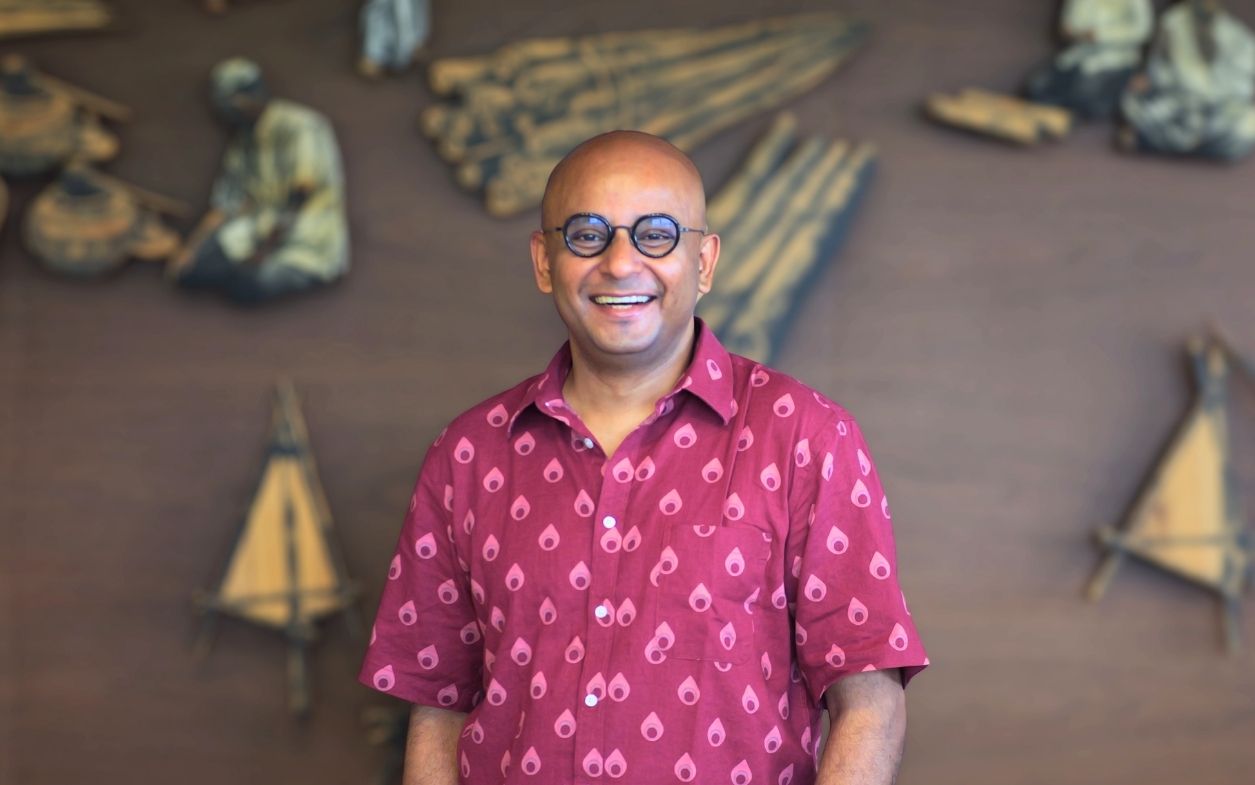
Amitangshu Acharya is an academic, researcher and writer. He is Associate Professor, Sustainability at Monash University, Indonesia.
A critical geographer and political ecologist by training, Amitangshu worked as a development practitioner and researcher across civil society organisations, philanthropic foundations, and international research institutes before completing his PhD from the University of Edinburgh, UK, as a Leverhulme Trust Scholar. He co-conceptualised and implemented the Participatory Groundwater Management (PGWM) Programme at Arghyam, which went on to become India's largest civil society network on groundwater for almost a decade. His research at ICIMOD, Nepal, on how communities forecast floods using local knowledge systems highlighted the need for pluralising knowledge of flood management in Himalayan River basins, which was cited and discussed to illustrate knowledge co-production in the IPCC, Special Report on the Ocean and Cryosphere in a Changing Climate (SROCC), in 2019.
Prior to joining Monash, Amitangshu was Senior Lecturer, Water and Society, at IHE Delft Institute for Water Education, the Netherlands, where he coordinated the MSc course on Water and Sustainable Development and taught qualitative research methodology, history and philosophy of science, and decolonial and postcolonial approaches to water. He coordinated the PhD Course on Decolonising Science at IHE Delft, the first of its kind for universities in the Netherlands for STEM and interdisciplinary doctoral candidates. He was also the Principal Investigator of the WaterPIP KAN project (2023-2026), which explored the information needs of smallholder and marginal farmers for irrigation across Benin, Burkina Faso, Egypt, Ethiopia, India, and Kenya.
He is currently an advisor to Digital Climate Futures, a research project led by Lancaster University and Bath Spa University, which explores a decolonial and justice perspective on digitalised climate change adaptation. He is also a member of the World Commission on Protected Areas (WCPA) as part of the Specialist Group on Cultural and Spiritual Values of Protected Areas (CSVPA) which advises IUCN and the WCPA on recognition, conservation, and promotion of the cultural and spiritual significance of protected land and waterscapes.
Amitangshu is committed to public-facing scholarship. He is a TEDx speaker and has written on water cultures, the climate crisis, and everyday urbanism in The Economist, The Independent, Places Journal, Huffington Post, The Hindu, Khaleej Times, Indian Express, Scroll.in, and The Mint. He is also engaged with practicing slow journalism.
More information
- Rusca, M., Zwarteveen, M., Acharya, A. et al. (2026). "Water justice needs careful interdisciplinary research." Nature Water 4 :277–286
https://doi.org/10.1038/s44221-026-00595-z - G. Gioli and A. Acharya. (2026). "The Plural Lives of Rubble: A Research Agenda for Disaster Geographies." In Geography and Disasters, eds Nathaniel O’Grady and Gemma Sou. Bloomsbury Publishing Inc, 61–80. https://doi.org/10.5040/9798881898182.ch-003
- Rusca, M., Sverdlik, A., Acharya, A. et al. (2024). "Plural climate storylines to foster just urban futures." Nature Cities 1:732–740 https://doi.org/10.1038/s44284-024-00133-6
- Acharya, A. (2024). "Tasting numbers: The numerical politics of Total Dissolved Solids and the privatisation of drinking water quality in Bhuj City, India." Water Alternatives 17(2): 469-490. https://www.water-alternatives.org/index.php/alldoc/articles/vol17/v17issue2/753-a17-2-11
- Acharya, A. and A. Prakash. (2019). "When the river talks to its people: Local knowledge-based flood forecasting in Gandak River basin, India." Environmental Development 31: 55-67. https://doi.org/10.1016/j.envdev.2018.12.003
- Acharya, A. and A. Ormsby. (2017). "The Cultural Politics of Sacred Groves: A Case Study of Devithans in Sikkim, India." Conservation and Society 15(2): 232-242. https://www.jstor.org/stable/26393289
- Acharya, A. (2015). The cultural politics of waterscapes', in R.L. Bryant (ed.), International handbook of political ecology, Cheltenham: Edward Elgar, pp. 373-386. https://doi.org/10.4337/9780857936172.00036
Teaching
My teaching values and methods are shaped by the writings of bell hooks, the critical pedagogy of Paulo Freire, and ‘methods of nature’ by Rabindranath Tagore. Such pedagogical thinking has inspired me to view teaching as an act of transgression – where I do not seek to limit theory to academization. In my teaching, I explore how theory can help critically interrogate everyday realities. I also work with students to explore how conceptual tools help us to navigate disciplinary transgressions to arrive at better questions, and possible solutions, to real-world problems. I value embodied learning, which is why I enjoy teaching outdoors through field courses. I have taught in field courses for undergraduate and postgraduate students at the University of Edinburgh, where we have explored questions of gentrification in Athens, racialized urban development in Cape Town, and energy politics in Orkney in Scotland.
At IHE, I coordinated visits to botanical gardens and museums in the Netherlands to interrogate the colonial production of scientific knowledge and collaborated with the Black Heritage Tours in Amsterdam to help students acquire an embodied understanding of how the colonial logic was scripted into the built environment. I also explore the application of innovative methods, which include teaching through critical interrogation of everyday objects – e.g., bottled water or a chocolate bar – which become conduits for reflecting on how human-environmental relations are deeply embedded in things. To think critically, however, is not an end in itself, unless it translates into practice that transforms not only our lives and ways of thinking but manifests in constructive interventions on issues of social and ecological justice.
Research
My research interests are located at the intersection of political ecology and Science and Technology Studies (STS). Subsequently, I bring forward decolonial and postcolonial theory to inform my interdisciplinary approach to questions of environmental justice, consumption, and sustainability. I am working on my monograph that examines the middle class’s technopolitical mediation of urban environments in the majority world.
In parallel, I am exploring the politics of traditional, indigenous, and local knowledges in climate science. My other areas of interest engage with and critically examine contemporary approaches and frameworks such as Nature-based Solutions (NbS), Circular Economy, and Planetary Boundaries in which wetlands, deltas, rivers, and cities emerge as heuristics.
- 2022 – Water Productivity in Practice (WaterPiP) Knowledge and Action Network (KAN) – an Eur. 1.5 million grant from the Water and Development Partnership Programme (WDPP) to research information needs of marginal and smallholder farmers in Benin, Burkina Faso, Egypt, Ethiopia, India and Kenya.
- 2023 – AQUAMUSE – an Eur. 300,000 project funded by the Dutch Ministry of Foreign Affairs (DGIS) on collaborating with communities in river basins in Egypt, Ethiopia, India, Mali and Sudan to locally and digitally archive memories, knowledge and memories of floods through "museum-making." (with Dr. Sara Ahmed, Living Water Museum, India)
TEDx Talk
- Acharya, A. (2025). "Decolonising Science." TEDxWageningenUniversity, Crossing Boundaries, 18th January, Wageningen, the Netherlands. https://www.youtube.com/watch?v=Xw3a5MArZZI
Podcasts
- Acharya, A. and M. Katti. (23rd April 2025). Decolonizing Ecology: Rethinking Nature in a Broken World. ProSocial World. https://www.prosocial.world/posts/decolonizing-ecology-rethinking-nature-in-a-broken-world-with-madhusudan-katti-amitangshu-acharya
- Bhattacharya, B. (Host). (2020, July 31). How dams and embankments lead to floods – In conversation with Amitangshu Acharya. Mint Climate Change Tracker. https://podtail.com/en/podcast/mint-climate-change-tracker/25-assam-and-bihar-floods-i-in-conversation-with-a/
Articles written in newspapers and magazines
- A.Acharya (April, 2023). 'Memories of Water', Places Journal. https://placesjournal.org/article/ponds-and-climate-crisis-in-the-bengal-delta/
- A.Acharya (Sep, 2022). 'Water in the city: A matter of ecology, public health, and livelihoods', Question of Cities. https://questionofcities.org/water-in-the-city-a-matter-of-ecology-public-health-and-livelihoods/
- A.Acharya and A. Dixit (Nov, 2021). 'We must recognise cities as waterscapes', Indian Express. https://indianexpress.com/article/opinion/columns/chennai-floods-climate-crisis-7618776/
- A.Acharya.(June 20, 2021). 'The Shudra queen Rashmoni and a sacred river', The Hindu, India. https://www.thehindu.com/society/the-shudra-queen-rashmoni-and-a-sacred-river/article34847554.ece
- A.Acharya and S.Sanyal (Jan, 2021). 'Where there's muck there's brass: making money from sewage in Kolkata' 1843 -The Economist. https://www.economist.com/1843/2021/01/13/where-theres-muck-theres-brass-making-money-from-sewage-in-kolkata
- A.Acharya. (April 3, 2020). 'Pandemics and prejudice', The Hindu, India. https://www.thehindu.com/society/pandemics-and-prejudice-when-there-is-an-epidemic-social-prejudices-resurface/article31246102.ece
- Acharya. (Nov 18, 2019). 'Engineering a season of floods', Mint Lounge, India. https://www.livemint.com/mint-lounge/features/engineering-a-season-of-floods-11573832077930.html
- A.Acharya. (August 5, 2019). 'Horrors from the backseat', The Independent, U.K. https://www.independent.co.uk/independentpremium/afghanistan-war-veteran-helmand-province-taliban-fiji-edinburgh-a9030056.html
- A.Acharya. (July 21, 2018), 'Sensing the rains', Mint Lounge, India. https://www.livemint.com/Leisure/0zSTPAAmfLahGzxPbxPwSO/Monsoon-Special-Sensing-the-rains.html
- A.Acharya and S.Sanyal. (March 2, 2018), 'Hidden in the hyphen', Khaleej Times, UAE. https://www.khaleejtimes.com/lifestyle/hidden-in-the-hyphen
- Acharya and S. Krishnan. (Dec 28, 2017), 'Through the smog-screen: on Delhi's air pollution', The Hindu, India. https://www.thehindu.com/opinion/op-ed/through-the-smog-screen-delhi-air-pollution/article22288600.ece
- A.Acharya. (Aug 29, 2016), 'Ecologist of the poor', Hindustan Times, India. https://www.hindustantimes.com/india-news/ecologist-of-the-poor-man-who-is-fighting-to-conserve-east-kolkata-wetlands/story-admvS9TGIk0MpW6V18UChN.html
- A.Acharya. (Aug 6, 2016), 'Wedded to uncertainty', Scroll.in, India. https://scroll.in/article/813307/wedded-to-uncertainty-stories-of-women-married-into-families-in-the-floodplains-of-bihar
- A.Acharya. (March 17, 2016), ' 5 Blind Spots That Are Blocking Solutions to India's Water Crisis', Huffpost India. https://www.huffpost.com/archive/in/entry/5-blind-spots-that-are-blocking-solutions-to-indias-water-crisi_b_9483230
Research featured in the media
- In India Water Portal a detailed story on my research on the rising popularity of Reverse Osmosis Water (RO) purifiers. https://www.indiawaterportal.org/water-quality-and-pollution/water-quality-/when-water-becomes-a-number-the-hidden-politics-of-tds-and-the-rise-of-ro-markets-in-bhuj
- Interviewed for a Mongabay story on sacred groves in the eastern Himalaya's as repositories of memory, cosmovisions, knowledge and healing practices. https://india.mongabay.com/2026/03/sacred-groves-anchor-traditional-healing-study/
- 2021 – Meiklejohn Fund, School of GeoSciences, University of Edinburgh, UK
- 2020 – Geography Endowment Fund, School of GeoSciences, University of Edinburgh, 2020
- 2020 – Konrad Lorenz Institute for Evolution and Cognition Research (KLI), Austria, Writing Up Fellowship
- 2019 – International Journal of Urban and Regional Research Foundation, U.K, Writing-Up Grants
- 2018 – The Lamb Fund, School of GeoSciences, University of Edinburgh, U.K
- 2016 – Leverhulme Perfect Storm PhD Scholarship, University of Edinburgh, U.K
- 2010 – Sir Ratan Tata Trust Post Graduate Scholarship (to study MSc in Environment, Culture and Society at the University of Edinburgh)