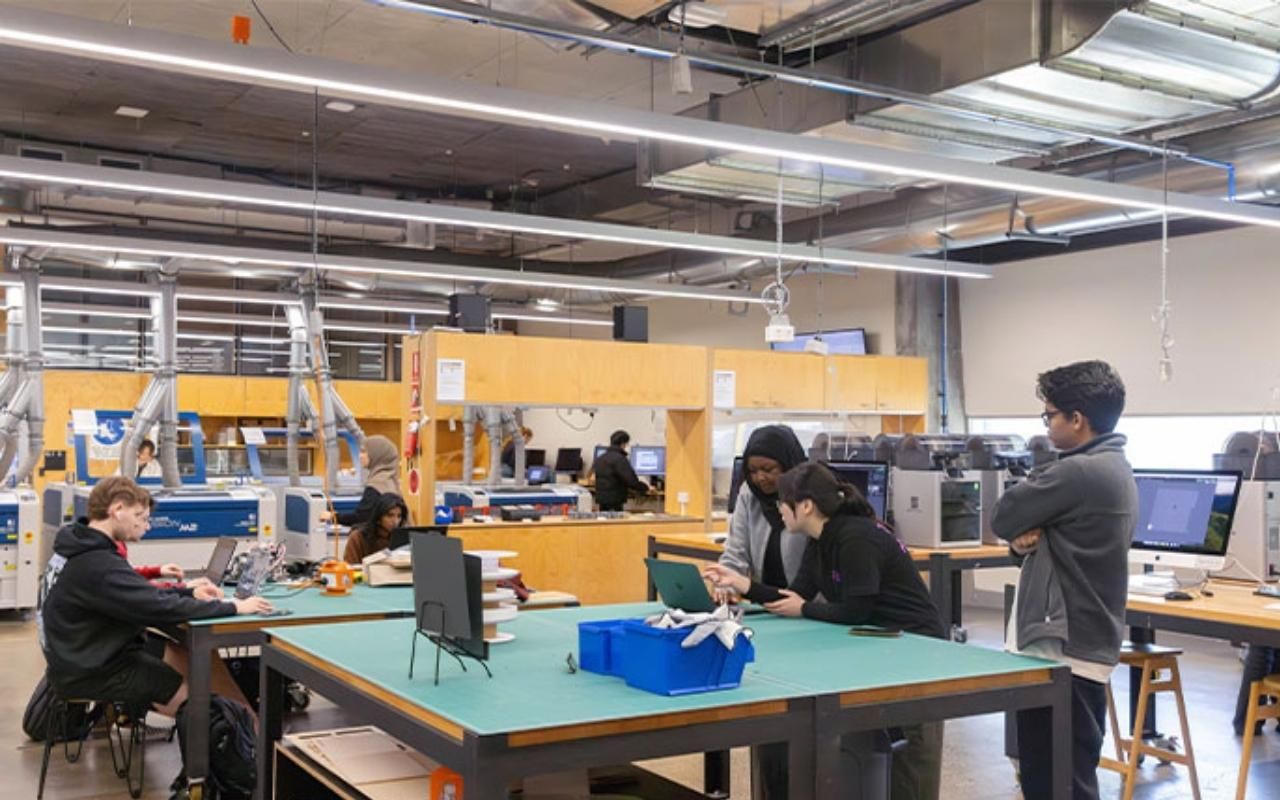
The course develops through theme studies in history and theory, a drawing foundation, design studios specific to each of the specialist areas of study, and a range of self-selected elective units. These will come together in the form of a graduand exhibition developed during the final two studio units in the third year of the course.
Part A. History and theory studies
History and theory units will equip you with the skills necessary to research design issues that enable you to contextualise your own thinking and making in relation to the broader spectrum of global practices. These units will develop your ability to communicate ideas and strategies. Through the duel lens of historic and contemporary practice, you will begin to situate the place of design in society by referencing pivotal art, design and architecture movements. Later units address issues of culture, society and responsible design practices.
Part B. Drawing Foundation
This will assist you to develop the practical and intellectual skills required by art, design and architecture students in the discipline of drawing.
Part C. Design Studios
This is the component of the course through which you will develop key skills and concepts particular to your design discipline.
In the collaborative design studio units you will create purposeful responses to contemporary social, cultural, and environmental challenges by employing co-design principles, mindsets, and methods. You will explore the specialist and transferable characteristics of collaborative design through simple and complex challenges. Through thematic-based projects, you’ll discover Design as a catalyst for collaboration, curiosity, learning, and impactful action. By immersing yourself in these studio units, you will experience the intersection of creativity and collaboration, and experience design as a relational, social, cultural and political practice with tangible impact.
In the communication design studio units you will undertake an exploration of traditional and emergent media and communication processes. You will learn to engage with and manipulate core design elements including typography, imagery, two and three-dimensional artefacts, interactivity, sound and motion, as key components to communication design solutions. Studio-based projects across both print and digital media platforms will develop skills in narrative story-telling, visible language, image construction and manipulation, interactive communication processes, production methods and technologies, and the planning and management of design outcomes.
In the industrial design studio units you will undertake a focused exploration of the range of issues, skills and techniques vital to the realisation of resolved product and object design. The studio units introduce you to the elements of industrial design including usability, form language and manufacturing. By carrying out industrial design projects, you will learn and apply skills in visualisation, interface design, model making, ergonomics, materials, manufacturing and production methods and technologies.
The spatial design studio units provide the opportunity to experiment with creative ideas while gaining an advanced understanding of the principles of spatial design. You will learn to translate your 2 dimensional concepts into 3 dimensional installations. Studio projects range from real client briefs involving cultural, commercial and community organisations to more speculative briefs that explore the opportunities and challenges of a continually transforming contemporary society. Through the sequence of studio units you will learn to create unique spaces and also how to adapt existing spaces to reflect your design ideas.
Part D. Occupational Health and Safety Study
This will introduce you to occupational health, safety and environmental training particularly within the context of studying art, design and architecture.
Part E. Free Elective Study
Deepen your knowledge by selecting electives from the Faculty of Art, Design and Architecture, including gaining workplace experience by selecting an internship unit as an elective and enriching your degree by using free electives for Monash Abroad opportunities. Alternatively, you may choose to select electives from across the university (provided you satisfy the unit rules) to broaden your interdisciplinary perspectives.
Part F. Indonesian Studies
This will enable you to gain an understating of key political, social andcultural values that define Indonesia.
More information
The Bachelor of Design Handbook has detailed information about the course structure and requirements.
The course progression maps provide guidance on unit enrolment for each semester of study. Download the course map here (content may be subject to change).