Understanding the economics of health equity in Indonesia
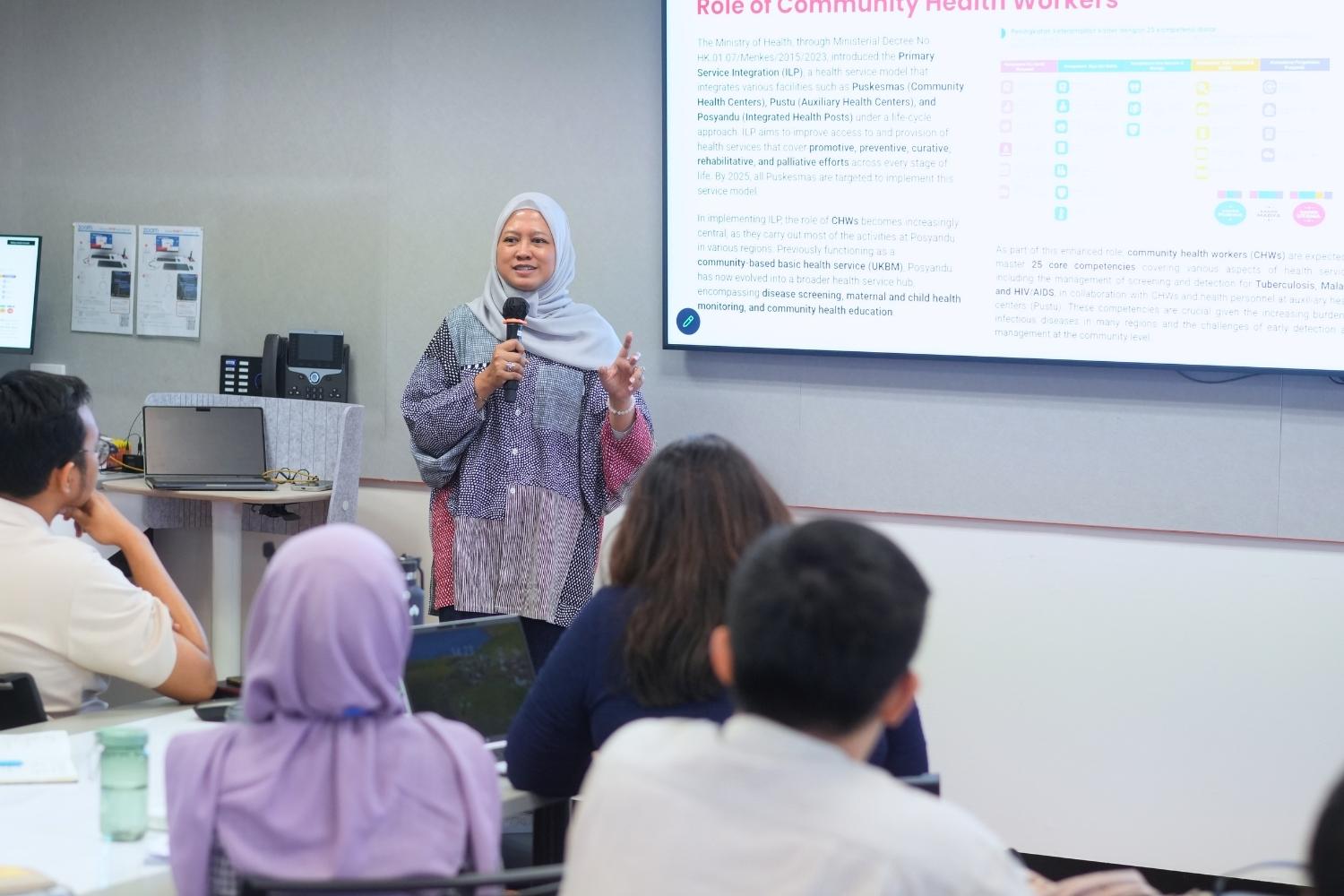
Diah Satyani Saminarsih delivering a lecture in the Economic Management in Healthcare class
Indonesia has made significant progress towards universal health coverage through Jaminan Kesehatan Nasional (JKN), one of the world's largest single-payer national health insurance schemes (Agustina et al., 2019). Yet having national health insurance does not automatically mean that everyone can access the right care, at the right time and in the right place.
Behind the question of coverage lies a more complex challenge: How can Indonesia build and finance a health system that is equitable, sustainable, and centred on people's needs?
These questions framed the guest lecture held on 15 August 2026, when students from the Master of Public Health, Master of Public Policy & Management, Master of Global Business, and Master of Marketing and Digital Communications, all taking the Master of Public Health program’s unit, Economic Management in Healthcare, at Monash University, Indonesia met with Diah Satyani Saminarsih, Founder and CEO of CISDI (Center for Indonesia's Strategic Development Initiatives). In her lecture, titled "People at the Centre: Reimagining the Future of Primary Health Care in Indonesia," Diah invited students to look beyond healthcare financing as a question of budgets and expenditure, and instead examine how economic incentives, policy decisions, the health workforce and communities interact to determine who ultimately receives care.
When individual choice is not entirely individual
One of the lecture's starting points was a simple question: How much of our health is really determined by individual choice?
Diah used the experience of walking into a minimart to illustrate how seemingly personal decisions can be shaped by the environment around us - the social determinant of health. In many Indonesian neighbourhoods, minimarts can be found only a short distance from one another. The products placed within easy reach, their prices and the options available, all influence what people eventually purchase and consume. In Indonesia, this becomes particularly important when products high in (processed) sugar, salt or fat can be cheaper or more accessible than healthier alternatives.
This reflects the growing importance of the commercial determinants of health, where commercial tactics and market environments influence behaviours and health outcomes (Kickbusch et al., 2016). For public health practitioners, this shifts the blaming and the conversation away from simply asking people to “make healthier choices”. Instead, it raises questions about the economic and policy environments in which those choices are made. In some cases, what appears to be an individual choice may already be shaped by what is affordable, accessible, and heavily promoted and marketed.
The same principle applies to accessing healthcare. Barriers can extend beyond whether a health facility exists or how far someone lives from it. People may still struggle to seek care because they do not have the flexibility to leave work, cannot afford associated costs or unavailability of treatment and medicines, lack access to health information, and/or face other household constraints.
Women, particularly, encounter different barriers across urban, semi-urban and rural communities, including unequal decision-making regarding their needs, access to information, and access to digital devices within households (GSMA, 2025). Some women may share a mobile phone with their husband or other (male) household members, which can limit their access to health information and services. Health, therefore, cannot be separated from the wider social and economic systems surrounding people's everyday lives.
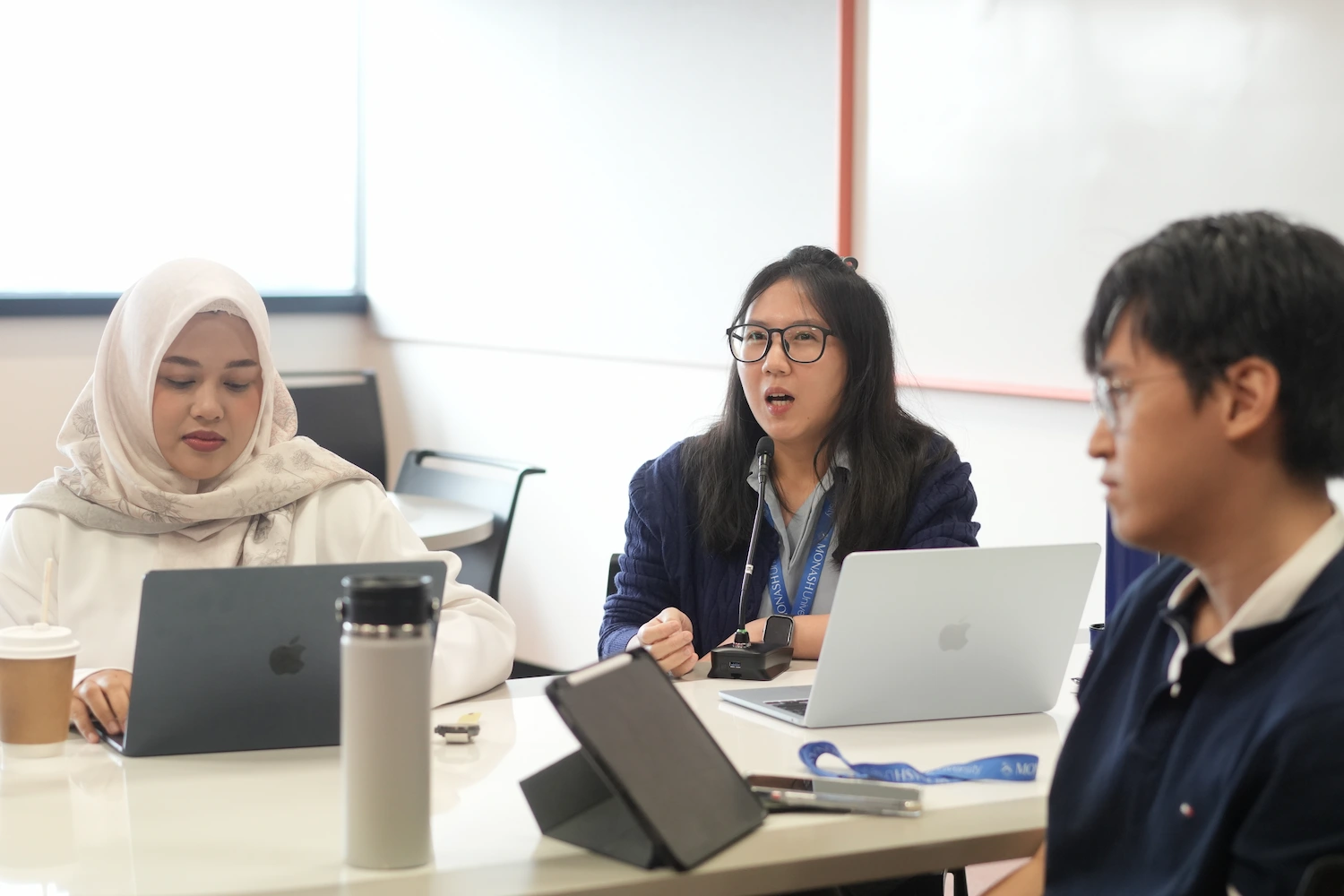
Interactive Q&A makes the class more engaging
Financing health for all
This system's perspective led to one of the central discussions of the session: If Indonesia wants to achieve meaningful universal health coverage, how should it pay for it?
Indonesia already has JKN and BPJS Kesehatan. Yet the lecture challenged students to distinguish between having an insurance mechanism and having sufficient, sustainable resources for health development. There are persistent pressures within the system, from service queues and limitations in access to medicines, to the challenge of mobilising public revenues in a country with a large informal workforce. The discussion became particularly relevant to students studying health economics because financing is not simply about finding more money. It is also about how resources are raised, where and how they are allocated, and what behaviours the financing system incentivises.
During the Q&A session, students explored whether a greater share of universal health coverage could be financed through general taxation and other compulsory public revenues, including health-related taxes. The discussion illustrated that health financing decisions extend far beyond the health sector itself. Different Ministries may have competing priorities, making policies such as taxes on tobacco and sugar-sweetened beverages as much a matter of political economy as public health.
Primary healthcare as an ecosystem
Finding sustainable financing, however, is only part of the challenge. The next question is what kind of health system those resources should support.
A key distinction raised during the lecture was between primary care and primary healthcare. Primary care may bring to mind a patient’s interaction with a doctor, nurse or nearby clinic. Primary healthcare is broader: it requires an ecosystem connecting health professionals, community health centres, community health workers and the populations they serve. At the centre of this ecosystem is the idea of people-centred care. Diah introduced five principles for thinking about what this should look like: Right Care, Right Time, Right Place, Right Team and Right Way.
These principles also raise an important question: How should financing and incentives be designed so that the health system can actually deliver them?
The question matters because strengthening primary healthcare is not simply about adding more facilities or programmes. Indonesia has identified primary care as one of the priorities within its health system transformation (Ministry of Health of the Republic of Indonesia, n.d), but financing gaps remain. Strengthening primary healthcare therefore requires aligning financing, workforce capacity, incentives, information systems and policy around a common mission.
A health facility may exist, but that alone does not guarantee effective access. The right services, professionals, medicines and information must also be available when people need them.
Investing in the people behind the system
The discussion also brought attention to the people expected to make primary healthcare work. Indonesia has an extensive network of nurses, midwives and community health workers. Yet availability does not necessarily mean that the workforce is adequately supported. Important attention was drawn on the responsibilities placed on community health workers, or kader, including household visits, community screening and expectations to develop a wide range of competencies, despite limited compensation (Nida et al., 2024).
The conversation also touched on the sustainability of programmes that initially depend on donor funding and the importance of building a stronger national human-resources-for-health information system. The discussion brought the economic discussion back to people. Financing a health system is ultimately not only about paying for hospitals, medicines or insurance claims. It is also about investing in the workforce and communities that make healthcare accessible in the first place.
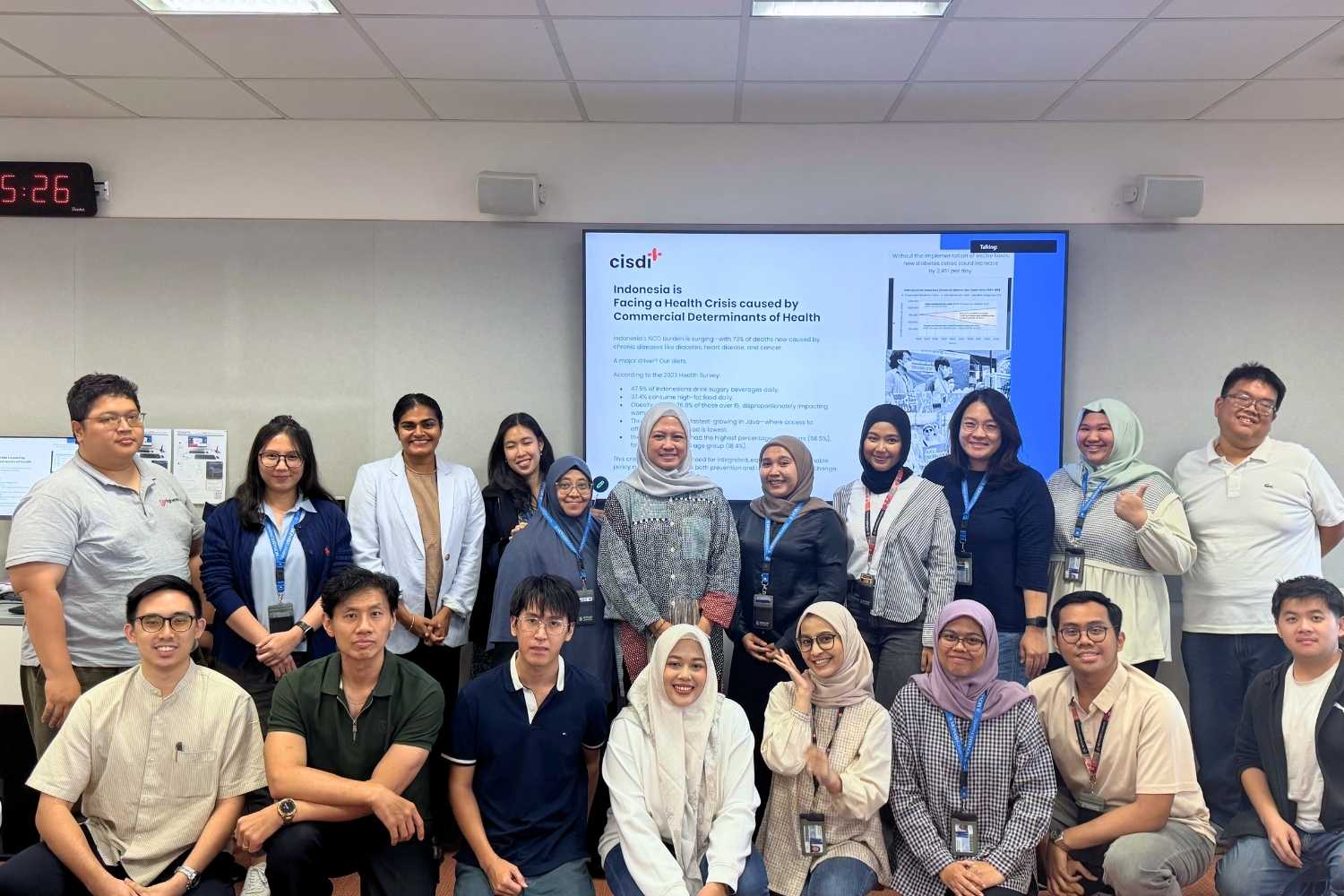
Group photo of the lecturers with students
Preparing public health leaders to navigate complexity
The guest lecture offered more than a discussion of Indonesia’s healthcare budget. It demonstrated how economic management of healthcare and health economics connects questions that are often considered separately: individual behaviour, taxation, policy priorities, workforce incentives, primary healthcare, and health equity. The session also reinforced the value of connecting academic learning with the practical challenges facing communities and health systems. By engaging directly with a public health and development practitioner, students were encouraged to consider not only what interventions may be effective, but also the financing, incentives and institutional relationships needed to make them work.
Perhaps the most important lesson from the session was that achieving universal health coverage cannot be reduced to a single financing mechanism or programme. It requires choices about what society values, where (limited) resources should be allocated or re-allocated, how health workers should be supported, and whose needs should be prioritised. A people-centred health system therefore asks more than whether someone has health insurance. It asks whether that person can actually receive the right care, at the right time, in the right place, from the right team and in the right way. For the next generation of public health practitioners and decision-makers, understanding those choices may be just as important as understanding the economics behind them.
References:
- Agustina, R., Dartanto, T., Sitompul, R., Susiloretni, K. A., Suparmi, Achadi, E. L., Taher, A., Wirawan, F., Sungkar, S., Sudarmono, P., Shankar, A. H., & Thabrany, H. (2019). Universal health coverage in Indonesia: Concept, progress, and challenges. The Lancet, 393(10166), 75–102. https://doi.org/10.1016/S0140-6736(18)31647-7
- GSMA. (2025). The mobile gender gap report 2025. GSMA Intelligence. https://www.gsma.com/gender-gap-2025/ (full report viewer: https://reports.gsma.com/the-mobile-gender-gap-report-2025/full-view.html
- Kickbusch, I., Allen, L., & Franz, C. (2016). The commercial determinants of health. The Lancet Global Health, 4(12), e895–e896. https://doi.org/10.1016/S2214-109X(16)30217-0
- Ministry of Health of the Republic of Indonesia. (n.d.). Indonesia health transformation. https://kemkes.go.id/eng/layanan/indonesian-health-transformation
- Nida, S., Tyas, A. S. A., Putri, N. E., Larasanti, A., Widoyopi, A. A., Sumayyah, R., Listiana, S., & Espressivo, A. (2024). A systematic review of the types, workload, and supervision mechanism of community health workers: Lessons learned for Indonesia. BMC Primary Care, 25(1), Article 82. https://doi.org/10.1186/s12875-024-02319-2
Authors