
Research projects

Visual Attention in Digital and Traditional Assessments Using Eye-Tracking Technology: A Randomised Controlled Trial
This study uses Tobii Pro Glasses 3 in a Randomised Controlled Trial to compare student attention during digital and paper-based assessments. Eye-tracking and audio data reveal engagement patterns and mind-wandering. Findings will inform adaptive assessment design and contribute to research on cognitive engagement in educational contexts.
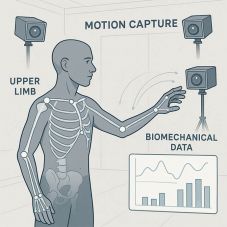
A reliability analysis of the Theia Marker-less System for upper limb movement assessment
This study evaluates markerless motion capture for upper-limb analysis during clinical tasks. It compares biomechanical data to assess reliability, aiming to overcome limitations of traditional systems. The research explores accuracy, repeatability, and operator influence, highlighting the potential of markerless technology for efficient, high-resolution movement assessment.
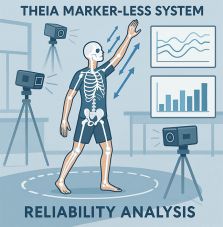
A reliability analysis of the Theia Marker-less Motion Capture System
This study investigates the reliability of markerless motion capture for analysing running biomechanics. By comparing biomechanical data, it explores the system’s accuracy, repeatability, and operator influence. The research highlights the potential of this technology to overcome limitations of traditional motion analysis tools in clinical and performance settings.