
A reliability analysis of the Theia Marker-less System for upper limb movement assessment
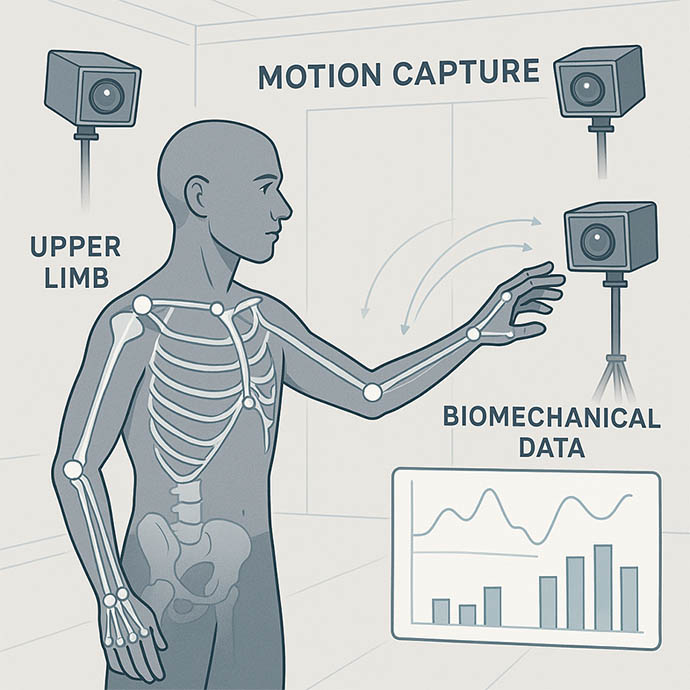
Traditionally, detailed analysis of human movement is conducted with highly accurate, and reliable equipment. High-end technologies, such as 3-dimensional motion capture systems, are recognised as the gold standard in movement analysis however, there are significant cost, environment, time and training/expertise barriers to the use of these tools. With the speed of technological advancement, alternative technologies have been developed and made available showing signs of potential for overcoming the barriers with the gold standard technologies. One such advancement is the introduction of markerless motion camera systems. Markerless motion capture systems offer the ability to measure human motion without the need to apply markers to the body. These systems use multiple synchronised video cameras and apply a range of tools in order to capture, understand and measure motion. The benefits of this new technology are through improved time efficiency, expertise, and cost of equipment. Whilst there is some evidence that markerless systems are valid, accurate and reliable, the evidence is not comprehensive and there is generally limited understanding regarding validity, repeatability, and reliability. Furthermore, it is not understood whether expertise and/or training of >the system operator has an impact on the accuracy of measurements taken.
Therefore, this research project will explore the use of a markerless motion capture system for analysing upper-limb function via clinical assessment tasks, such as reaching and grasping a cup. The study aims to assess the reliability of the markerless motion
capture technology. By comparing the biomechanical data collected, the research seeks to understand the potential of markerless technology in capturing high-resolution biomechanical signals
Contact
Email: Chief Investigator at Corey.Joseph@monash.edu