
Monash Korean Studies Conversation Circles Programme
This programme helps develop the linguistic abilities of students, ensure increased engagement for our cohort and cultivate important exchange links with universities in South Korea. It is a programme organised by students for other students to interact, discuss and develop their linguistic and social skills.
About the Conversation Circles Programme
Each semester Korean Studies runs a peer mentorship program (or “buddy system”) known as “Culture and Communication Circles”. This is run by higher-level students (usually ATS3176 students) of Korean language who work as “circle leaders”.
This is a nice opportunity to get to know other students in Korean Studies and looks great on CV. Students also earn credit from their units for their work as circle leaders.
The program involves the formation of “circles” where one student, the “circle leader” (typically a student in the 3rd year or above) is paired up with around 3-5 “buddies” in the 1st year. The circle meets regularly both for Korean language practice and assistance, and to discuss and socialize around a shared interest. Circles may meet online or offline, or in a hybrid format.
Each circle is themed around a specific area of Korean culture (e.g. Korean politics, Korean grammar, Korean pop music, Korean food). The themes are proposed by the circle leaders.
The circle leaders are responsible for organizing regular meetings of the circle, which involves a mixture of language practice/support plus discussion of the agreed theme and related social activities. They are also tasked with setting up an online platform (e.g. Discord, Instagram, Facebook) for the circle to communicate and share study resources. Each circle submits a short video (3-6 minutes) at the end of the semester which showcases the activities of the group.
2026 Report
General Overview
In Semester 1 of 2026, there were 46 participants in total. The average attendance was about 3-5 sessions across the 8/9 sessions. There was not a single time slot in which a student attended all 9 sessions.
There were 39 introductory students, 1 intermediate student, 5 proficient students and 1 advanced student. There were no cultural studies students joining the program this semester.
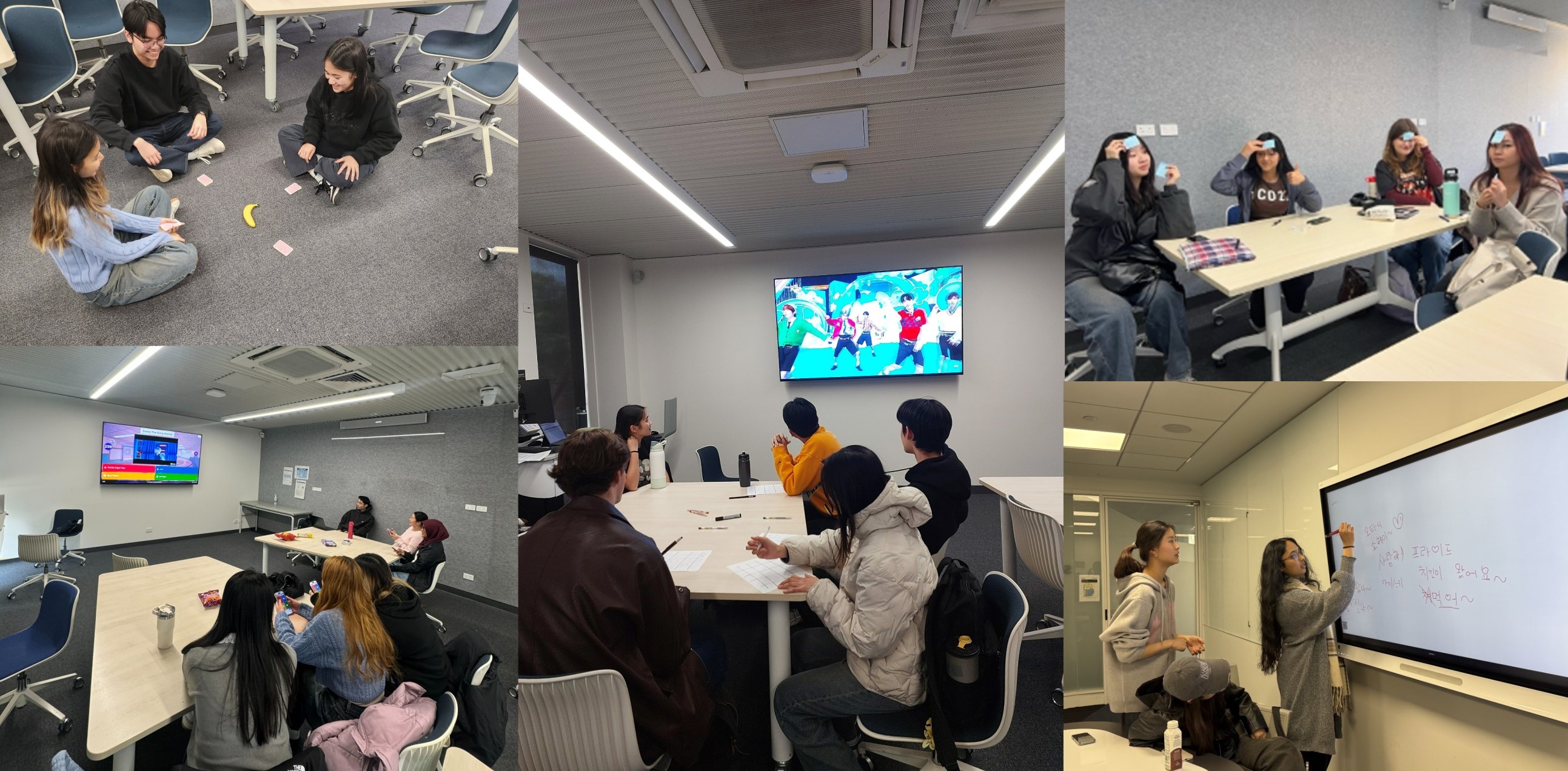
The topics were varied: K-dramas, K-pop, K-lifestyle and K-games. The K-drama session (Thursday) had the highest and most consistent attendance.
Feedback From the Participants
Participants noted that they enjoyed the sessions for the content and the interactive activities available each week. Participants noted that they enjoyed the use of PowerPoint presentations, quizzes, personality quizzes, videos and games throughout the sessions. It is recommended that future leaders implement a variety of media and activities relevant to their topics. Students also appreciated that discussion times were included in the sessions.
In particular, students from the Wednesday session with Shona noted that they enjoyed her sessions because she would ask what they wanted before upcoming sessions. They appreciated how curated the sessions were to their interests, as each topic is quite broad. This suggests that a more student-oriented approach is more suitable.
Some students noted that they liked that each time slot focused on a different topic, as it allowed them to attend the session for a topic that they were interested in.
There were some students who had to drop out of the program as they were unaware that the sessions were to be held in person. As a result, they stated that they would have appreciated a session time that was run online. There were also some students who were enrolled in Korean studies on the Caulfield campus who wished for a session to be held on the Caulfield campus.
Feedback From Leaders
In general, the leaders gave positive feedback for their time over the course of the 9-week program.
● Shona was the only leader who decided to continue their sessions until week 12.
● Jade and Seungyeon had to continue their sessions until week 12 due to scheduling issues.
● Jessica and Mikita/Evie held their sessions until week 11.
Leaders noted that it was a good opportunity for them to practice their public speaking skills and refine their organisational skills.
All the leaders had issues with maintaining consistent numbers. While there would be participants coming each week, it was hard for them to prepare activities as they would not know how many people would be attending that session. Jade’s experiences (Monday) were harder as her attendance was especially low and volatile. Most of the sessions only had one participant attending.
Some leaders noted that they would have liked more guidance as to what activities they could provide their participants. Some noted that it was harder in the beginning when they had no ideas, and some noted that it was harder near the end when they were running out of ideas.
Ideas on How to Improve the Program
I think it could be a good idea to run the KCC program in two blocks. Block A would run from week 3-7, and Block B would run from week 8-12. This would allow students to commit for shorter periods of time, possibly increasing the average attendance per time slot. This would also allow students who forgot to apply for Block A to try to apply for Block B. This would have been a good option for the students who emailed me quite late in the semester, requesting to join the program.
Another method we could implement to improve attendance would be to require students to email their leaders at least 24 hours before the indicated session time if they are unable to attend, and to give a reason for their absence. This would help the leaders plan or adjust their activities accordingly.
I also received a lot of emails from students asking me how many points they would receive if they were unable to attend every session. Although there is a range of students attending the sessions from different streams, it could be a good idea to implement a blanket point system that applies to all streams.
It would also be a good idea to add an online session time and an in-person session time on the Caulfield campus. This would make the program more accessible to students who are not able to come onto the Clayton campus every week.
2025 Report
Korean Conversation Circles was proven to be a widely successful, student-led program this semester. KCC began in Week 4 of semester 1, and ended either Week 11 or 12 depending on the KCC Leader’s preference. There were a total of 8 circles being run on a weekly basis, highlighted below:
KCC Leader(s) | Circle Day(s) |
Aurora Gregorio | Mondays 10-11 AM |
Juno Park | Mondays 12-1 PM |
Mikita Ho | Tuesdays 9-10 AM |
Jiwon Kang | Tuesdays 12-1 PM |
Cameron Grooby | Tuesdays 2-3 PM & Thursdays 10-11 AM |
Ai Lin Kang & Anna Aaroenes | Tuesdays 3-4 PM |
Eve Haviaridis & Alisha Tan | Thursdays 11-12 PM |
Participation
KCC saw a great amount of interest in sign-ups this semester from units including ATS1171, ATS2171 and ATS2173. We received 138 initial sign-ups, but unfortunately could not accommodate all keen participants due to circle size, venue size, and time / date constraints. We were able to allocate 123 participants to circles, though not all participants actively or regularly participated. There were a remaining 4 students who were on the waitlist by the end of the semester as spots never opened up in their preferred circle.
Some circles saw more consistent attendance than others. The highest recorded attendance was 20 (full attendance) in Jiwon’s circle during Week 6. The lowest recorded attendance was 3 in Mikita’s circle during Week 12 (however her maximum participant capacity was 13). Arguably, circles that had more preferences also had more consistent attendance. Students who were initially on the waitlist and added later to circles (one or two weeks after the initial start date) displayed much poorer attendance, which is likely attributed to finding other options to gain portfolio points.
Recruitment (Leaders & Participants)
Recruiting both leaders and participants proved to be the most difficult aspect this semester. Initially, the idea was to match participants and leaders based on similar time preferences and interest points. However, the influx of participant interest made that impossible. Therefore, a new system was implemented to have leaders run a circle during times they wanted, and have participants choose from those options. This system relied on a first-come, first-served basis, however made it difficult for participants to choose focal topics that they were interested in. Fortunately, most leaders were flexible and able to discuss a variety of topics throughout the weeks.
All leaders were keen to run in-person meetings at Clayton. However, students from other campuses expressed difficulty in coming to meetings due to this reason. An online zoom circle was proposed but none of the leaders were interested in running an online session. Sign-ups for leaders were also slow, taking about 4 weeks until we reached the current number of leaders. Leaders also had a say with how big their circles were, ensuring comfortability in running sessions and also ensuring engagement. Larger circles saw 19-20 students, while smaller circles saw 10-11, with variance in between.
Participant Feedback
A feedback form was sent out to participants, but only 3 responses were received. However, the limited feedback did praise the flexibility of circle topics, enrichment of language and culture skills and general fun and interest. One improvement highlighted was that some participants did not seem particularly interested, and were there mainly for portfolio points.
Personal Feedback
It was difficult to contact some leaders, and ultimately I only received a full weekly summary from Aurora and Juno, and one weekly summary from Jiwon despite a few reminder emails. You may view the summaries and photos here (in the 2025 S1 Google Drive folder). Despite this, all the leaders were very understanding when difficult circumstances arose and were respectful and polite in our email exchanges.
RECOMMENDATIONS:
- Budget for KCC Leaders
- It may be beneficial to allocate a small fund to leaders for their circles to assist in activities, streaming services (e.g Kdrama websites) or Korean snacks.
- More incentive for consistent attendance
- A finalised, perhaps more generous portfolio point attribution system could help ensure more consistent attendance as it was likely that some participants dropped out or stopped attending as they found easier alternatives.
- Monash Venue Bookings
- Book venues early on. The Monash Venue Booking system allows for weekly bookings with just one form submission.
- Continue the current sign-up system
- Recruit leaders and finalise session dates. Then open to sign-ups and allocate everyone as best as you can. Due to numerous changes this semester, a lot of emails were sent out which made sign-ups a bit convoluted.
- Encourage a range of topics
- Large numbers of participants makes it difficult to focus on a niche. If leaders are able to talk about a lot of topics, it would be beneficial. This semester, Juno was able to share her own experiences living in Korea, which was a unique topic point.
The Korean Conversation Circles once again ran in semester 2, starting in Week 4 and ending in Week 11. One group (Angelica’s Friday Circle about K-Dramas and Korean History) ended in Week 12, as there was a week missed due to the AFL Grand Final public holiday. There were a total of 6 circles, as shown below. Three circles had one leader each, while the other three circles had two leaders paired up, based on leader availability and overlap of topics.
LEADER NAME(S) | DAY + TIME | TOPICS/THEMES |
Krystal Ge | Monday 3pm-4pm | Korean food & K-pop |
Cameron Grooby + Eve Haviaridis | Tuesday 11am-12pm | K-pop |
Madeline Hexter | Wednesday 2pm-3pm | K-dramas |
Aurora Gregorio + Layla O'Farrell | Thursday 2pm-3pm | Broad topic: K-pop, K-dramas, Korean fashion, etc |
Ai Lin Kang + Mikita Ho | Thursday 3pm-4pm | Korean games |
Angelica Giaquinta | Friday 10am-11am | K-dramas & Korean history |
This semester, the participant sign-ups had dropped from Semester 1 despite advertising on Moodle and on social media from before the first week of classes. A reason for this could be Introductory classes no longer having portfolios, where students no longer have an incentive to attend. Despite this, the students who did attend over the semester were mostly consistent, with attendance dipping around Week 8, when it was peak assessment season.
There were initially 74 participant sign-ups (expressions of interest), with some students dropping out due to work and university commitments. However, there were also a number of students who requested to sign up halfway through the semester, attending consistently despite joining late.
The circle sizes varied from 5 students in the Thursday circles to 13 students on Monday.
The highest attendance was 10 students in Krystal’s Monday circle in Week 5 and the lowest attendance was 1 student in Aurora and Layla’s Thursday circle in Week 7 due to final assessments and the longer period before a mid-semester break in the second semester, prompting many students to take an early break.
There was a great response to the leader sign-up form in Week 1 of the semester, which resulted in the form having to be closed earlier than initially planned. Many of the students who applied to be leaders had previous experience in being a leader, and they were mostly students in the proficient levels. In the past, it has usually been proficient and advanced language students who became leaders. However, this semester, that opportunity was extended to two intermediate students, Krystal Ge and Madeline Hexter, in the hopes that they can gain experience in leading to sign up to be leaders again in future KCCs.
The system used to divide leaders and establish circles was based on leaders providing 2-3 suitable times for them to lead the circle, as well as providing a few suggested topics. Based on this, at least one circle was run per day of the week, totalling 6 circles across the week. The overlap of leaders’ suggested times and topics led to the pairing of some leaders.

In terms of the breakdown of participants based on the units taken this semester, Introductory students saw the most sign-ups and participation. While there was a considerable number of intermediate students who signed up, there was only one consistent participant from the proficient level. A significant number of students from ATS3947 (The making of a modern Korea: History and development), a cultural unit, also took part in the KCC.
The chart is based on consistent attendance, rather than participant sign-ups. There were lots of proficient students who signed up in the beginning, but they did not consistently attend/they dropped out.
The process of recruitment and the KCC schedule over the semester was as follows:
- Prior to Week 1: posts on social media to encourage students to ‘keep an eye out’ for KCC notices once the semester starts
- Week 1: leader sign-up forms posted and notices sent out (leaders finalised by the start of Week 2)
- Week 2-3: participant sign-ups
- Week 4: KCC officially began
- Week 11-12: KCC ended; leaders upload summaries and photos/videos of activities
A feedback form was sent out to participants at the conclusion of circles in Week 11. The form had an overwhelmingly positive response, with students describing their experience as ‘fun and enjoyable’ and that KCC provided an opportunity for them to meet people who have ‘similar interests’ in a ‘fun and engaging environment’. One student also described KCC as what will be their “favourite memory of doing Korean at Monash”, which was a really lovely comment to get back about the program. However, one student responded that it was not made clear to them that they should have been taking weekly photos for their portfolios. This is something that can be done better for next time. On top of emails alerting students about the need to take photos throughout the semester as evidence, it could be good for the circle leaders to really emphasise that again each week. The feedback also highlighted that the students often felt that 1 hour a week was not long enough and suggested making the circles at least one and a half-hour sessions. However, this could be difficult to implement due to the tight schedules of leaders who would be required to run longer sessions. An alternative solution could also be giving students the opportunity to attend two circles, but the compromise would be that they still get the same number of portfolio points as attending one, but they have the option to attend two if they so wish.
2024 Report
The Korean Conversation Circle for semester 1 of 2024 started from week 4 (March 18th) and ended in week 11(May 13th), a total of 8 weeks. This semester, the KCC program had a total of 4 weekly sessions with 5 circle leaders; 3 of which ran their circles individually and another 2 who worked together to accommodate the session with more participants.
The circle leaders include:
1. Nicole Ahn – Korean Proficient 1: Nicole ran Mondays conversation circle. Her topics focused on Korean snacks, food, games, and studying Korean in general.
2. Joyce Wong – Korean Proficient 1: Joyce ran Tuesdays conversation circle alongside Jayden. Their sessions focused on K-pop, doing deep-dive into K-pop groups and try to learn from their lyrics and concepts, and sharing Korean music among the participants
3. Jayden Truong – Korean Proficient 1: Jayden and Joyce organised their circle together on Tuesdays.
4. Larissa Carbery – Korean Advance 1: Larissa’s session is usually held on Thursdays, with topics covering mostly Korean games and a mix of K-pop.
5. Rachel Goh – Korean Proficient 1: Rachel ran her sessions on Fridays. Her circle group watched the K-drama “Twinkling Watermelon” and enjoyed their time snacking while watching that show.
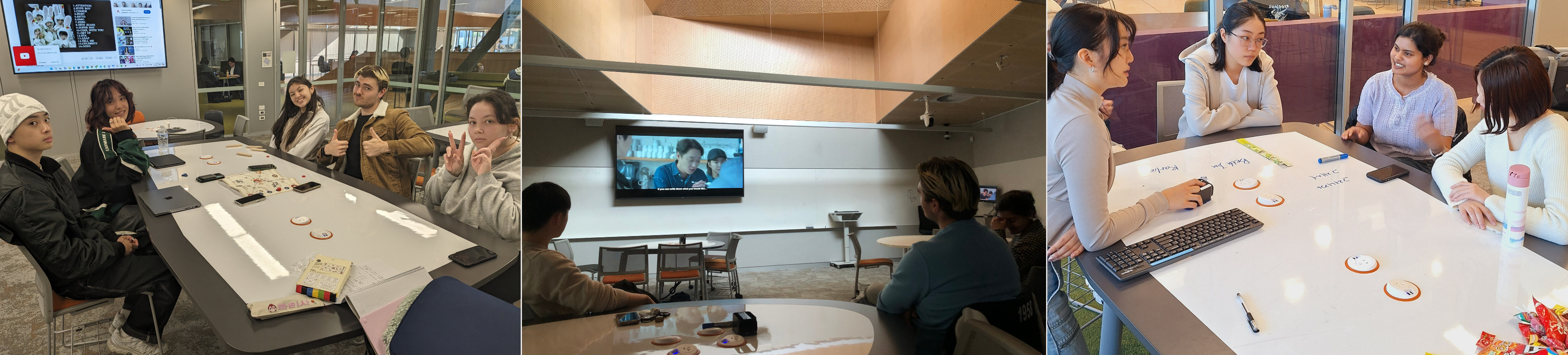
The attendance of this semester's KCC was consistent throughout the semester, with a slight drop in weeks that students have many assessments due. Around 10-15 students attended the circles each week, with the fewest being 7 attendees, and the highest being a total of 16 attendees per week. As we considered the pros and cons from last semester's, we decided that for this semester we would have a more flexible approach to the program in terms of the conversation topics and managing attendance. This allowed both the circle leaders and attendees to discuss a variety of K-content during their sessions, rather than being limited to one topic for 10 weeks.
In semester 2 of 2024, the Korean Conversation Circle ran weekly from 12th August (week 4) to 11th October (week 11), a total of 8 weeks. There were a total of 6 circle leaders running the weekly sessions. The circle leaders include: Alisha Tan (Korean intermediate 2), Valeria Paniagua (Korean intermediate 2), Joyce Wong (Korean proficient 2), Jayden Troung (Korean proficient 2), Olivia Wang (Korean proficient 2) and Alicia Han (Korean proficient 2).The attendance was quite consistent throughout the semester, averaging around 12 students attending the sessions each week. This is thanks to all the amazing work from the leaders who ran fun and engaging weekly sessions, which concluded the semester with great success.
2023 Report
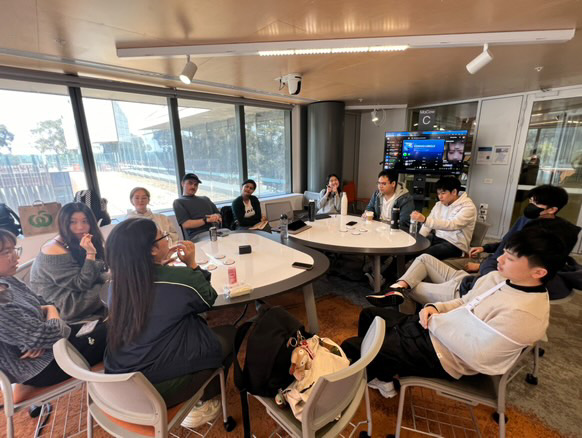
The semester 2 2023 Monash Korean Studies Conversation Circles programme ran between the 21st of August 2023 to 22nd October 2023. This semester it involved over 27 students who participated in the circles and 3 students who worked as circle leaders. The circle leaders this semester was Grace, Minna and Ratchanon (Pick). This year the topics selected for the conversation circle groups were flexible and ranged from Korean travel to cults. These topics were selected by the circle members because they wanted to explore more aspects of Korea and Korean culture not covered in class and hear all the different stories and perspectives of Koreans in Korea and foreigners visiting Korea. Over the course of the semester, students met together with their circle leaders 8 times, and they met for 60 to 90 minutes each time. They always met face-to-face in rooms on campus. During a typical session, students would take time to ask any questions they had that week, explore the topic of discussion and watch videos or play games surrounding that topic. Students would also spend time to discuss how to advance in their Korean studies, under the guidance of their fellow senior peers (선배). The aim of the programme is to help develop the linguistic abilities of students, ensure increased engagement for students and cultivate important exchange links between students.
2022 Report
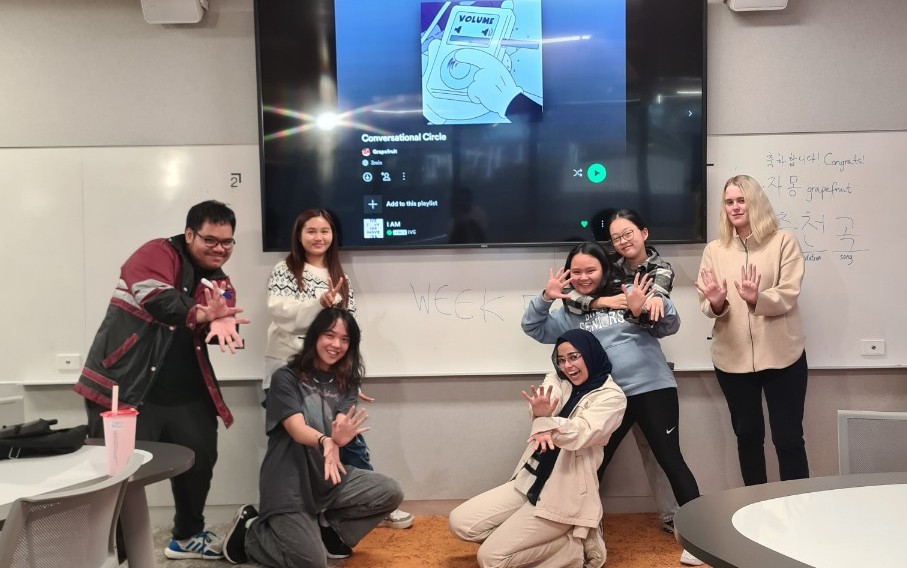
Semester 2 Korean Conversational Circle made lots of progress from semester 1. We strived to make changes based on semester 1’s feedback for a more positive experience for both leaders and participants.
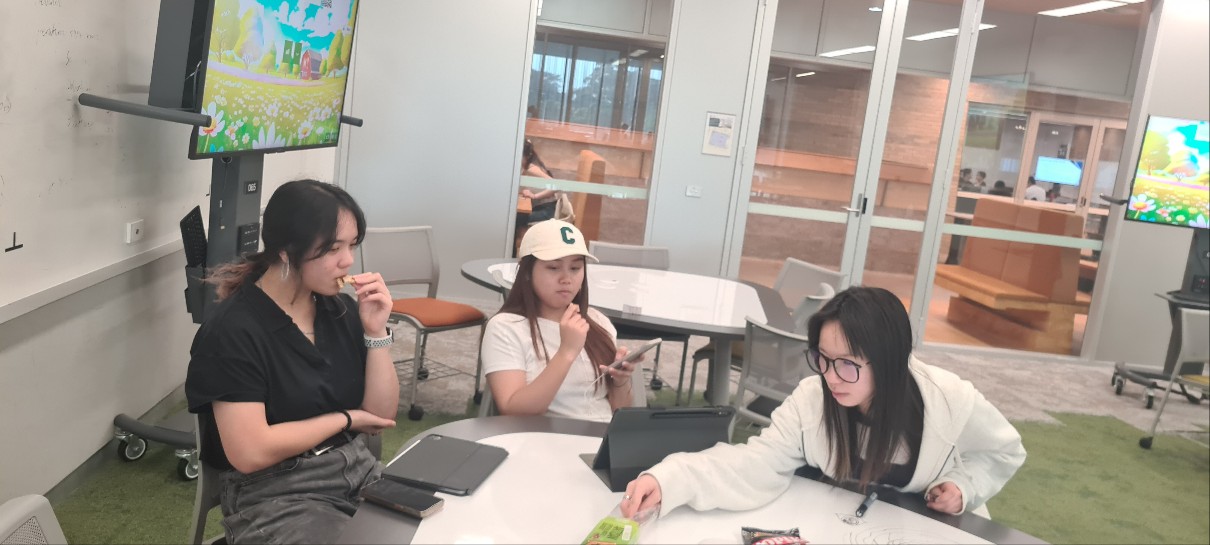
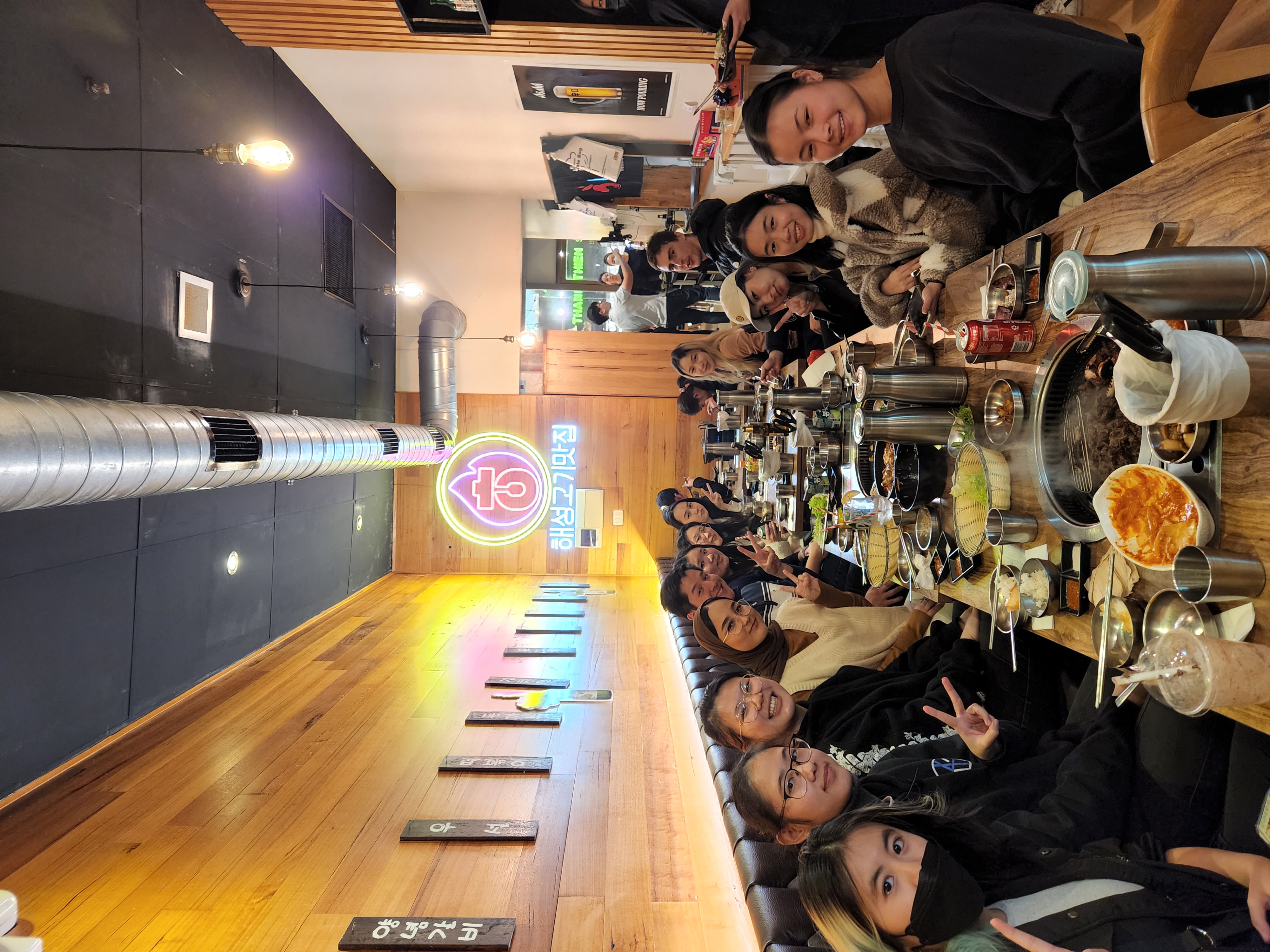 2022 Conversation Circle End of Semester Dinner at Haysung BBQ Springvale
Thus, the strategies implemented such as encouragement of budget use and weekly sessions, credit points, reduced video time requirement, no hybrid sessions, gatherings with leaders and coordinators assisted with a more successful semester 2! This is demonstrated in the attendance check spreadsheet and feedback form, where it highlights high attendance rates as well as less students discontinuing the programs/not attending sessions. Also, leaders' engagement and encouragement have played a major role in securing these numbers!
Feedback at the end of the program included requests for the implementation of a more organised and structured timetabling to schedule circle meetings, a set guideline of balancing academic work and fun, collaboration with other circles or an event for all circle groups to get together during SWOTVAC (or around midpoint of the program). Overall, the 2022 semester 2 Korean Conversational Circle program was a success and greatly improved on from semester 1!