
Monash Korean Studies Research Hub Beyond Borders Seminar Series
Monash Korean Studies Research Hub Beyond Borders Seminar Series 2023-2026
The Monash University Korean Studies Research Hub (MUKSRH) helps to coordinate Korean Studies research and educational activities in the Melbourne and metropolitan area. MUKSRH holds regular seminars, workshops, and conferences to showcase the work of scholars researching Korea-related topics.
This page contains information about the latest MUKSRH seminars.
For information about the MUKSRH seminars and the Monash Korean Studies Research Hub's Melbourne Metropolitan Korean Studies Seminar Series 2017-2022, please click here.
Monash University Korean Studies Research Hub (MUKSRH) Presents:
Monash Beyond Borders Korean Studies Seminar Series 2026
Seminar 1 - South Korea’s Decade of Living Dangerously: Navigating Economic Coercion without Middlepowermanship, 2016–26
Dr Alexander Hynd (University of Melbourne)
Date & Time: Thursday 19th March, 2-3pm (Melbourne time)
Abstract
There is widespread consensus among scholars and policymakers that South Korea is a middle power. According to the middle power behavioural image, Korea should be expected to embrace strategies including multilateralism, coalition building, niche diplomacy, and good international citizenship. But is this actually how the country behaves?
In this seminar I will examine Korea’s recent experiences as a target of economic coercion by more powerful states: China, the US, and Japan. What challenges did Korea face in each case, and through what strategies did it respond?
I will argue that Korea’s ability to withstand sustained pressure in each of these cases supports narratives of its rise ‘from shrimp to whale.’ However, its strategic responses have been a poor fit with the popular behavioural image of middle powers. And nor are South Korea’s strategies comparable to those enacted by authoritarian great powers like China, autarkic ‘rogue states’ like North Korea, or minor powers like the Solomon Islands. Instead, I argue, we see in the South Korean case something quite different: compromise without capitulation in the face of the great powers – the US and China – and retaliation without direct escalation against Japan. Put together, analysis of these cases complements and further develops a growing body of scholarship that is critical of the middle power behavioural image.
Bio
Alexander M. Hynd is Lecturer at the University of Melbourne's Asia Institute, and Deputy Director of the Master of International Relations. He frequently writes about South Korean foreign policy, with research interests in international hierarchies, economic statecraft, and ‘inbetweener’ states. Alexander is currently finishing up a book about how Korea, Indonesia and Australia ‘became’ middle powers.
Seminar 2 - Korean Film-Induced Tourism: Socio-cultural and Economic Impacts
Prof Sam Kim (The Hong Kong Polytechnic University)
Date & Time: Thursday 2nd April, 2-3pm (Melbourne time)
Abstract:
His presentation is entitled “Korean Film-Induced Tourism: Socio-cultural and Economic Impacts”. His presentation mainly deals with three famous Korean TV dramas which attracted numerous international tourists to Korea and affected TV drama audience countries. It also portrays international tourists’ activities or behavior in film screened destinations. It will be a good way to understand a beginning of Hallyu (Korean Wave) through three Korean TV dramas.
Bio:
Prof Kim received his MSc and PhD in Recreation, Park and Tourism Sciences from Texas A&M University in 1996 and 1999, respectively. He is currently a Professor in the School of Hotel and Tourism Management at The Hong Kong Polytechnic University. He is one of the most prolific authors in the hospitality and tourism field. He is a recipient of Lifetime Research Achievement Award in 2024 (ICHRIE and ICOT).
Seminar 3 - How Does Dialect Fit the Nation? The Politics of Language Standardization in South Korea
Dr Eunseon Kim (ANU)
Date & Time: Friday 8th May, 2-3pm (Melbourne time)
Abstract:
South Korea is often imagined as a nation bound together by a single shared language. But what happens to regional dialects under that ideal? This study explores the politics of language standardization in South Korea by examining how standard Korean came to function as the legitimate language of education, public life, and national belonging, while dialects were marked as incorrect, undignified, backward, or in need of correction. Dialects were not simply excluded; they were managed—corrected in schools, restricted in broadcasting, and tolerated mainly as subordinate forms of speech. Even recent efforts to celebrate dialects as cultural heritage or linguistic diversity do not fully escape this hierarchy: dialects are increasingly welcomed as markers of regional identity that “enrich” Korean, but usually without challenging the privileged status of the standard language itself. This study highlights how standard language ideology has shaped the social meanings of dialect: who sounds educated, who sounds provincial, and who gets to speak for the nation. In doing so, it asks what a more inclusive vision of language, identity, and belonging in Korea might entail.
Bio:
Eunseon Kim is Lecturer in the School of Culture, History and Language at the Australian National University. Her research explores the ideological and semiotic dimensions of Korean, especially honorifics, linguistic etiquette, and metapragmatic discourse. She is currently preparing a book manuscript on the socio-semiotic history of Korean honorifics and their role in ethno-national modernity.
Seminar 4 - The Koryo Museum of Art and Re-imagining Historical Landscape from Kyoto, 1968-1988
Dr Shin Takahashi (Monash University Japanese Studies)
Date & Time: Friday 22nd May, 2-3pm (Melbourne time)
Abstract:
In a corner of inner Kyoto City, there is an area that is starkly different from the neighbourhood for its distinctive Korean-style garden, which invites visitors into a rich cultural world, including collections, which are registered on UNESCO’s World Memory Heritage List. The Koryo Museum of Art was founded in 1988 by Chung Jo-Moon, a first-generation ethnic Korean resident in Kyoto, and his friends. Among them are his older brother, Chung Quy-Moon, and Quy-Moon’s neighbour in Osaka, Shiba Ryōtarō, one of the most prominent Japanese historical novelists of the last century; Ueda Masa’aki, a professor of ancient Japanese history at Kyoto University; Kim Tal-su, a renowned Korean novelist; and Okabe Itsuko, a Kyoto-based essayist.
Since the 1970s, these authors and academics had started to publish a quarterly journal called Korean Cultures in Japan (‘Nihon no Naka no Chōsen Bunka’), and their collective project eventually led to the opening of the Koryo Museum. The questions I have at this preliminary stage are: (a) Why was it built in the middle of Kyoto? (b) What were the ideas behind the founding of this museum? (c) What implications can we draw from the founders’ stories, especially with regard to transcultural memory studies and to understand postwar Japan-Korea relations? Starting with those questions, this research investigates the thoughts and practices of those key intellectuals by tracing their works over the two decades between the 1970s and the 80s.
Bio:
Shin Takahashi is a historian of modern Japan and Japan-Asia relations. He is a lecturer in Japanese Studies at Monash University and the author of Translocal Island of Okinawa: Anti-Base Activism and Grassroots Regionalism (Bloomsbury 2024). He is an Associate Editor for The Journal of the Society for Asian Humanities.
Seminar 5 - What Can Artificial Intelligence Tell Us About Korean Language and Culture?
Dr Benoit Berthelier (University of Sydney)
Date & Time: Thursday 13th August, 3-4pm (Melbourne time)
Abstract:
Artificial intelligence, and large language models in particular, are increasingly used as question answering tools, raising concerns about the reliability of their outputs. Rather than take them as authoritative or try to discern their level of truth, this talk considers what these answers - either right or wrong - can reveal about a society and its culture. Because language models are probabilistic systems trained to identify and reproduce patterns in language, they are useful artefacts to study in order to trace changes in representation, language, and stereotypes across time and across different social and linguistic contexts.
Drawing on research on North and South Korea, the talk shows how computational methods can reveal patterns that are difficult to identify or substantiate through qualitative analysis alone. It argues that AI is most useful not as an oracle, but as an analytical instrument, one whose errors and biases can themselves tell us something about Korean language and culture. The talk shows how AI can help us understand the different conceptions of art between North and South Korea, the different ways in which readers from North and South might read the same text, and the finer semantic differences between North and South Korean languages.
Bio:
Dr Benoit Berthelier is Senior Lecturer in Korean Studies at the University of Sydney. His research focuses on North Korea, digital methods and the interaction between science, technology and politics.
Seminar 6 - Feeding the People: Socialist Dining, Technoscience, and Gendered Labor in Postwar North Korea
Dr Sunho Ko (Penn State University)
Date & Time: Thursday 17 September, 10-11am (Melbourne time) / Wednesday, 16 September 2026, 8-9pm (Pennsylvania time)
Abstract:
In the aftermath of the Korean War, North Korea embraced the slogan, “Let’s turn our restaurants into collective kitchens of the people (inmin ŭi kongdong chubang)!” to address the challenges of feeding a war-torn population. This initiative expanded state-owned and cooperative dining facilities with its emphasis on the scientific management of the facilities to provide nutritious, affordable, and appealing meals. This presentation examines these facilities as sites where scientific visions for food management were materially enacted, with revealing tensions, negotiations, and conflicts that reflected broader political dynamics. Special attention is given to women, who played a central role in realizing these scientific ideals through labor constrained by limited resources and conservative gender expectations. How did women workers navigate these intersecting worlds of gender, scientific discourse, and local realities? By tracing themes of socialist dining, scientific management, and women’s labor, the presentation highlights how North Korean socialism was both enacted and contested in everyday experiences.
Bio:
Sunho Ko is a cultural historian of modern Korean history with expertise in food and agriculture. He received a PhD degree from the University of Toronto with a dissertation on the history of food in wartime colonial Korea. He is currently expanding his research period from colonial Korea into North Korea to explore new topics of socialism, the Cold War, animal studies and environmental history.
Seminar 7 - An Analysis of North Korean Textbooks in the Kim Jong-un Era
Associate Professor Isaac Lee (University of Queensland)
Date & Time: Thursday 15 October, 4-5m (Melbourne time)
Abstract:
This project examines North Korean elementary school textbooks as ideological instruments that cultivate emotional loyalty and political obedience to the supreme leader. Through Critical Discourse Analysis and narrative inquiry, it analyses eight Korean language textbooks from the Kim Jong-un era, revealing how authoritarian values are embedded from early childhood.
At the core of the curriculum is the deification of Kim Il-sung and Kim Jong-un, who are portrayed as paternal figures whose sacrifices secure national strength and personal well-being. Emotionally charged first-person narratives encourage students to understand obedience as a moral duty and diligent study as a form of repayment for the leader’s benevolence, thereby fostering intergenerational loyalty. For example, the glorification of Hyang-rim’s self-sacrifice to protect portraits of the leaders illustrates how devotion and selflessness are normalised. Such narratives align personal identity with state interests and present military service as both honourable and expected.
Another example is Geum-sun’s statement that Kim Il-sung was “both a dear father and the foundation of her spirit,” which illustrates Puleungi-sasang ideology, in which the leader’s authority is closely associated with parental love and life itself. This ritualised emotional attachment helps secure the regime’s political legitimacy.
Education is framed not as a right but as a privilege granted by the leader. Historical trauma under Japanese colonialism is contrasted with present-day prosperity in order to legitimise the regime, while anti-American sentiment is reinforced through depictions of Americans and Christian missionaries as hostile invaders. Ultimately, the textbooks construct political subjectivity by fusing civic identity with personal devotion to the leader, reinforcing nationalism, legitimising political authority, and portraying loyalty as both virtuous and essential.
Bio:
Associate Professor Dong Bae (Isaac) Lee is an academic in Korean Studies and Korean language education at the University of Queensland, Australia. He holds an MA in Applied Linguistics and a PhD in Critical Curriculum Studies and has more than two decades of experience in university teaching, research, postgraduate supervision, curriculum development, and academic leadership.
His research is interdisciplinary, spanning critical curriculum and textbook studies, language education, nationalism, identity, ideology, multiculturalism, environmental and sustainability education, and critical discourse analysis. His work has examined English, Korean, and Chinese language textbooks and school curricula across a range of national contexts, including South Korea, North Korea, China, Japan, Vietnam, Indonesia, Saudi Arabia, Iran, and Australia. He has also conducted research on North Korean education and curriculum, North Korean defectors, and issues of identity among overseas Korean communities.
Associate Professor Lee has published two research monographs with international academic publishers, more than 45 peer-reviewed journal articles and book chapters, and a co-authored book. His recent research examines environmental education, sustainability, environmental citizenship, national identity, ideology, and the ways in which school curricula and textbooks construct national and global futures, particularly across the Indo-Pacific region.
At the University of Queensland, he has played a significant role in the development of Korean Studies and has served as Director and Co-Director of the Korean Studies Centre. He is also actively involved in international research collaboration, postgraduate supervision, and the mentoring of early-career and next-generation scholars.
Monash Beyond Borders Korean Studies Seminar Series 2025
Seminar 1 - Women leaders in South Korea: Challenges and Opportunities
Monash University Korean Studies Research Hub is proud to announce the visit of EWAK (Empower Women for Australia and Korea) members who will be sharing the stories behind their book "누구보다 일에 진심입니다만" at our meet and greet book talk event.
Delegates from Empower Women for Australia and Korea (EWAK):
Sangeun Kim, EJ Choi, Serena Jeong, Minyoung Kim, Narai Kim, You Sun Lim, Saeyoung Park, Heejung Rim, Josie Daw
Date & Time: Monday 17th March, 2:30-3:30pm (Melbourne time)
Blurb:
"누구보다 일에 진심입니다만" is a motivational book aimed at women contemplating their careers and futures. It features stories from various professional women from the EMPOWER group who share their experiences, challenges, and insights about their work and personal lives. The book emphasizes the importance of passion and dedication in overcoming societal biases and personal obstacles. By sharing their journeys, these women aim to inspire and empower others to pursue their career goals with confidence and resilience.
Seminar 2 - 'Multicultural' Accommodations of South Korea: Its developments and Debates
Dr Hyun Mee Kim (Yonsei University)
Date & Time: Thursday 17th April, 4-5pm (Melbourne time)
Abstract
Since the 1960s, multiculturalism policies have been adopted in the West, responding to the demands of various civil movements centered on race, gender, and immigration. In April 2006, the South Korean government proclaimed a transition to a 'multi-ethnic, multicultural society', leading to a significant shift from the single-ethnicity paradigm as the discourse on multicultural society boomed. This shift was underpinned by an increase in migrants, particularly since the 1990s, with a rapid rise in international marriages noted after the 2000s, underscoring the need for 'social integration' of immigrants. Families from international marriages were designated as 'multicultural families', and viewed as a 'vulnerable group' by the Korean government, which provided various social welfare services through the Multicultural Family Support Act. This talk aims to analyze the complex political dynamics embedded in Korea's multicultural society discourse and policies from a gender perspective. It seeks to explore the meanings of 'multicultural society' as negotiated among the state, civil society, and immigrant stakeholders, and to interpret the development and debates surrounding Korea's acceptance of multiculturalism.
Bio
Hyun Mee Kim 김현미 金賢美 is Professor in the Department of Cultural Anthropology at Yonsei University, South Korea. Her research interests include political economy of gender and labor, globalization and migration, refugee issues, and eco-feminism. She is the author of Cultural Translation in a Global Era (2005, in Korean) and We always leave home: Becoming migrants in South Korea (2014, in Korean/2019 in Chinese ), Feminist Lifestyle (2021 in Korean) and A Society of Flawless Fragments: Work Experiences and Adventures of Korean Women in their 20s to 60s (2023 in Korean). She also co-edited Multiculturalism in East Asia: A transnational exploration of Japan, South Korea and Taiwan (2016 in English).
Seminar 3 - Gold Rush: Writing about the Lives of Korean diasporas
Author Seo Sujin (Author of multiple books on Korean diasporic community of Australia)
Date & Time: Thursday 8th May, 4-5pm (Melbourne time)
Abstract
In the short story Gold Rush, a young Korean couple moves to Australia on a Working Holiday visa, facing challenges such as unfair treatment by a Korean business owner and scams from fellow immigrants. Despite these hardships, they persist, clinging to their dream of a bright future in Australia. After registering their marriage to secure a visa, their relationship faces unexpected struggles, leading them to question the Gold Rush they once dreamed of. The author discusses the process of writing Gold Rush, highlighting how the story was perceived differently by Korean readers in Australia and Korea, revealing a gap in emotional experiences. The narrative of Korean immigrants’ struggles has often been overlooked. Drawing from interviews with Korean immigrants, the author reflects on the changing perceptions of immigration across generations and the ongoing struggles that many immigrants still face. The author explores the question of why immigrants, despite facing hardships, choose to remain in their new countries.
Bio
Seo Su-Jin is a Korean novelist, Seo Su-jin’s debut novel Korean Teachers won the 25th Hankyoreh Literature Prize in 2020. Korean teachers clearly reveals the absurdities of Korean society, such as women, race, labor, and class, behind the Korean Wave while detailing the scene of Korean language education. Korean teachers has been translated into English in 2022 and it was said to be “one of the most hyped and discussed Korean translations of the year” in the media.
Since 2021, She published new novels Yujin and Dave and Oleander, and a short story collections Gold Rush, which won the 13th Munhakdongne Young Writer’s Award in 2022. She focuses on the lives of Korean immigrants in Australia throughout her work.
Seminar 4 - Beyond Borrowing: The Complex Trajectories of English and Korean Vocabulary
Dr Hyejeong Ahn (University of Melbourne)
Date & Time: Thursday 22th May, 4-5pm (Melbourne time)
Abstract
This talk presents the dynamic history of the contact between the Korean language and English. Firstly, the trajectories of English loanwords into Korean via Japanese are explored. This path has led to English loanwords both in the Korean and Japanese languages having similar features. The talk also presents more current examples of English words of Korean origin found in online databases which showcase the complicated and unpredictable trajectories of this new vocabulary of Korean origin, which has resulted in inconsistent spellings and variations in meaning that differ from their local context. The present study concludes with the argument that linguistic authorities do not play a significant role in determining the forms and usage of English words of Korean origin. Instead, Hallyu (the Korean Wave) and its fandom are the protagonists fuelling the rapid growth of these words, which are widely used online.
Bio
Dr Hyejeong Ahn is a Senior Lecturer in the Faculty of Education at the University of Melbourne. She completed her PhD at Monash University. Her teaching career began in South Australia and has extended to South Korea and Singapore. Dr Ahn's research focuses on the translingual nature of English lexicons from the perspective of World Englishes. Her publications include Beyond Borrowing: Lexical Interaction Between Englishes and Asian Languages (Routledge, 2023) and The Emergence of Korean English (Routledge, 2024).
Seminar 5 - Chelsia, Jackie, and A Better Tomorrow: Hong Kong Syndrome in South Korea, 1977-1992
Dr Sangjoon Lee (School of Creative Media City University of Hong Kong)
Date & Time: Tuesday 27th May, 4-5pm (Melbourne time)
Abstract
Anyone who spent their teens in South Korea in the 1980s would most definitely recall the heyday of Hong Kong film and popular culture in the local cultural sphere. Hong Kong cinema had long been known as “low-end” cultural products in South Korea and most local intellectuals looked down on them. It is, despite the distaste of local intellectuals, an indisputable fact that Hong Kong films had a significant influence on the 1970s South Korean cultural scene. Beginning in the 1980s, however, the location of Hong Kong cinema was rapidly changed. Chelsia, My Love (秋霞 1976)’s huge popularity and Jackie Chan's Drunken Master (1978)'s record-breaking success in the late 1970s catapulted what had been regarded as a ‘working-class men's culture’ into the domain of ‘everyone's popular culture.’ Melodrama, kung fu comedy, and gangster films became the main genres of the 1980s receptions of Hong Kong films in South Korea. However, the belle epoque of Hong Kong cinema did not last long. After Swordsman 2 (笑傲江湖II東方不敗1992)’s huge commercial success, Hong Kong cinema gradually declined in popularity in South Korea. Fans were growing tired of ‘low-quality’ martial arts and gangster films that had been hastily produced to meet the market’s needs. Moreover, the quality of local films improved significantly. This lecture chronicles the rise and fall of Hong Kong cinema’s reception in South Korea, from the early 1980s success of Jackie Chan, Yuen Biao, and Sammo Hung to the mid-1980s Hong Kong gangster films of Chow Yun-fat, Andy Lau, and Leslie Cheung, concluding with the final note, the early 1990s' return to wuxia, which ended the syndrome.
Bio
Sangjoon Lee is an Associate Professor of Film Studies at the School of Creative Media, City University of Hong Kong. Lee is the author of Cinema and the Cultural Cold War: US Diplomacy and the Origins of the Asian Cinema Network (2020; Korean Version 2023 and Chinese version 2024) and the editor/co-editor of Hallyu 2.0: The Korean Wave in the Age of Social Media (2015), Rediscovering Korean Cinema (2019), The South Korean Film Industry (2024), Routledge Companion to Asian Cinemas (2014), and Remapping the Cold War in Asian Cinemas (2024). Currently, Lee is completing a monograph tentatively titled Destination Hong Kong: South Korean Cinema’s Encounter with Sinophone Cinemas, which chronicles the seven-decade-long interactions between South Korean cinema and the diasporic Sinophone cinemas of Hong Kong, Taiwan, and Singapore. He is also working on a new edited volume on Netflix and South Korean Media in a Globalizing World (Brill). Lee’s works have been translated into Korean, Japanese, Chinese, and Italian.
Seminar 6 - Gender Narratives in Korean Aid
Dr Jae Eun Noh (Research Fellow at Australian Catholic University)
Date & Time: Wednesday 27th August, 3-4pm (Melbourne time)
Abstract
Aid policies and practices are shaped by both international and national drivers. The promotion of gender equality in Korean aid has largely been attributed to international influences. This talk explores how women’s economic empowerment is conceptualised and implemented in Korean aid, considering both international and national factors.
Korea has strengthened its commitment to gender mainstreaming in its aid projects by adopting policies and guidelines for gender equality and increasing gender-related ODA. However, Korea has also been experiencing a gender backlash, as demonstrated in its two recent presidential elections. In addition, despite its long history and notable achievements in the women’s rights movements, Korea still exhibits a significant gender gap, particularly in economic terms.
An analysis of project reports identified four key misconceptions, which reflect Korea’s discourses on gender and development, and present barriers to adopting a transformative approach to gender equality. This talk will add new insights by highlighting the role of domestic influences on Korean aid and offer suggestions on how Korean aid can advance gender equality.
Bio
Born and raised in South Korea, Dr Jae-Eun Noh is an international development scholar whose research focuses on development policies and practices from human rights perspectives. Jae-Eun’s recent publications examined Korean development policies and practitioners through the lens of emotions, cosmopolitan nationalism in Korea, and Korean migrants’ activism. Jae-Eun is currently working on the global research project, “Solidarity in Global Health” as a Research Fellow at the Australian Catholic University.
Seminar 7 - Status of Gender Equality and Gender Impact Assessment in South Korea
Dr Dool Soon Kim (Korean Women's Development Institute)
Date & Time: Thursday 4th September, 3-4pm (Melbourne time)
Abstract
How do women live in South Korea today? South Korea has achieved remarkable growth in various areas, including political democratization, economy, society, and culture. In 2024, Korea's nominal GDP ranked 12th in the world. A recent report from the International Monetary Fund has revealed that South Korea now ranks first in the world for soft power. In this context of growth, I will examine how South Korean women experience life from a gender perspective.
Efforts to reduce gender inequality have been made across various sectors. Despite this, gender inequality structures persist. The gender wage gap in South Korea is the widest among OECD countries, and women's participation in senior decision-making positions remains very low. Rigid gender roles still exist in everyday life.
As part of its efforts to address gender inequality, the Korean government conducts a yearly gender impact assessment on various policies. This presentation will examine the operational structure of Korea's gender impact assessment system and examples of policy improvement.
Bio
Dool Soon Kim has worked a researcher at the Korean Women's Development Institute in South Korea since 2009, where she researches the gender impact assessment of policies and develop mid- to long-term women's policy for governments. She also provide consulting services to central government agencies and local government officials on the implementation of policies from a gender-sensitive perspective.
Seminar 8 - Leaving it All in the Ring: Pro Wrestling and Reconciliation in North and South Korea
Professor Roald Maliangkay (ANU)
Date & Time: Thursday 18th September, 5-6pm (Melbourne time)
Abstract
In the early 1960s, pro wrestling became a popular form of entertainment in South Korea. Shows featuring male and female athletes, and a few affected by dwarfism, repeatedly sold out. The fast-growing popularity of the fake fighting theatre put the authorities on notice. As it was keen to normalise relationships with its former coloniser, organising bilateral events in the sport, which was hugely popular in Japan, carried much potential. What is more, the sport’s biggest star in Japan was Rikidōzan, who was born in Korea. In early 1963, Park Chung-hee invited the wrestler to come to Korea to help organise bilateral wrestling events. While many bilateral events would take place after, Rikidōzan was murdered in December that year by a member of the yakuza. His legacy would live on, nevertheless, though ironically more so in North Korea than in the South. In the two years leading up to what would be the world’s largest-ever pro wrestling event, held in Pyongyang in April 1995, North Koreans were told about the wrestler’s past, his love of Kim Il Sung, and how he was forced to hide his proud North Korean identity for decades. In this talk I discuss the importance of pro wrestling in North and South Korea. I argue that even though the sport has been used as a way of facilitating bilateral exchanges and reconciliation, due to its violence and its association with Japan and the United States, it has served as a conduit for patriotism, and ethnic masculinity.
Bio
Roald Maliangkay is Professor in Korean Studies at the Australian National University. He specialises in the history of Korean popular culture and enjoys exploring the consumption of what are commonly considered non-essentials. He is the author of Broken Voices: Postcolonial Entanglements and the Preservation of Korea’s Central Folksong Traditions (2017) and co-editor of K-pop: The international rise of the Korean music industry (2015).
Seminar 9 - The Effects on a Lifetime – The Life Force of 5.18
David L. Dolinger, Ph.D.
Date & Time: Thursday 25th September, 3-4pm (Melbourne time)
Abstract
I can’t say that any of us, foreigners who were in Kwangju in May of 1980, had any idea as to what we were witnessing, what we would do, how our lives would end up. I can only say that I have tried to take my live one day at a time, on my terms but have let my experiences from May of 1980 help to guide me down my path. Being there, witnessing the violence, the bravery, the sacrifices have long term affects on a young impressionable mind. I was twenty-four years of age, very young and very naïve compared to the other twenty somethings that I would meet over those days in May. At that time, I was living in Yeongam, about an hour’s bus ride southwest of Kwangju, I was a resident of Chollanam Do, I was affected by those around me. During the spring of 1980 I witnessed aspects leading up to 5.18. I felt people’s hope, despair and fear but I also felt a deeper drive, a force. I witnessed the hope on Friday the 16th, the aftermath of the 18th. We had no idea on the 18th and 19th what was going to follow, I went back to Yeongam, I had a job, I had individuals with TB that I need to attend to. But I made the decision to return to Kwangju on Wednesday May 21st, Buddha’s birthday. Without bus service and the ability to pay the hefty taxi fees I walked back into Kwangju. Later, I and other Peace Corps volunteers made the key decision not to leave even when ordered by the U.S. Peace Corps and U.S. Embassy. In the intervening days prior to the military re-invading the city I was in constant contact with the citizen and student leaders, spent time in the Provincial Office building, I was the only foreigner to have free entry into the Provencial Office building. I translated for foreign journalist, visiting hospitals, did what I thought could help. At time it was just listening to people, listening to their stories. Following the re-invasion of the city, we Peace Corps volunteers were removed from the city. I was forced to resign from the Peace Corps and was told that I should immediately leave the country as I could no longer be protected by the U.S. Embassy and that the Korea government had threatened my life. I did not leave, I stayed, I became more involved. Kwangju opened my eyes, I view it as the city of my birth, as a human. The pain has stayed with me every day, but it has also provided a mindset of never accepting no, or it is not possible, as an answer. For me personally it has allowed me to approach my career in multiple different directions and with a viewpoint which others do not have nor can provide. But there are questions that I ask everyday of myself, can I do more, could I have done more, have I done enough, how can I ensure that truth is disclosed, how can I educate others. I never want to forget the pain, the emotions, the memories of what occurred during 5.18. I also want others to know the story of 5.18, how some people lived their all too short lives, how they were willing to sacrifice themselves for the greater good.
Bio
Graduating from college with a B.S. in Chemistry and Biology, David had little direction or understanding of where his life would go. But he knew that he wanted to contribute, to make a difference. This led to the Peace Corps and south Korea. From April 1978 onwards he found himself in south Korea. David was sent to rural Jeollanam Province, Yeongam County where he worked as a tuberculosis case worker in the county health centre. He spent most of his free in his beloved Wolchulsan, hiking and climbing. Then life started to get interesting, starting in October of 1979 and the spring of 1980. He found himself in the middle of the turbulent events of Gwangju. He and other Peace Corps volunteers refused the orders of the U.S. Embassy to leave the city, wanting to stay, witness what was happening, help as they could. Because of the life decision that he had he was summarily dismissed form the Peace Corps. But he has not regretted the decisions that were made at that time, they have helped to lead him to where he is today and has help to strengthen the decisions he has made and things that he has been willing to stand up and fight for. During his time as a Peace Corps volunteer, he developed tuberculosis, and it made him realized that proper diagnostics were the key foundation of good healthcare regardless of socio-economic status or where one was in the world. Returning home, David received his Ph.D. in Microbiology and Immunology from Temple University School of Medicine and has since focused his career on in vitro diagnostics (IVDs) and medical devices (MDs). Through his career he has developed and commercialized innovative and impactful assays for infectious disease (e.g. HIV, HCV, tuberculosis, etc.), but always with a focus on neglected diseases, and solutions that focus on the individual and the pathway that they must follow to regain their health. This approach as lead to major paradigm shifts in diagnostics for HIV and tuberculosis. In addition to a fulfilling life in diagnostics he has had time to have a family, travel the world, travel back to and reconnect with Korea. In addition to his many adventures, scientific publication he has publish his first autobiographical book which provides insight into what he witnessed, the people he met and what he did in Gwangju during those turbulent times in May of 1980.
Seminar 10 - Non-native Korean Speaking Teachers: The Elephant in the Room of Korean Language Education
Dr Nicola Fraschini (University of Melbourne)
Date & Time: Thursday 16th October, 3-4pm (Melbourne time)
Abstract
During the past two decades, the field of Korean language education has been quantitatively and qualitatively boosted by several policies and initiatives introduced by Korean governmental institutions in light of the growing interest towards learning the Korean language in both domestic and overseas contexts. While, on the one hand, such policies provided a formal recognition of the language teaching profession, on the other hand, affected by the narrative of Koreaness, they have almost completely ignored the expertise of non-native Korean speaking teachers (NNKSTs) and their needs. This presentation provides an analysis of the main policies and initiatives of the past 20 years and their relevance for the training of Korean language teachers in general and NNKSTs in particular. Then, through a consideration of the author’s research conducted on NNKSTs’ competencies, it advocates for more recognition of NNKSTs’ expertise and for the adoption of a dynamic model of teacher competencies that could leverage on NNKSTs’ context knowledge to support the development of Korean language learning in global contexts.
Bio
Nicola Fraschini is Senior Lecturer in Korean Studies and Director of the Global Korea Research Hub at the University of Melbourne. His research focuses on individual differences in Korean language teaching and learning, and on the application of Q methodology to language research. He is co-editor of the volumes Advancing language research through Q methodology (2024, Multilingual Matters), Enabling learning: Language teaching for Australian universities (2024, ANU Press), Innovative methods in Korean language teaching (2025, Routledge), and The Korean case for youth language learning (2026, Routledge).
Monash Beyond Borders Korean Studies Seminar Series 2024
Seminar 1 - The ‘Nation of Propriety in the East’: A Naturalized History of Polite Language in Korea
Dr Eunseon Kim (The Australian National University)
Date & Time: Friday 12th April, 2-3pm (Melbourne time)
Abstract
Korean honorifics system is one of the salient cultural categories of communication that comes to be seen as a ‘linguistic emblem’ (Harkness 2015) of Korean society and culture often known as the epithet ‘Nation of Propriety in the East’ (Tongbang yeŭi chi kuk 東方禮儀之國). Native Koreans often believe that the complex linguistic practice of politeness embodies or emanates from their culture of respecting superiors in age or status. How did a set of linguistic repertoires in Korean gain social significance as an icon of ethno-national culture? In this talk, I explore the genealogy of representations of the saturated cultural images of signs within a network of diverse practices. Drawing on the semiotic analysis of language ideology, I analyse the ways in which images and ideas about Korean honorifics and honorification acquire social meanings and become linguistic markers of ‘Koreanness.’ I argue that the culture-specific models of modern-day Korean linguistic politeness are an ideological artifact peculiar to the history of modernising Korea. This study examines a variety of discursive social practices ranging from premodern conduct manuals to linguistic studies and popular books on ‘proper’ language use. The folk and professional meta-linguistic/-pragmatic discourses rationalise how linguistic practices of politeness should work and what they mean in Korean society and culture.
Bio
Eunseon Kim is Lecturer and Convenor of the Korean Language Program in the School of Culture, History and Language at the Australian National University. Her research interests include language ideology, the history of linguistic thought, and metalinguistic discourses, with a particular emphasis on Korean linguistic etiquette. She explores how language users shape the cultural values of language in society in order to project identity, to establish group membership, and to engage with political issues. She works on a variety of issues in Korean history and culture through language-related topics, including language policy and education, linguistic nationalism, linguistic variations, and linguistic identity.
Seminar 2 - Navigating Stuckness and Movement: (Dis)Connections Between Korean Student Migration and Mobilities Across Asia and the South Pacific.
Dr Sarah Jane Lipura (University of Auckland)
Date & Time: Wednesday 23th April, 3-4pm (Melbourne time)
Abstract
This talk draws on the author’s doctoral dissertation that examines the pathways, experiences and imagined lives of Korean degree-seeking students in Fiji, India and the Philippines – study destinations considered to be at the periphery of global knowledge production while being referenced as popular among Koreans. Informed by the Migration and Mobilities Nexus Framework (MMN) (Piccoli et al., 2024), this presentation particularly features how the flows of Korean students across these three spaces manifest the complex interplay between migration and mobilities, impacting students’ everyday place-making and aspired trajectories. Employing the theoretical categories of continuum, enablement, hierarchy and opposition and drawing on narrative data empirically captured from three different locations, it highlights the following key findings: first, it illustrates how co-ethnic brokerage through the practices of different types of Korean migrants play a role in (re)producing continuing and more stable forms of knowledge mobilities in and out of Korea towards Fiji, India and the Philippines. Second, it reveals Korean students' fluid and contradicting ethnic and global identities as education migrants on the one hand and as mobile Koreans on the other. Lastly, it attends to the ways by which students’ narrations of their experiences and imagined lives reflect the indeterminacy and unevenness of migration-mobilities outcomes and trajectories. The findings featured in this talk hope to expand the thematic and geographical scope of as well as enrich critical and interdisciplinary perspectives on Korean Studies.
Bio
Sarah Jane Lipura obtained her doctoral degree in Asian Studies from the University of Auckland. Her research sits at the intersections of contemporary educational mobilities, migration and Korean Studies and her work in these areas has been published in reputable international journals such as the Globalisation, Societies and Education, Research in Comparative and International Education, and Review of Korean Studies. In the Philippines, Sarah contributed actively to the promotion of Korean Studies through various initiatives supported by the Academy of Korean Studies and the Korea Foundation at Ateneo de Manila University.
Seminar 3 - Fieldwork Beyond the Field: Navigating the Challenges of Fieldwork with Older Migrants During COVID-19.
Dr Shu Zhu (Curtin University)
Date & Time: Thursday 16th May, 2024, 2-3pm (Melbourne time)
Abstract
This presentation reflects on the insights gained from conducting fieldwork with older people during the COVID-19 pandemic. It covers various challenges, including limitations in physical access and potential technological barriers, alongside innovative strategies employed to maintain research continuity while prioritising participant safety and well-being. In my project, the participants aged 60 to 89 faced technology difficulties during interviews, leading to the development of a workaround allowing in-person interviews while ensuring research integrity and adhering to government hygiene protocols. Ethical considerations related to researching older adults are also discussed in this talk. This includes attentiveness to participant fatigue, careful language use to avoid embarrassment or distress, and managing off-topic narratives respectfully. The talk also explores how the researcher's positionality influences findings. Numerous sociological studies have examined the researcher's positionality as an insider or outsider in qualitative research; I was also aware that my interview experiences were influenced by the different contextual factors shaped by my characteristics. For the Chinese participants, I am both an insider since I come from the same cultural background as they, and an outsider since I am a young researcher who is not in their age group. For Korean participants, my interview experiences were also influenced by my outsider status as a young Chinese and my insider status as a migrant living in Perth. The fluidity of the researcher’s status has led me to develop several methodological reflections.
Bio
Shu Zhu recently received her PhD from the School of Human Sciences at the University of Western Australia. Her research focuses on the intricate intersection of ageing, ethnicity, gender, and migration studies. During her doctoral studies, she delved into how older Chinese and Korean migrants perceive and navigate their ageing bodies amidst varied bodily practices. Through an embodied approach, her thesis sheds light on the migrant ageing body as a bio social realm where various power dynamics intersect. Presently, Shu serves as the centre manager at the Korean Research & Engagement Centre of Western Australia at Curtin University, where she continues to explore and contribute to the understanding of migration, ageing, and cultural dynamics.
Seminar 4 - The Anti-Buddhist Movement in Chosŏn (1392–1910) Korea: Historical and Legislative Foundations.
Prof. Gregory Evon (UNSW)
Date & Time: Friday 6th September, 2-3pm (Melbourne time)
Abstract
The founding of the Chosŏn dynasty marked a radical shift for the Buddhist institution in Korean history. From the sixth through the fourteenth centuries, the commonplace view was that Buddhism and the state supported each other. This idea was central to the successful transmission of Buddhism to the competing states on the Korean peninsula, and it played a crucial role in the kingdom of Silla’s eventual ascendancy and consolidation of rule during Unified Silla (668-935). In the final stages of the Koryŏ (918-1392) dynasty, however, this idea came under attack. This talk begins with a sketch of the historical background to the anti-Buddhist legislation of the Chosŏn dynasty, paying special attention to the connection Buddhism’s critics drew between Buddhist influence and dynastic collapse. It then examines how tensions in the anti-Buddhist program were reflected at the court of Yŏnsan’gun (r. 1494-1506). A renowned despot, Yŏnsan’gun nonetheless had a good understanding of the anti-Buddhist policies enacted at court under his father, something he used to taunt his officials. The talk concludes with an overview of the legislative ambiguity surrounding Buddhism over the following centuries.
Bio
Gregory Evon is Senior Lecturer in the School of Humanities and Languages at UNSW Sydney. His research focuses on premodern Korean religion and literature. He is the co-editor of Premodern Korean Literary Prose (Columbia University Press, 2018) and author of Salvaging Buddhism to Save Confucianism in Chosŏn Korea (1392-1910) (Cambria Press, 2023), in addition to numerous articles and book chapters.
Seminar 5 - Witnesses to peace: Australian recollections of Korea and Koreans.
Prof. David Hundt (Deakin University)
Date & Time: Friday 20th September, 2-3pm (Melbourne time)
Abstract
Most accounts of Australia’s involvement in the Korean War (1950–53) have emphasised the gallantry and military acumen of its forces in particular battles such as Kapyeong, but little attention has been paid to how Australian veterans have thought about their service’s contributions to the social, political, and economic development of South Korea and to the development of Australia’s relations with an increasingly important regional partner in recent decades. There has also been little consideration of the inter-personal connections that veterans have maintained with Koreans and Korea. The collective memories of Australians who have served in Korea both during and after the war amount to a unique set of insights into the transformation of South Korea from a newly liberated but war-torn and impoverished society in the early 1950s, to a prosperous democracy in the 2020s. In this talk I discuss some preliminary findings from an ongoing oral history project that focuses on Australians who served in the war, as well as those service personnel who have represented Australia in peacekeeping and diplomatic capacities since the signing of the Armistice in 1953. Most veterans, the project shows, emphasise how Korea changed their lives profoundly, but also how their service has influenced the future trajectory of Korea and the Korean people.
Bio
David Hundt is an Associate Professor of International Relations at Deakin University, Melbourne. He specialises in the political economy of the Indo–Pacific region, especially in respect to Korea and Australia. He is the outgoing Editor-in-Chief of Asian Studies Review, and he has been Vice President of the ASAA since late 2023.
Seminar 6 - State of Criminality: Cinematic Depictions of 1970s and 1980s South Korea.
Prof. Kyung Moon Hwang (ANU)
Date & Time: Friday 4th October, 2-3pm (Melbourne time)
Abstract
South Korean feature films set in the 1970s and 80s have tended to highlight the criminality of the period, led by the authoritarian state itself. The idea is that, as an increasingly brutal autocracy veering toward fascist rule in the 1970s and 1980s, the South Korean military dictatorships blurred if not decimated the line between legality and illegality. In addition to highlighting the underworld, these films have featured the instruments of state enforcement, such as the KCIA or police, in order to accentuate the overlap between such actors and criminals. This presentation demonstrates how such cinematic portrayals have sought to historicise this era of South Korean military rule through the notion of state criminality. It will do so through an analysis of the semiotics, visual cues, and storylines of primarily two films set in the 1970s and 1980s, respectively: “The Drug King” (Mayag-wang [U Min-ho, 2018]) and “Memories of Murder” (Sarin ui chu-eok [Bong Jun-ho, 2003]). These two works are representative of South Korean historical films that establish strong historical connections to the country’s history of developmentalist dictatorships while implying the lingering presence of that past in contemporary times.
Bio
Kyung Moon Hwang is Korea Foundation Professor in the School of Culture, History, & Language at the Australian National University and currently serves as Director of the ANU Korea Institute. He is the author of Fate and Freedom in Korean Historical Films (2023), A History of Korea (Third Edition, 2021), Past Forward: Essays in Korean History (2019), Rationalizing Korea: The Rise of the Modern State (2015), and Beyond Birth: Social Status in the Emergence of Modern Korea (2004). At ANU he teaches courses on Korean history, society, culture, and language.
Seminar 7 - The Continuity and Multilayeredness of Transnational Migration - Focusing on the Oral History of Koreans in the 20th Century.
Dr. An Mijeong
Date & Time: Tuesday 8th October, 2-3pm (Melbourne time)
Abstract
This presentation is about the migration and settlement of Koreans who left their homeland in the 20th century. I will discuss Korean society by examining Koreans in Japan, permanently returning Koreans from Sakhalin and Korean seafarers. The most powerful factors that influenced the movement and settlement of Koreans were the colonial rule of Japanese imperialism and the Cold War system following the Korean War (1950-1953). I will briefly introduce my research, focusing on interpreting narratives of families (including kinship) rather than macro discourses. What I emphasize in the case of Korean migration in the 20th century is the social phenomenon of continuity and multilayeredness. In the case of Koreans who have political and economic migration histories over several generations, their nationality, citizenship, ideology, etc. are different, but they are not dichotomized and disconnected. There is a continuous flow (continuity) and it is a world composed of multiple layers (multilayeredness). These two concepts come from my imagination of the ocean. I think about what potential explanations for human society can be derived from the ocean as a vast world of flow.
Bio
Mijeong AN was born in Jeju Island, a ‘peripheral island’ in Korean history, but recently a famous tourist destination. She received her Ph.D. in cultural anthropology with a thesis on cultural strategies for pursuing ecological sustainability through the rituals and fishery practices of Jeju women divers (Haenyeo). Afterwards, she worked as a visiting researcher at the Museum of Ethnology in Japan (2008.9.~2009.2.), and she is participating in the HK (Humanities Korea) project at Korea Maritime and Ocean University (in Busan), where she is currently a professor in the Department of Liberal Arts and Education (교양교육부) and Institute of International Maritime Affairs (국제해양문제연구소). She has written books such as Jeju Jamsoo (women divers)’s Maritime Garden (2008), History and Culture of Korean Women Divers (2019), and History and Culture of Korean Seafarers (ed.2003). She is currently scheduled to be a visiting scholar at Monash University Korean Studies Research Hub (September 2024 ~ February 2025).
Monash Beyond Borders Korean Studies Seminar Series 2023
Seminar 1 - The story of three Australian Samsin Halmeoni and their Doban
Dr Hea-Jin Park (Independent scholar)
Date & Time: Wednesday 23rd August, 3:30-4:45pm (Melbourne time)
Abstract
A landmark medical institution in Busan recently celebrated 70 years of delivering excellence in maternal and neonatal healthcare. Established by the Australian medical missionaries Dr Helen and Sister Catherine Mackenzie, the Ilsin Women's (now Christian) Hospital changed the course of midwifery and obstetrical practices in Korea. Although the latest statistics of Korea’s total fertility rate of 0.78 makes it hard to believe, Ilsin has safely welcomed 299,040 babies (and counting, albeit very slowly) to this planet since opening its doors in 1952.
In the making of Ilsin as one of the principal reference maternity centres in Korea, there was a group of unassuming local people - among them, widows of the Korean War, refugees from North Korea, single mothers and former patients - who joined the Australian missionaries in their vision of creating a medical haven open for all women. Indeed, the three Australian Samsin halmeoni worked tirelessly to establish and spread the safe practice of obstetrics and neonatology in Korea, while their Korean doban provided incalculable aid, assistance and encouragement to the Australian Samsin halmeoni in their mission of building a fairer society.
This is the story of three remarkable Australian female medical missionaries and their unwavering companions. Although never intended, Ilsin grew into a mission that brought out the best of Australia and Korea. In a superb example of public diplomacy, Ilsin shows that two countries, through mutual understanding and cooperation, can achieve a lasting outcome that overcomes all manner of imaginable barriers.
Bio
Dr Hea-Jin Park is a Canberra based independent researcher. Her research interests include the Korean migration to Latin America, the history of Australian Presbyterian missionaries to Korea and Australia-Korea bilateral relationships, especially in public diplomacy. Her latest work, “Why aid diplomacy eventually pays off” (with A/Prof Jo Elfving-Hwang, Curtin University) explores the story of 2,500 Australian sheep and two Kelpies named Mick and Monty who travelled to Korea in the 1970s to boost South Korea’s rural development. This research on Australian medical missionaries and the Korean staff has received generous support from the Australia-Korea Foundation of the Department of Foreign Affairs and Trade.
Seminar 2 - James Choi. Korean-Australian Relations
Date & Time: Wednesday 13th August, 6-8pm (Melbourne time)
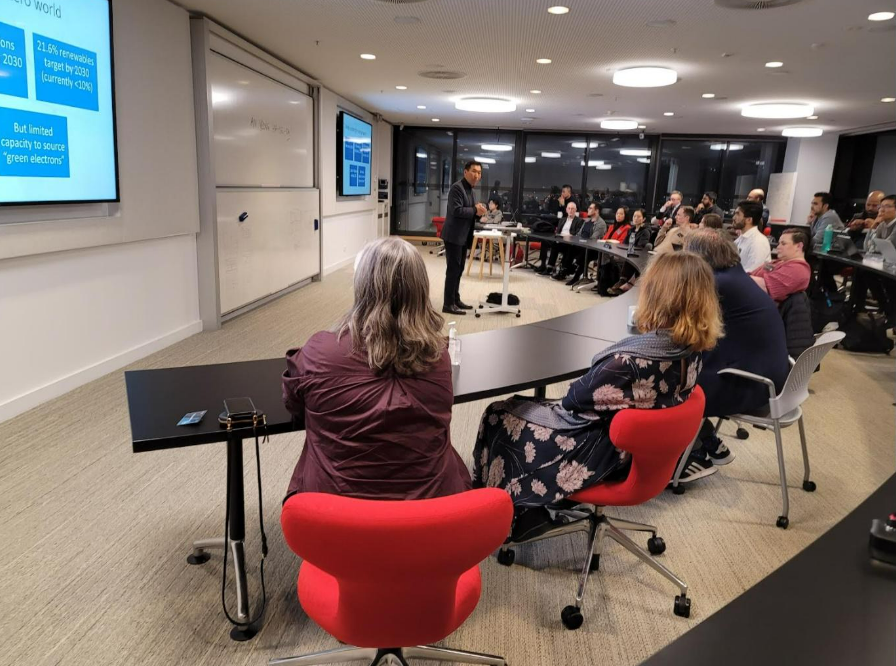
On 30 August 2023, in collaboration with MUKSRH, Monash MBA programme (based at Monash Business School, Caulfield), hosted James Choi, the former Ambassador to Korea for a seminar on South Korean-Australian relations. Ambassador Choi spoke to members of MUKSRH and the International Business Module Class on the current state of Korean-Australian relations and the challenges and opportunities that impact future collaboration between the two countries.
Seminar 3 - Exchanges (study) in Korea: Information Session
Ewan Smith (Monash Abroad)
Date & Time: Wednesday 13th September, 2-3pm (Melbourne time)
Abstract
For any students who are considering studying in Korea for a semester, come along to find out all about the exchange options and application process.
Seminar 4 - The Forgotten Victims of the Atomic Bomb: North Korean pipokja and the politics of victimhood in Japan-DPRK relations
Dr Lauren Richardson (ANU)
Date & Time: Wednesday 20th September, 4-5pm (Melbourne time)
Abstract
This seminar will examine transnational activism for North Korean atomic bomb victims (pipokja) waged by activists in Japan. These forgotten victims were repatriated to the northern half of the Korean peninsula after being exposed to the A-bombs dropped on Hiroshima and Nagasaki in 1945, while under colonial rule. Their unique plight was exposed to a prominent activist in Japan, Lee Sil-gun, at the occasion of the World Festival of Youth Students hosted in Pyongyang in 1989. This became the catalyst for Lee to launch a redress campaign that came to be supported by a number of (mostly anti-nuclear) activists in Japan. How did these activists navigate the structural constraints of the authoritarian North Korean regime and the tenuous relations between Tokyo and Pyongyang? The seminar will explore this question by drawing on fieldwork conducted in South Korea and Japan.
Bio
Lauren Richardson is a Lecturer in the Department of International Relations. From 2018-2020 she was Director of Studies and Lecturer in the Asia-Pacific College of Diplomacy at the ANU. Prior to that Dr Richardson taught Northeast Asian Relations at the University of Edinburgh. Her research focuses on the role of non-state actors in shaping diplomatic interactions in Northeast Asia, particularly Japan-Korea relations.
Seminar 5 - K-Pop Fandom's Role in Shaping Knowledge of Gender & Sexuality among LGBTQ+ Fans
Dr Thomas Baudinette (Macquarie University)
Date & Time: Tuesday 3rd October, 3-4pm (Melbourne time)
Abstract
The global impact of the Korean Wave has motivated a wealth of scholarship to critically investigate how fans draw upon K-pop to make sense of their gendered identities and sexual desires. Despite this flourishing previous literature, the experiences of LGBTQ+ fans of K-pop remain under-explored and under-theorized, a gap I fill within this presentation. Through an analytical approach sensitive to the affective discourses produced by fans, I establish that Anglophone K-pop fandom operates as a “queer space” that normalizes queer sexuality and gendered performance through the production of feelings of security, attraction, and relief. Significantly, I demonstrate that K-pop fandom provides a safe space for LGBTQ+ fans to navigate their mental health during times of intense hardship, such as the recent COVID-19 pandemic. Further, my analysis of 17 LGBTQ+ fans’ discourses uncover the seminal role that both the primarily visual nature of K-pop and the performances of the idols who sit at the genre’s heart play in producing queer knowledge. In particular, I reveal that the playful gendered performances of K-pop idols facilitate fans’ queering of heteropatriarchal and heteronormative ideologies and therefore represent a key resource that such fans deploy to articulate their own queer identities and experiences. I conclude the presentation by reflecting on how Anglophone LGBTQ+ fans negotiate their recognition of the fact that the K-pop industry represents one of the central mechanisms whereby the culture industries support the promotion of heteropatriarchy and heteronormativity in the South Korean context. I insist that a queer theory of the Korean Wave must always already be grounded in international fans’ reflexive engagement with this fundamental paradox. In developing a queer theory of the Korean Wave, I posit that the global spread of K-pop into a diverse number of receptive cultures around the world helps unlock the genre’s queer potentials.
Bio
Dr Thomas Baudinette is Senior Lecturer in Japanese and International Studies at Macquarie University. His first book is Regimes of Desire: Young Gay Men, Media, and Masculinity in Tokyo (University of Michigan Press, 2021). His second book is Boys Love Media in Thailand: Celebrity, Fans, and Transnational Asian Queer Popular Culture (Bloomsbury, 2023).
[Link to video played during presentation: https://youtu.be/1ZAVEYloI_k?si=cHLtx-6g3ZNTWpK4&t=458]
Seminar 6 - Junian Tetrad: Hangeul as a vertex of nation-building
Dr Eldin Milak (KF Postdoc at Curtin University)
Date & Time: Wednesday 10th October, 12:30-1:30pm (Melbourne time)
Abstract
In this talk, I map out the trajectory by which Hangeul has come to function as a vertex of nation-building in contemporary South Korea. Building on the discussion of the historical rise of Hangeul through the writings of one of the founding figures in Korean linguistics, Ju Si-gyeong, I position Hangeul within the national development project of South Korea, theorizing it as one of the four central elements of the nation-state, alongside ‘language’, ‘people’, and ‘land’. I label this fourfold construct as the ‘Junian Tetrad’ (a reworking of the ‘Herderian Triad’) and explore how it evolved from its earliest formulations in Ju’s ‘Grammar of the National Language’ (국어문법, 2010) to its contemporary manifestations in the semiotic landscapes of Seoul. Triangulating the landscape data with a discursive analysis of the public laws and legislations enforced in the city, I exemplify how the ‘Junian Tetrad’ surfaces in modern language and script policies and discuss its continued influence on the Korean national imagination. By focusing on Hangeul in particular, I demonstrate how script can reify the nation-state construct through the ubiquitous and mundane practice of sign-making in public spaces. I conclude the talk by arguing that such symbolic power is derived from a set of co-constructed paradoxical principles, which allow for the consolidation and simultaneous deployment of dialectically opposed concepts, such as ‘preservation’ (보전) and ‘development’ (발전).
Bio
Dr Eldin Milak is the 2023 Korea Foundation Postdoctoral Fellow for research in Australia and New Zealand and a Visiting Research Fellow at the School of Media, Creative Arts, and Social Inquiry at Curtin University. He completed his PhD in sociolinguistics at Sungkyunkwan University as a Global Korea Scholar (GKS), while also serving as a Brain Korea 21+ (BK 21+) researcher. His work explores the intersection of language and society in contemporary South Korea, with a particular focus on script and writing practices and policies in the country, as well as other sociolinguistic issues, including naming and addressing, public spaces and landscapes, and pop culture. Eldin is a Fulbright Alumnus (Montclair State University, NJ), and the 2022 International Research Foundation (TIRF) Doctoral Dissertation Grant (DDG) recipient.
Seminar 7 - Colourful Adventures in Korea
Dr Scott Watkins (Chief of Sustainability Officer, KISCO)
Date & Time: Monday 9th October, 4-5pm (Melbourne time)
Bio
Scott is Chief Sustainability Officer for KISCO, (주)경인양행, a Korean chemical company that makes dyes and colorants for the textiles and electronics industries. Scott has a PhD in Chemistry and spent 15 years working in research in the UK and Australia before joining KISCO in 2015. Scott works remotely from Melbourne but spends about 40% of his time in Korea. Scott is a board member of the Australia Korea Foundation and of the legendary Seoul Flyers Running Club. Scott is also a non-executive director and chair of two Australian not-for-profits, Pollinate Group (a social enterprise that empowers women, sustainably, in India and Nepal) and parkrun Australia (organiser of over 430 free, weekly, 5km run or walks across Australia). Scott will discuss his experience as an Australian working in Korea.
_________________________________
For details about previous events in the Monash University Korean Studies Research Hub Melbourne and Metropolitan Seminar Series, please navigate to Archived Events. This page includes some videos of the talks.